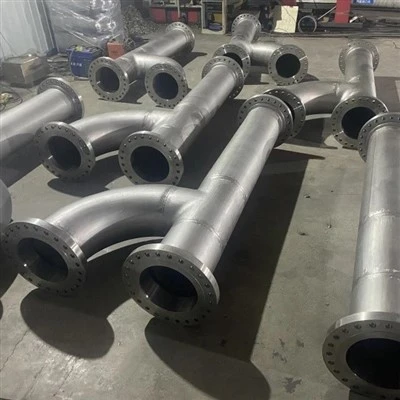
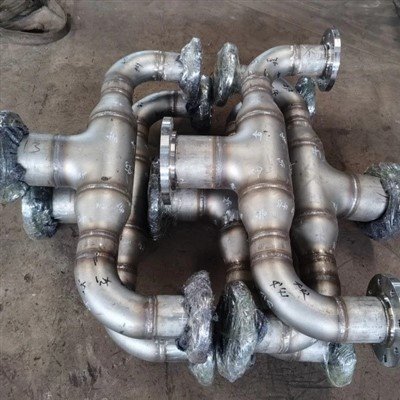
Finding the right equivalent for ASTM A182 F22 alloy steel is crucial for engineers, procurement specialists, and fabricators working with high-temperature and high-pressure piping systems. When global supply chains, regional standards, or specific project specifications come into play, knowing the comparable materials can save significant time and cost while ensuring technical compliance. This article breaks down the key equivalent grades to ASTM A182 F22 across major international standards and specific manufacturer designations, focusing on seamless clarity.

Why Do We Need Equivalents?
Projects often operate under different regional standards, manufacturers might brand materials uniquely, or sourcing specific ASTM grades might pose challenges locally. Identifying equivalents ensures you receive a material offering comparable performance – primarily high-temperature strength, creep resistance, and weldability – necessary for critical components like flanges, fittings, valves, and forged parts used in power generation, oil & gas refineries, and petrochemical plants.
Characteristics of ASTM A182 F22
First, understand what defines F22. It's a forged low-alloy steel containing chromium (Cr: ~2.25%) and molybdenum (Mo: ~1.0%). Key features include enhanced strength at elevated temperatures (typically up to about 593°C / 1100°F), good toughness, and resistance to hydrogen attack. Its common specifications include ASTM A182 (forgings), A336 (castings), and piping grades like A335 P22.
International ASTM A182 F22 Equivalent Standards
- European EN Standards: The most direct equivalent is EN 10222-2: 13CrMo9-10 (1.7380). This steel, used for forgings, aligns closely with F22 in chemistry (Chromium ~2.0-2.5%, Molybdenum ~0.90-1.10%, Carbon typically ~0.15%) and mechanical properties. For plate material, EN 10028-2: P22 (1.7380 or 10CrMo9-10) serves an equivalent role.
- ISO Standards: Internationally recognized equivalents include ISO 9327-2: F22V or F22, along with ISO 9330-2: WPHY 52.
- German DIN Standards: Older DIN references like DIN 17175: 13CrMo44 (1.7335) or DIN 17240: 24CrMo5 (1.7258) were predecessors but are generally superseded by EN 1.7380 for modern forgings. Plate references include DIN EN 10028-2: P355GH (approximate strength match) and 1.7335.
- Japanese JIS Standards: Look for JIS SUS F22 – this designation directly mirrors the ASTM grade. Material standards include JIS G 3201 SF22V (forgings), JIS G 3119 P22 (pipe), JIS G 4109 STF22 (tube forgings), and JIS G 4109 F22 (round bar). Key specifications are JIS G 3201 SF22V and JIS G 3119 STPT22.
- British BS Standards: BS equivalents include BS 1504:622-490 Grade 660 and forging specifications like BS 1501-621 Grade 660 or BS 1503-621 Grade 622, although EN standards dominate.
- Chinese GB Standards: Common equivalents are GB 15CrMo (a general alloy designation) and the more specific forged grade GB/T 3077 15CrMoG. Plate grades often referenced are GB/T 5310 15CrMoG (pipe) and for forgings GB/T 1221 15CrMo.
How To Choose ASTM A182 F22 Equivalent
- Certification is Non-Negotiable: Always demand certified mill test reports (CMTRs). These documents must prove explicit compliance with the required ASTM A182 F22 specification, including full chemistry, mechanical testing (tensile, impact, hardness), heat treatment verification (typically normalized + tempered), and NDE results. Accepting an "equivalent" based solely on a commercial name without proper certification is a major risk. Ensure the material has been manufactured and tested under a recognized Quality Management System (e.g., ISO 9001).
- Beyond Chemistry: While approximate chemical composition (especially Cr and Mo levels) is the starting point, true equivalence requires matching:
■ Mechanical Properties: Minimum tensile/yield strength, elongation, and impact energy (Charpy V-notch) values across the required temperature range, achieved after the correct post-forging heat treatment.
■ Heat Treatment: Forgings must undergo the proper Normalizing and Tempering cycles as mandated by ASTM A182.
■ Testing Requirements: Confirm all necessary tests per ASTM A182 were performed (tensile, impact, hardness, potentially hydrostatic and/or NDE like UT or MT/PT).
■ Application Requirements: The specific operating conditions (temperature, pressure, corrosive environment) dictate necessary properties. An equivalent must hold ASME Section IX P-Number for welding.
In conclusion, finding an ASTM A182 F22 equivalent material requires due diligence. While EN 1.7380, JIS SF22V/F22, and K32570 are the closest direct equivalents in their respective systems based on chemistry and common application, the definitive factor is certified compliance. Never rely solely on a table or generic equivalent suggestion.
Always insist on mill certificates proving the material strictly meets every requirement of ASTM A182 Gr. F22 or is approved for substitution under the specific governing code (like ASME BPVC) by a competent engineer. This rigorous approach guarantees safety, performance reliability, and long-term success for any critical high-pressure, high-temperature application.