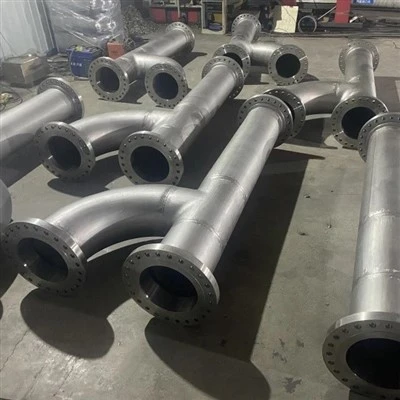
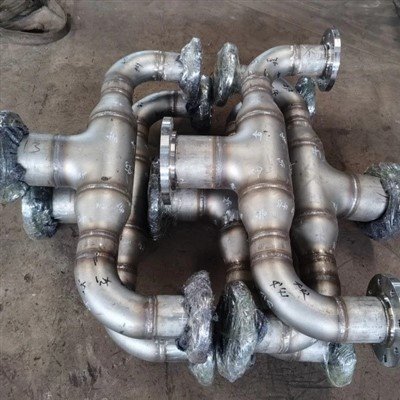
What is ASTM A182?
If you work with pipes, valves, flanges, or fittings in industries like oil and gas, power generation, or chemical processing, you've likely encountered ASTM A182. This isn't just another technical document; it's a critical specification developed by ASTM International. Its job? To define the exact requirements for forged or rolled alloy and stainless steel pipe flanges, forged fittings, and valves designed to handle intense heat and pressure. Think boilers, reactors, and pipelines where failure isn't an option. The ASTM A182 standard ensures these crucial parts are made from the right materials, manufactured correctly, and rigorously tested to perform safely and reliably under demanding conditions. It's a cornerstone for safety and integrity in high-stakes environments.

What Materials Does ASTM A182 Cover?
ASTM A182 casts a wide net, covering several important families of metals known for their strength and resistance to heat and corrosion. The main groups are:
- Ferritic and Martensitic Stainless Steels: These offer good strength and mechanical properties, often used for moderately high temperatures and where corrosion resistance is needed but extreme heat isn't the main factor. Common grades include F6 (like 410 stainless), F11, F22, and F91.
- Austenitic Stainless Steels: These are the champions of corrosion resistance and perform exceptionally well at very high temperatures. They are non-magnetic and easily formable. This group includes extremely common grades like F304/F304L, F316/F316L, F321, and F347/F348.
- Nickel-Based Alloys: For the absolute toughest conditions – extreme heat, severe corrosion, or both – ASTM A182 includes special nickel alloys like F44 (Alloy 625), F51 (Duplex 2205), F55 (Super Duplex 2507), F60 (Alloy 20), and F62 (Alloy 825). These alloys are significantly more expensive but essential for critical applications.
Understanding ASTM A182 Grades
Within each material group, ASTM A182 defines specific "grades." These are designated by an 'F' followed by numbers (like F304, F11, F91, F44). Think of the grade as a precise recipe and performance guarantee. Each ASTM A182 grade specifies:
- Exact Chemical Composition: How much chromium, nickel, molybdenum, carbon, and other elements must be in the steel or alloy. This directly controls properties like strength, corrosion resistance, and how it behaves at high temperatures.
- Required Mechanical Properties: The minimum strength (how much force it can take before bending or breaking – measured as tensile and yield strength) and ductility (how much it can stretch before breaking – measured as elongation) the material must achieve after specific heat treatment. Hardness limits are also set to ensure the material isn't too brittle or too soft.
- Heat Treatment: The specific heating and cooling processes (like annealing, quenching and tempering, or solution annealing) required to achieve the desired microstructure and properties for that grade.
ASTM A182 Requirements and Testing
Making sure parts meet ASTM A182 isn't guesswork; it involves strict rules and testing. The standard mandates:
- Chemical Analysis: A sample from each heat of molten steel (or master alloy for remelted grades) is precisely analyzed in a lab to confirm the chemical composition meets the specific grade requirements.
- Mechanical Testing: Samples are taken from actual production forgings (or test forgings made from the same material under the same conditions). These samples are pulled apart in a tensile test machine to measure strength and elongation, and hardness is checked to ensure it falls within the required range. This proves the material performs as promised.
- Heat Treatment: All forgings must undergo the exact heat treatment process (temperature, time, cooling method) defined for their specific ASTM A182 grade. This step is vital for achieving the correct properties. Records proving proper heat treatment are mandatory.
- Quality & Inspection: The standard outlines requirements for surface quality (freedom from harmful defects), dimensions (must match the ordered specifications), and marking (each piece needs clear identification showing its grade, manufacturer, heat number, etc.). Non-destructive testing (like ultrasonic or liquid penetrant inspection) is often specified by the purchaser for critical applications.
How ASTM A182 Parts are Made
ASTM A182 parts start as solid blocks or billets of steel or alloy. The key manufacturing step is forging. This involves heating the material until it's plastic (like very stiff clay) and then hammering or pressing it into the rough shape of the final part (a flange blank, a valve body). Forging is crucial because it breaks up the original cast structure of the metal, aligns the grain flow to follow the part's shape, and creates a denser, stronger, and more reliable microstructure compared to simply machining from a cast bar or plate. After forging, the parts are precisely machined to their final dimensions and finish. Finally, they undergo the specific heat treatment mandated by their ASTM A182 grade to achieve the required strength, toughness, and microstructure. Strict quality control throughout the process ensures compliance.
ASTM A182 Materials Applications
You'll find ASTM A182 materials absolutely everywhere demanding performance under pressure and heat is critical:
- Oil and Gas: High-pressure pipelines, wellheads, Christmas trees, offshore platforms, refineries (pipelines, reactors, heat exchangers).
- Power Generation: Boilers, steam lines, turbines, and auxiliary systems in fossil fuel and nuclear power plants.
- Chemical and Petrochemical: Reactors, distillation columns, heat exchangers, and piping systems handling corrosive chemicals at high temperatures.
- High-Temperature Processing: Equipment in industries like pharmaceuticals, food processing (sterilization), pulp and paper, where heat and pressure are key factors.
- General High-Pressure Services: Any system where components must reliably contain fluids or gases under significant pressure, especially combined with elevated temperatures.
Why ASTM A182 is Essential
In simple terms, ASTM A182 provides a common language and a guaranteed level of performance for the forged parts that hold high-pressure, high-temperature systems together. It ensures that a F304L flange from one manufacturer will have virtually the same chemical makeup, strength, and heat treatment as an F304L flange from another. This consistency is vital for engineers designing systems and for maintenance teams replacing parts. By demanding rigorous chemical control, mechanical testing, and specific manufacturing processes like forging and heat treatment, the ASTM A182 standard plays a fundamental role in preventing leaks, failures, and potentially catastrophic accidents. It underpins the safety, reliability, and longevity of countless industrial assets worldwide. When you see ASTM A182 on a material certificate or a part marking, it signifies a component built to withstand the toughest conditions.