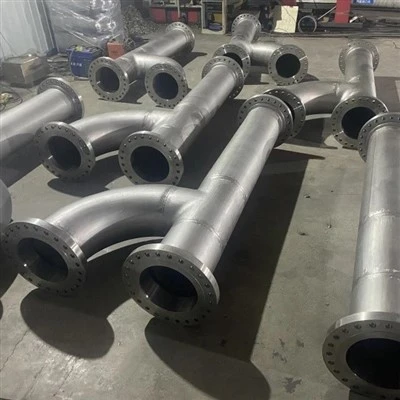
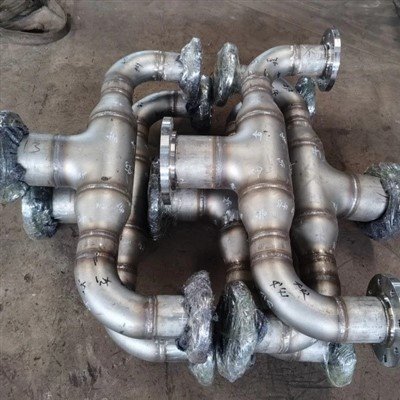
Alloy 31, also known as UNS N08031 or 1.4562, is an iron-nickel-chromium-molybdenum alloy enhanced with nitrogen and copper, offering execellent performance in corrosive settings.

Below, we examine the specific features and applications of Alloy 31 flanges.
Alloy 31 Flange Features
1. Exceptional Resistance to Corrosion in Acidic Media
Alloy 31 flanges offer superior durability in sulfuric and phosphoric acid environments across a wide range of concentrations and temperatures.
The alloy's high chromium (26-28%) and nickel (30-32%) content allows it to resist oxidizing acids, while the significant molybdenum addition enhances resistance to reducing acids. This dual capability makes Alloy 31 flanges ideal for piping systems handling sulfuric acid, phosphoric acid, and even nitric-hydrofluoric acid mixtures, often outperforming Alloy 20 and standard super-duplex grades in these specific aggressive conditions.
2. High Resistance to Localized Corrosion
The material provides outstanding protection against pitting and crevice corrosion in halide-containing environments.
Pitting and crevice corrosion are the leading causes of flange failure in saltwater and chloride-rich processing. Alloy 31 boasts a Pitting Resistance Equivalent Number (PREN) generally exceeding 50. This high PREN value indicates robust resistance to localized attacks, ensuring the integrity of the flange face and gasket seating area even in hot, chlorinated seawater or brackish water.
3. Superior Mechanical Strength
Alloy 31 exhibits higher yield and tensile strength compared to conventional austenitic stainless steels.
The addition of nitrogen to the alloy matrix not only improves corrosion resistance but also acts as an interstitial strengthener. Alloy 31 flanges maintain their structural integrity under high pressure and elevated temperatures. This high strength allows engineers to potentially reduce wall thickness in piping designs without compromising safety, leading to lighter and more cost-effective systems.
4. Excellent Weldability and Fabrication
Alloy 31 flanges can be welded and fabricated without requiring post-weld heat treatment to maintain corrosion resistance.
Unlike some high-alloy materials that become brittle or lose corrosion resistance after welding, Alloy 31 maintains its ductility and resistance properties in the welded condition. This feature is crucial for flanges, which often require welding to pipe ends (such as weld neck or slip-on flanges), ensuring that the heat-affected zone (HAZ) does not become a weak point in the system.
Applications of Alloy 31 Flanges

1. Chemical and Petrochemical Processing
Alloy 31 flanges are critical components in the production of fine chemicals, specifically where sulfuric and phosphoric acids are handled.
In chemical plants, flanges are often the leak points where corrosion initiates. Alloy 31 is extensively used in heat exchangers, piping systems, and reactor vessels involved in the production of phosphoric acid via the wet process. It effectively resists the impurities found in these acids, such as chlorides and fluorides, which often accelerate corrosion in other alloys.
2. Pulp and Paper Industry
31 alloy is widely used in bleaching plants, particularly in chlorine dioxide stages where high corrosion resistance is mandatory.
Modern pulp bleaching processes utilize aggressive oxidizing agents that are highly corrosive to standard 316L or 317L stainless steel. Alloy 31 flanges withstand the harsh environment of chlorine dioxide bleaching towers and washers, extending the service life of the equipment and preventing costly shutdowns due to leaks or flange face erosion.
3. Oil and Gas Extraction
Alloy 31 is utilized in sour gas service and downhole tubing connections due to its resistance to hydrogen sulfide and chlorides.
In the oil and gas sector, particularly in offshore environments, equipment is exposed to sour gas (H₂S) and high-chloride formation waters. Alloy 31 flanges resist sulfide stress cracking (SSC) and stress corrosion cracking (SCC), making them a safe and reliable choice for heat exchangers using seawater as a coolant and for piping systems transporting sour crude.
4. Environmental Pollution Control
These flanges serve as essential connectors in Flue Gas Desulfurization (FGD) systems for power generation plants.
FGD systems scrub sulfur dioxide from exhaust gases, creating a highly corrosive slurry containing sulfuric acid and chlorides. Alloy 31 flanges are used in the absorbers, ductwork, and spray headers of these systems. Their resistance to abrasion-corrosion is particularly valuable here, as the slurry can be physically abrasive as well as chemically aggressive.
5. Mining and Ore Processing
31 alloy material is ideal for acid leaching technology used in the extraction of copper, nickel, and gold.
Hydrometallurgy involves using strong acids to dissolve metals from ore. The piping systems transporting these leachates require connections that can handle high acidity and elevated temperatures. Alloy 31 flanges provide the necessary resilience against the erosive-corrosive nature of ore slurries, ensuring leak-free operation in remote mining locations where maintenance is difficult.
Conclusion
Alloy 31 flanges exceptional resistance to sulfuric acid, phosphoric acid, chlorides, and stress corrosion cracking-combined with reliable mechanical properties-makes them the optimal choice for chemical processing, FGD systems, pulp and paper facilities, offshore installations, and petroleum refining.
Consult our sale team to buy Alloy 31 flanges for your application-we'll provide material certification, corrosion testing data, and installation guidance.