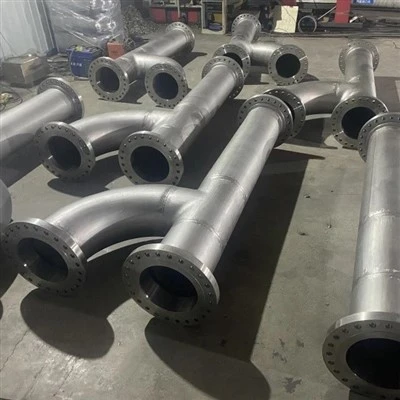
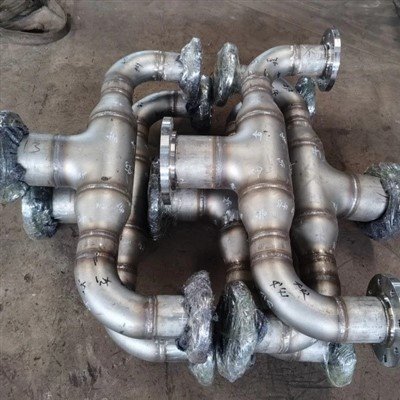
This article details the specifications and ratings of ASME B16.5 Alloy 20 flanges.
Specifications of Alloy 20 Flanges
Alloy 20 flanges feature a balanced composition of 32-38% nickel, 19-21% chromium, 2-3% molybdenum, and 3-4% copper, providing exceptional resistance to pitting and crevice corrosion.

Alloy 20 flanges comply with ASME B16.5 for dimensions, tolerances, and pressure ratings, as well as ASTM B462 for forgings and ASTM B463 for plates. Adherence to these specifications guarantees interoperability with other piping components, with available types including weld neck, slip-on, socket weld, threaded, lap joint, and blind flanges in sizes NPS 1/2 to 24.
ASME B16.5 Standard Introduction
ASME B16.5 standard is the definitive specification for pipe flanges and flanged fittings in North America and is widely adopted globally. For Alloy 20 flanges, this standard provides the complete architectural blueprint, governing:
Scope & Pressure Classes: The standard covers flanges from NPS 1/2" to NPS 24" in pressure classes ranging from Class 150 to Class 2500.
Flange Types: It defines dimensions for various flange types, including Weld Neck (WN), Slip-On (SO), Socket Weld (SW), Threaded, Lap Joint, Blind (BL), and others.
Critical Dimensions: ASME B16.5 mandates precise dimensions for the outside diameter, bolt circle, number and size of bolt holes, flange thickness, and facing details.
Dimensional Tolerances: The standard sets strict tolerances for these dimensions, including flange thickness (e.g., +3.0mm/-0.0mm for NPS ≤18), bolt hole spacing, and face perpendicularity to ensure leak-tight, interchangeable joints.
Alloy 20 Flange Dimensions According to ASME B16.5

Dimensions for Alloy 20 flanges span NPS 1/2 to 24, with variations by type such as raised face or ring-type joint for optimal sealing.
Sample Dimension Table for Class 150 Weld Neck Flanges
The following table illustrates key dimensions for Class 150 weld neck flanges, demonstrating ASME B16.5 compliance for Alloy 20 products.
|
NPS |
Outside Diameter (in) |
Bolt Circle Diameter (in) |
Number of Bolts |
Bolt Diameter (in) |
Hub Diameter (in) |
Raised Face Diameter (in) |
|
1/2 |
3.50 |
2.38 |
4 |
1/2 |
1.38 |
1.38 |
|
3/4 |
3.88 |
2.75 |
4 |
1/2 |
1.69 |
1.69 |
|
1 |
4.25 |
3.12 |
4 |
1/2 |
2.00 |
2.00 |
|
2 |
6.00 |
4.75 |
4 |
5/8 |
3.62 |
3.62 |
|
4 |
9.00 |
7.50 |
8 |
5/8 |
5.31 |
5.31 |
|
6 |
11.00 |
9.50 |
8 |
3/4 |
7.56 |
7.56 |
|
8 |
13.50 |
11.75 |
8 |
3/4 |
9.69 |
9.69 |
|
10 |
16.00 |
14.25 |
12 |
7/8 |
12.00 |
12.00 |
|
12 |
19.00 |
17.00 |
12 |
7/8 |
14.38 |
14.38 |
|
14 |
21.00 |
18.75 |
12 |
1 |
15.75 |
15.75 |
|
16 |
23.50 |
21.25 |
16 |
1 |
18.00 |
18.00 |
|
18 |
25.00 |
22.75 |
16 |
1-1/8 |
19.88 |
19.88 |
|
20 |
27.50 |
25.00 |
20 |
1-1/8 |
22.00 |
22.00 |
|
24 |
32.00 |
29.50 |
20 |
1-1/4 |
26.12 |
26.12 |
Alloy 20 Flange Pressure-Temperature Ratings
Alloy 20 flanges offer robust pressure-temperature ratings per ASME B16.5 Group 3.1, supporting high performance in elevated conditions.
Ratings are determined by material strength and temperature, with Alloy 20 in Group 3.1 providing higher allowable pressures than many stainless grades.
Pressure-Temperature Rating Table
The table below details maximum working pressures (psig) for Alloy 20 flanges at various temperatures (°F), as per ASME B16.5.
|
Temp. (°F) |
Class 150 |
Class 300 |
Class 400 |
Class 600 |
Class 900 |
Class 1500 |
Class 2500 |
|
-20 to 100 |
290 |
750 |
1000 |
1500 |
2250 |
3750 |
6250 |
|
200 |
260 |
740 |
990 |
1485 |
2225 |
3710 |
6180 |
|
300 |
230 |
710 |
945 |
1420 |
2130 |
3550 |
5920 |
|
400 |
200 |
670 |
890 |
1335 |
2005 |
3340 |
5565 |
|
500 |
170 |
605 |
805 |
1210 |
1815 |
3025 |
5040 |
|
600 |
140 |
540 |
720 |
1080 |
1620 |
2700 |
4500 |
|
650 |
125 |
520 |
690 |
1040 |
1555 |
2595 |
4325 |
|
700 |
110 |
505 |
670 |
1010 |
1510 |
2520 |
4195 |
|
750 |
95 |
485 |
645 |
965 |
1450 |
2415 |
4025 |
|
800 |
80 |
465 |
620 |
930 |
1395 |
2330 |
3880 |
|
850 |
65 |
380 |
505 |
755 |
1135 |
1890 |
3155 |
|
900 |
50 |
280 |
370 |
555 |
835 |
1390 |
2315 |
Alloy 20 Flanges Applications

Chemical Processing
In chemical plants, Alloy 20 flanges handle sulfuric, phosphoric, and nitric acids, preventing leaks and extending equipment life. Their resistance to chloride stress cracking makes them essential for reactors and piping, reducing downtime in corrosive operations.
Pharmaceutical Industry
These flanges support sterile environments in pharmaceutical manufacturing, resisting cleaning agents and organic acids. Compliance with hygiene standards ensures contaminant-free connections, enhancing product purity and regulatory adherence.
Food and Beverage Sector
Alloy 20 flanges are used in food processing for handling acidic ingredients like vinegar and citric acid without contamination. Their non-reactive surface maintains flavor integrity and meets FDA requirements for safe, durable installations.
Oil and Gas Operations
In offshore platforms, these flanges withstand sour gas and seawater corrosion, ensuring secure seals under pressure. This durability minimizes maintenance in harsh marine settings, improving safety and operational efficiency.
Conclusion
Alloy 20 flanges provide an essential defense against sulfuric acid and chloride stress corrosion cracking, but their performance relies entirely on correct specification. By strictly adhering to ASME B16.5 Material Group 3.1 ratings, you ensure that your system is not only chemically resistant but also mechanically sound.