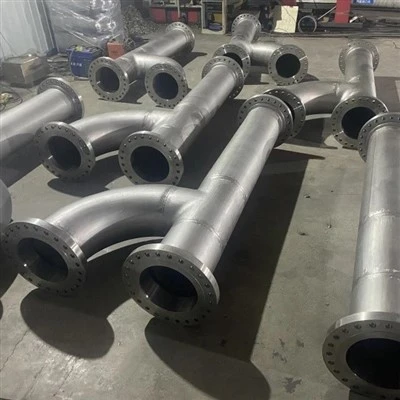
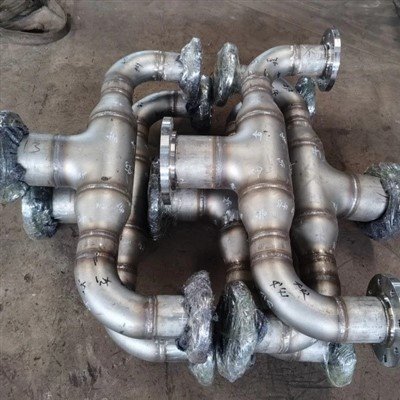
Proper installation of the AL6XN sliding flange is crucial for ensuring long-term leak-free operation of piping systems. This article will detail the professional installation steps for the AL6XN sliding flange.

What is AL6XN?
AL6XN (UNS N08367) is a "super-austenitic" stainless steel containing 6% molybdenum and high levels of nitrogen. It was specifically engineered to bridge the performance gap between standard 300-series stainless steels and expensive nickel-base alloys.
With a PREN value exceeding 45, AL6XN offers a level of protection against chloride-induced stress corrosion cracking that 316L (PREN ~24) simply cannot match.
In our factory, we treat AL6XN as a precision material; its high chromium and molybdenum content requires careful thermal management during fabrication to prevent the precipitation of secondary phases that could degrade its corrosion resistance.
What are Slip On Flanges?
A slip-on flange (SO) is designed to slide over the outside diameter of the pipe. Unlike a weld neck flange, which has a tapered hub that is butt-welded to the pipe, the slip-on flange is slightly larger than the pipe's outer diameter, allowing it to be positioned with ease. The primary advantages of the slip-on design are its lower procurement cost and ease of alignment.

Because the flange "slips" onto the pipe, it does not require a perfect square cut of the pipe for a butt weld, and the internal alignment is simpler to achieve. However, it is important to note that a slip-on flange requires two fillet welds: one on the outside (at the hub) and one on the inside (near the face).
From a structural standpoint, they are generally rated at about two-thirds the strength of a weld neck flange under internal pressure, which is why they are predominantly used in Class 150 and Class 300 systems.
AL6XN Slip On Flanges Pre-Installation Preparation
The success of an AL6XN installation begins long before the welding torch is lit. Because AL6XN is used in highly corrosive environments, any contamination introduced during preparation can lead to premature failure.
Material Verification and Inspection
MTR Review: Always verify the Material Test Reports (MTRs) to ensure the chemistry meets UNS N08367 standards.
Surface Check: Inspect the flange face for scratches or gouges. For AL6XN, even a small surface defect can become a site for crevice corrosion.
Cleaning and Degreasing
AL6XN is sensitive to carbon contamination. All pipe ends and flange bores must be cleaned using a solvent. Use only stainless steel wire brushes that have never been used on carbon steel to prevent cross-contamination.
AL6XN Slip On Flanges Installation Steps
The following steps outline the rigorous protocol required to install AL6XN slip-on flanges correctly.

Step 1: Pipe Preparation
Cut the pipe to the required length. While slip-on flanges are more forgiving than weld neck flanges, the pipe end should still be relatively square. Deburr the inner and outer edges to ensure a smooth flow and a clean welding surface.
Step 2: Positioning the Flange
Slide the AL6XN flange onto the pipe. The standard practice for slip-on installation is to set the pipe back from the flange face by a distance equal to the wall thickness of the pipe plus 3mm (1/8"). This gap ensures that the internal fillet weld does not damage the flange face (the sealing surface).
Step 3: Alignment and Leveling
Use a "two-hole" level or a flange alignment tool to ensure the bolt holes are oriented correctly (usually "straddling" the vertical or horizontal centerlines). This is crucial for ensuring that the rest of the piping system connects without mechanical strain.
Step 4: Tack Welding
Once aligned, apply four small tack welds at 90-degree intervals. For AL6XN, it is imperative to use the correct filler metal. We recommend over-alloyed filler metals like Alloy C-22 or Alloy 625. Using 316L filler on AL6XN will result in a weld that is less corrosion-resistant than the base metal, leading to "preferential weld attack."
Step 5: Final Welding (Fillet Welds)
External Fillet Weld: Weld the hub of the flange to the outside of the pipe. Maintain a low interpass temperature (below 150°C / 300°F) to prevent overheating.
Internal Fillet Weld: Weld the inside of the flange to the end of the pipe. Ensure this weld is smooth and does not protrude beyond the recessed area, as it could interfere with the gasket.
Post-Installation Inspection
After the welds have cooled, a rigorous inspection is required to validate the integrity of the joint.
Visual Inspection (VT): Check for undercut, porosity, or cracks. The weld should have a clean, "silvery" appearance. If the weld looks dark or "burnt," it may have been overheated, potentially compromising the molybdenum distribution.
Liquid Penetrant Testing (PT): Since slip-on flanges use fillet welds, PT is the most effective way to check for surface-breaking defects.
Passivation: After welding, we strongly recommend a chemical passivation treatment (using a nitric or citric acid solution) to restore the protective oxide layer on the AL6XN surface.
Applications of AL6XN Slip On Flanges
Marine & Seawater: Used in firewater systems on offshore platforms and piping for desalination plants.
Power Industry: Ideal for Flue Gas Desulfurization (FGD) scrubbers where acidic condensates are present.
Chemical Processing: Used in the production of organic acids and specialty chemicals that contain high chloride concentrations.
FAQs
How to calculate AL6XN flange thickness?
The thickness of an AL6XN flange is dictated by ASME B16.5. While the material is stronger than standard stainless steel, the dimensions must adhere to the standard class ratings (e.g., Class 150 or 300) to ensure compatibility with standard gaskets and bolting.
Do AL6XN slip-on flanges require hydrotesting?
Absolutely. Every flanged joint should undergo a hydrostatic test at 1.5 times the design pressure. This confirms the integrity of both the internal and external fillet welds and ensures that the gasketed seal is leak-proof.
How much does an AL6XN slip-on flange weigh?
AL6XN has a density of approximately 8.06 g/cm³, which is very similar to 316L stainless steel. For a 4" Class 150 slip-on flange, the weight is approximately 5.8 kg (12.8 lbs). For larger or higher-class flanges, always refer to a standard weight table and add a 1% margin for the alloy's specific gravity.
How to measure a slip-on flange?
To measure for a replacement, record the Outside Diameter (OD), the Bore Diameter (which should be slightly larger than the pipe OD), the Thickness, and the Bolt Circle Diameter. For a 4" pipe, the bore of the slip-on flange will typically be 4.57 inches.