|
QUICK ANSWER AL-6XN is ATI's registered trade name for an alloy that meets UNS N08367, a 6% molybdenum super-austenitic stainless steel. Buyers often confuse it with 254 SMO (UNS S31254), 25-6MO (UNS N08926), 904L (UNS N08904) and 316L. The fix is simple: control the grade on paper, then confirm it in the metal. [1][6]
Four rules for maintenance buyers: Order by UNS number plus ASTM specification. Never use a trade name or "6Mo" alone. Read the certificate for nickel, nitrogen and copper before accepting delivery. Run positive material identification (PMI) on arrival, and remember that XRF cannot see nitrogen. Weld repairs with a nickel-base filler that has at least 9% molybdenum, never 316L filler. |
Picture a typical repair. A seawater line leaks on a Friday, the spare is gone, and a request goes out for "AL6XN, 2-inch pipe, urgent." A part arrives on Monday. It looks right, and the paperwork says "6Mo." But "6Mo" describes at least three different alloys, and they are not interchangeable for code and welding purposes.
This guide uses data from the alloy's producer, from independent industry bodies and from ASME code documents to show where grade confusion starts and how maintenance teams can stop it.
What Is AL-6XN, and What Is UNS N08367?
AL-6XN is a registered trademark of ATI for a super-austenitic stainless steel that meets UNS N08367. The UNS number is the generic designation used by ASTM and ASME; the trade name identifies one producer's version of that alloy. [1]
ATI describes AL-6XN as a low-carbon, high-purity, nitrogen-bearing alloy designed to resist seawater and later shown to resist many other harsh environments [1]. Typical chemistry is about 20.5% chromium (Cr), 24% nickel (Ni), 6.2% molybdenum (Mo) and 0.22% nitrogen (N), with copper kept to a residual 0.2% [1]. "Super-austenitic" simply means the steel carries far more Cr, Ni and Mo than ordinary 316L, so it can handle salty or acidic water that would pit 316L.
The "N" in N08367 is a historical quirk. The alloy contains slightly less than 50% iron, so ASTM first filed it among the nickel alloys (the "B" specifications). ASTM later reclassified it as a steel and added it to the "A" specifications, but it also remains in the B specifications [1]. Both families describe the same alloy. Four names in the AL-6XN family are easy to mix up (Table 1).
Table 1. The AL-6XN family: four names, one alloy line
|
Name |
Designation |
What it is |
Buying note |
|
AL-6X |
UNS N08366 |
Earlier version without deliberate nitrogen |
Limited to thin gauges, roughly 0.10 in. (2.5 mm) or less [1] |
|
AL-6XN |
UNS N08367 |
Standard grade; typical PREN about 47.5 |
Available from stock in many product forms [1] |
|
AL-6XN PLUS |
UNS N08367 |
Same specifications, higher Cr, Mo and N; guaranteed minimum PREN of 50 |
Custom-melted to order, not stocked [1][2] |
|
CN-3MN |
UNS J94651 |
Cast form used for pumps, valves and similar parts |
Carries a J-number, not N08367 [1] |
Source: ATI Allegheny Ludlum AL-6XN data book [1]; ATI AL-6XN PLUS data sheet [2]. PREN = pitting resistance equivalent number (see Table 4).
Why Does Grade Confusion Happen in Maintenance Purchasing?
Grade confusion happens because one alloy has many names, close-cousin alloys have nearly the same chemistry, and urgent repair orders rely on shorthand copied from old drawings and nameplates.
Five causes show up again and again:
"6Mo" is a family, not a grade. Industry definitions of "Type 6Mo" give UNS S31254, N08367 and N08926 as examples [11]. The International Molybdenum Association (IMOA) groups the same three as the 6% Mo super-austenitic stainless steels [6].
Names come in layers. A trade name, a UNS number, ASTM "A" and "B" specifications and EN numbers can all describe the same metal in different ways (Table 2).
Datasheets use different PREN formulas. The same alloy can be quoted at about 44 or about 48, depending on the sheet (Table 4).
Two chemistry ranges overlap. Some heats can meet both N08367 and N08926 limits, and at least one mill lists a product under both numbers [6][14] (EETA comparison of the published ranges). A certificate naming one number can therefore describe metal that also fits the other, so the order must say which number is required.
Urgency removes review time. When a line is down, nobody compares the certificate with the drawing line by line.
Table 2. The naming layers that cause mix-ups
|
Layer |
Example for this alloy |
Where the risk lies |
|
Trade name |
AL-6XN, AL-6XN PLUS (ATI registered trademarks) |
Often shortened to "AL6XN" or "6XN," or used as a generic word for any 6Mo steel |
|
UNS number |
N08367 |
The unambiguous identifier. Use it on every order |
|
ASTM "A" specifications |
A240, A312, A479, A182 and others |
Steel-series documents; the alloy is listed here under its UNS number |
|
ASTM "B" specifications |
B688, B690, B691, B462, B366, B804 and others |
Nickel-series documents; several cover more than one UNS number |
|
EN number |
None listed for N08367 in IMOA's table [6] |
European paperwork quoting 1.4547 (S31254) or 1.4529 (N08926) describes a different grade |
|
Shorthand |
"6Mo," "6% moly," "super austenitic" |
Covers at least three different UNS numbers |
Source: ATI [1]; IMOA [6]; IADC Lexicon [11]; EETA summary.
How Does AL-6XN Differ from 254 SMO, 25-6MO, 904L and 316L?
AL-6XN is the nickel-rich member of the 6Mo family, with about 24% nickel against about 18% in 254 SMO. It resists chloride pitting and crevice corrosion far better than 904L and 316L, and it sits close to 254 SMO and N08926 in most environments, but it is not the same alloy.
Table 3 lists the specified chemistry limits. Three elements do most of the separating work: nickel (lower in 254 SMO), molybdenum (lower in 904L and 316L) and copper (capped at 0.75% in N08367, but required at 1.0–2.0% in 904L).
Table 3. Specified chemistry limits, weight %
|
Grade |
UNS |
Cr |
Ni |
Mo |
N |
Cu |
PREN* |
|
AL-6XN |
N08367 |
20.0–22.0 |
23.5–25.5 |
6.0–7.0 |
0.18–0.25 |
0.75 max |
43–45 |
|
254 SMO |
S31254 |
19.5–20.5 |
17.5–18.5 |
6.0–6.5 |
0.18–0.22† |
0.50–1.00 |
41–43 |
|
25-6MO / 1925hMo |
N08926 |
19.0–21.0 |
24.0–26.0 |
6.0–7.0 |
0.15–0.25 |
0.50–1.50 |
41–43 |
|
904L |
N08904 |
19.0–23.0 |
23.0–28.0 |
4.0–5.0 |
0.10 max |
1.0–2.0 |
33–35 |
|
316L |
S31603 |
16.0–18.0 |
10.0–14.0 |
2.0–3.0 |
0.10 max |
- |
24–26 |
Source: IMOA austenitic stainless steel tables [6]; copper range for S31254 from ASME Code Case N-439 [7]. *IMOA calculates PREN with the 16 × N formula from nominal analyses. †Some editions of ASTM A479 list 0.18–0.25 N for S31254; confirm in the current standard. UNS N08925 is a separate, earlier number for a similar Ni-Cr-Mo-Cu grade and should not be confused with N08926.
Why PREN numbers from different sheets do not match
PREN estimates resistance to pitting corrosion from the steel's chemistry. Two formulas are in common use. ATI calculates PREN = Cr + 3.3 × Mo + 30 × N [1]. IMOA and Rolled Alloys use 16 × N in place of 30 × N [3][6]. The steel is the same; the number is not (Table 4).
Table 4. One alloy, two PREN formulas (EETA calculation from published typical analyses)
|
Alloy |
Typical Cr / Mo / N, % |
PREN, 30 × N formula |
PREN, 16 × N formula |
|
Type 316 |
16.5 / 2.1 / 0.05 |
24.9 |
24.2 |
|
Alloy 904L |
20.5 / 4.5 / 0.05 |
36.9 |
36.1 |
|
254 SMO |
20 / 6.1 / 0.2 |
46.1 |
43.3 |
|
AL-6XN |
20.5 / 6.2 / 0.22 |
47.6 |
44.5 |
Source: typical analyses from ATI [1] (316, 904L, AL-6XN) and Outokumpu [14] (254 SMO); calculations by EETA.
Used consistently, either formula puts AL-6XN only about 1.2 to 1.4 points above 254 SMO. Mixing a 30 × N figure from one sheet with a 16 × N figure from another makes the gap look like 4 points or more. Compare PREN values only when they use the same formula, and treat PREN as a screening score. ATI itself says PREN predicts potential resistance and is not a measure of performance [2].
How much do the differences matter in service?
Test data show a large gap between the 6Mo grades and the lower grades, and a small gap inside the 6Mo group (Table 5). In ATI's ferric chloride crevice test (ASTM G48 Method B), AL-6XN showed no crevice attack until 43°C, compared with 20°C for 904L and below −2.5°C for Type 316 [1]. In a seawater crevice test reported by Rolled Alloys, a distributor of AL-6XN, and attributed to the LaQue Center, 0% of AL-6XN sites were attacked, against 6% for both 254 SMO and 1925hMo and 75% for 316/316L [3].
Table 5. Pitting and crevice test results (ATI laboratory data)
|
Measure |
Type 316 |
Type 317 |
Alloy 904L |
AL-6XN |
|
PREN (30 × N formula) |
24.9 |
30.5 |
36.9 |
47.6 |
|
Critical crevice temperature, ASTM G48-B |
below −2.5°C |
1.7°C |
20°C |
43°C |
|
Critical pitting temperature, ASTM G48-A |
not listed |
25°C |
45°C |
78°C |
Source: ATI AL-6XN data book, Table 7 [1]. ATI cautions that crevice test results vary with test practice, so compare data only when the method is the same.
Be careful with claims of superiority inside the 6Mo group. A Nickel Institute review concluded that very little difference exists among the 6Mo grades for most applications and that availability, price and technical support often decide the choice [5]. Producers also disagree about copper. Rolled Alloys argues that AL-6XN's low copper helps in chlorides [3], while the Nickel Institute review notes that the 254 SMO producer documented benefits from its specific copper level [5]. That review dates from 1988, so use it for context only.
For buyers, the practical point is different from the corrosion debate. These grades are close enough to be swapped by accident, and different enough in code treatment that a swap becomes a design decision (Table 6).
Table 6. Strength and code treatment: where the swap shows up on paper
|
Item |
904L |
254 SMO |
AL-6XN |
|
Minimum tensile strength, thin flat-rolled and tubular products (ksi) |
71 |
94 |
100 |
|
ASME allowable stress at 200°F, plate (ksi) |
16.7 |
23.9 |
26.2 |
|
ASME allowable stress at 400°F, plate (ksi) |
13.8 |
19.8 |
21.9 |
|
ASME allowable stress at 600°F, plate (ksi) |
11.9 |
17.9 |
19.4 |
|
ASME Section IX P-number |
45 |
8, Group 4 |
45 |
Source: ATI [1] for tensile minimums and AL-6XN stress values; Rolled Alloys [3][4] for 904L and 254 SMO stresses; ASME Code Cases N-438 and N-439 [7] and published ASME P-number listings [8]. Always confirm stresses and P-numbers in the current ASME Section II, Part D and Section IX.
At 200°F, the allowable stress for 254 SMO is about 9% lower than for AL-6XN, and for 904L about 36% lower. In the simplest thin-wall pressure formula, required wall thickness rises as allowable stress falls, so a 904L part would need roughly 57% more wall for the same rating. Real designs follow ASME B31.3 or the applicable code, but the direction is clear.
Why Do the Same Parts Appear Under Both ASTM A and ASTM B Specifications?
Because N08367 contains slightly less than 50% iron, it was first listed with the nickel alloys (B specifications) and later added to the steel specifications (A specifications). Both families are valid for AL-6XN. The mistake is accepting a document whose UNS number does not match the order.
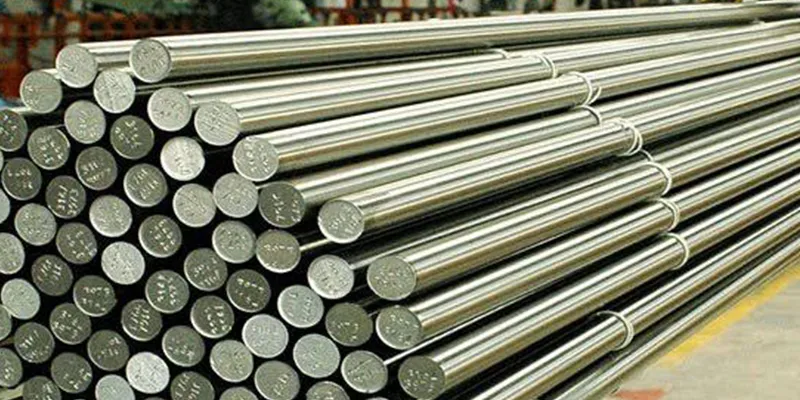
Table 7 shows where AL-6XN product forms sit in each family. Three of the B specifications deserve a closer look because they cover more than one alloy. ASTM B688 and B690 name both N08366 and N08367 in their titles, and ASTM B804 covers N08367 and N08926 welded pipe [12]. ASTM B462 covers more than a dozen alloys, including N08367, N08020, N08031 and N10276 [12]. On these documents, the UNS number on the certificate is the only proof of which alloy you received.
Table 7. AL-6XN product forms and their specification families
|
Product form |
ASTM "A" (steel) |
ASTM "B" (nickel alloy) |
What to check |
|
Plate, sheet, strip |
A240 |
B688 |
UNS reads N08367, not N08366 |
|
Seamless and welded pipe |
A312 |
B690 (seamless pipe and tube) |
UNS and product form on certificate |
|
Welded pipe |
A358, A409, A813, A814 |
B675, B804 |
B804 also covers N08926; UNS must be named |
|
Welded tube |
A249, A269, A270, A688 |
B676 |
UNS and wall thickness |
|
Bar, rod, wire |
A479 |
B691 |
UNS and heat treatment |
|
Flanges, forged fittings, valve parts |
A182 (F62 = N08367; F44 = S31254) |
B462 |
F44 and F62 look alike; B462 covers many alloys |
|
Wrought butt-weld fittings |
A403 (some supplier charts [15]) |
B366 |
UNS and fitting class |
|
Bolting |
A194 (nuts, per ATI) |
- |
Confirm bolt and nut grades with supplier |
|
Castings |
A351, A743, A744 (CN-3MN, J94651) |
- |
J-number, not N08367. Cast 254 SMO is CK3MCuN, J93254 |
Source: ATI data book, Table 4 [1]; ASTM specification titles [12]; ASTM A182 grade table [13]; Nickel Institute [5]; supplier specification chart [15]. Confirm grade designations in the current edition of each standard.
One more check: N08366 is the older, nitrogen-free AL-6X, which could only be made in thin gauges [1]. A certificate showing N08366 for thick plate or heavy-wall pipe deserves an immediate question.
Which Substitutions Are Acceptable for AL-6XN Replacement Parts?
Only AL-6XN PLUS is a drop-in alternative, because it is also N08367. Moving down to 904L, 317L or 316L is not acceptable in chloride service. Moving sideways to 254 SMO or N08926 may be possible, but only with written engineering approval, because code stresses, ASME welding groupings and filler qualifications are not identical.
Table 8. Substitution decision guide for AL-6XN
|
Proposed substitute |
Direction |
What changes (published data) |
Recommended position |
|
AL-6XN PLUS (N08367) |
Up, same UNS |
Higher Cr, Mo and N; guaranteed minimum PREN 50 versus about 47.5 typical for AL-6XN [1][2]; custom-melted, not stocked |
Acceptable. Name it on the order if lead time allows |
|
254 SMO (S31254) |
Sideways |
Ni about 18% versus about 24%; P-number 8, Group 4 versus 45; allowable stress about 9–10% lower at 200–400°F [3][7][8] |
Engineering review and written approval. Check welding procedures and fillers |
|
25-6MO / 1925hMo (N08926) |
Sideways |
Copper 0.50–1.50% versus 0.75% maximum; both P-number 45 [6][9] |
Engineering review. If N08367 is required, the certificate must show N08367 compliance |
|
904L (N08904) |
Down |
Critical crevice temperature 20°C versus 43°C; allowable stress about 36% lower at 200°F [1][4] |
Not acceptable for chloride, brine or seawater service |
|
316L (S31603) |
Down |
Critical crevice temperature below −2.5°C versus 43°C; 75% versus 0% of crevice sites attacked in a seawater test [1][3] |
Not acceptable |
Source: ATI [1][2]; Rolled Alloys [3][4]; IMOA [6]; ASME Code Cases and P-number listings [7][8][9]. The "recommended position" column is EETA's assessment, not a code requirement.
The safest policy is to decide in advance. Have engineering list, in writing, which sideways substitutes (if any) are approved for each system. Urgent orders then follow a rule instead of a guess.
How Should You Write a Purchase Order to Prevent Grade Confusion?
Write every AL-6XN line item with the same fixed elements: UNS number, ASTM specification, product form and size, heat-treatment condition, certificate type, verification step and a no-substitution clause. A trade name can appear as a reference but never as the only description.
Table 9. Weak and strong purchase-order wording
|
Element |
Weak wording |
Strong wording |
|
Material |
"AL6XN" or "6Mo" |
"UNS N08367 (AL-6XN or AL-6XN PLUS). No other 6Mo grade." |
|
Specification |
"ASTM equivalent" |
"ASTM A312/A312M, current edition, UNS N08367" |
|
Form and size |
"2 in. pipe" |
"NPS 2, Schedule 10S, seamless" |
|
Condition |
(blank) |
"Solution annealed at 2025°F (1110°C) or above and rapidly cooled; descaled and pickled" |
|
Certificate |
"Mill cert" |
"EN 10204 Type 3.1 certificate showing UNS number, heat number, full chemistry including N and Cu, heat treatment and mechanical results" |
|
Verification |
(none) |
"PMI on receipt of every part; results recorded against heat number" |
|
Substitution |
"Equivalent acceptable" |
"No substitution of UNS number, specification or manufacturer without written engineering approval" |
|
Weld consumables |
"Matching filler" |
"ERNiCrMo-3, -4 or -10 per approved welding procedure" |
If your design needs a guaranteed minimum PREN of 50, say "AL-6XN PLUS" explicitly. Standard AL-6XN meets N08367 but typically sits near 47.5 [2].
How Do You Read an AL-6XN Mill Test Certificate?
Check six items: the UNS number, the specification and edition, the heat number against the physical marking, the chemistry (especially nickel, nitrogen and copper), the heat treatment, and the mechanical results. A mismatch in any one is grounds to hold the material.
Table 10. Certificate check for UNS N08367
|
Certificate field |
N08367 requirement |
Red flag |
|
UNS number |
N08367 |
N08366, S31254, N08926, N08904, or no UNS number at all |
|
Chromium |
20.0–22.0% |
Outside range |
|
Nickel |
23.5–25.5% |
About 18% points to 254 SMO [6] |
|
Molybdenum |
6.0–7.0% |
About 4–5% points to 904L; 2–3% points to 316L [6] |
|
Nitrogen |
0.18–0.25% |
Not reported, or below 0.18% |
|
Copper |
0.75% maximum |
Above 0.75% rules out N08367 |
|
Carbon |
0.030% maximum |
Above limit |
|
Heat treatment |
Solution anneal at or above 2025°F (1110°C), rapid cooling |
Lower temperature, slow cooling, or not stated |
|
Mechanical |
Yield 45 ksi (310 MPa) min; tensile 95 ksi (655 MPa) min above 3/16 in., 100 ksi (690 MPa) min at or below; elongation 30% min |
Any value below minimum |
Source: chemistry limits from IMOA [6] and ATI [1]; mechanical minimums and annealing rule from ATI data book, Tables 1 and 5 and heat-treatment section [1]. ATI states that final heat treatment below 2025°F is not permitted for ASME pressure vessel material.
How Can You Verify the Grade When Parts Arrive?
Use handheld XRF positive material identification (PMI) to separate AL-6XN from 254 SMO, 904L and 316L by nickel, molybdenum and copper. Use optical emission spectrometry or laboratory analysis when nitrogen matters, or when the question is N08367 versus N08926. XRF cannot measure nitrogen or carbon.
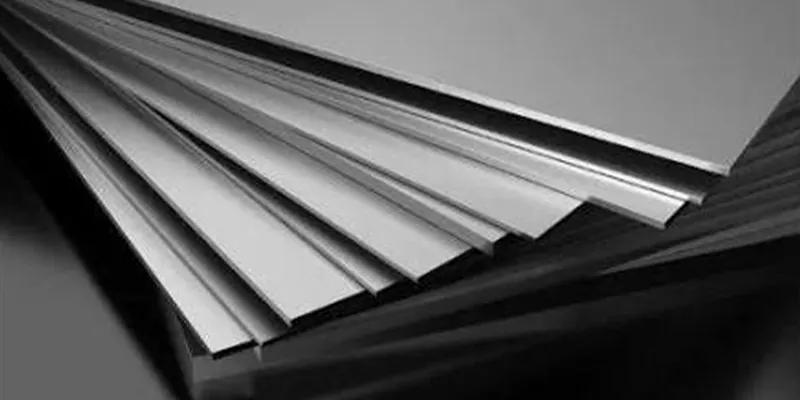
PMI practice is covered by API RP 578, ASTM E1476 and ASME Section I, Nonmandatory Appendix B [10]. Handheld XRF analyzers do not report carbon or nitrogen, which means they cannot verify the nitrogen content of nitrogen-alloyed stainless steels. Portable optical emission devices can measure elements XRF cannot [10]. The same source notes that PMI confirms nominal alloy identity but does not by itself ensure heat-number traceability [10].
Table 11. What XRF can and cannot separate from N08367
|
Grade you might receive |
Element that separates it |
XRF confidence |
|
316L |
Mo 2–3% versus 6–7%; Ni 10–14% versus 23.5–25.5% |
High |
|
904L (N08904) |
Mo 4–5% versus 6–7%; Cu 1–2% versus 0.75% maximum |
High |
|
254 SMO (S31254) |
Ni 17.5–18.5% versus 23.5–25.5% |
High |
|
25-6MO / 1925hMo (N08926) |
Ranges overlap; only copper above 0.75% (or nitrogen) separates them |
Low. Use certificate plus OES or lab analysis |
|
AL-6XN PLUS (also N08367) |
Typical Cr 21.8 versus 20.5 and Mo 6.7 versus 6.2 |
Low. Differences are close to field-instrument scatter; rely on the certificate |
Source: element ranges from IMOA [6] and ATI [1, 2]; instrument limits from Valve Magazine [10]; confidence ratings are EETA's assessment.
Three habits make PMI work. Test every alloy part on critical systems, and sample by a written plan elsewhere. Record each reading against the heat number. Decide before the order arrives what happens to a mismatch, for example hold, notify the buyer and expand testing.
What Must Change When You Weld or Repair AL-6XN?
Use a nickel-base filler with at least 9% molybdenum (ERNiCrMo-3, -4 or -10), never matching-composition or 316L filler. Keep heat input low, and clean and pickle the weld afterwards. Weld metal that is not over-alloyed can lose corrosion resistance even when the base metal is the correct grade.
The reason is segregation. As weld metal solidifies, molybdenum, chromium and nickel separate unevenly, and molybdenum-poor spots corrode first [1][5]. ATI recommends filler metals with a PREN at least ten points above the base metal. It notes that Alloy 625 filler, with about 9% molybdenum, leaves little margin for dilution, and that later studies found Alloy 22 filler to be superior [1]. The Nickel Institute review adds that autogenous welds (welds without filler) should never be made unless a full anneal and quench follows [5].
Table 12. Key welding and repair controls for AL-6XN
|
Item |
Requirement |
Why it matters |
|
Filler metal |
ERNiCrMo-3 (N06625), ERNiCrMo-4 (N10276) or ERNiCrMo-10 (N06022) for GTAW and GMAW |
Over-alloying makes up for molybdenum segregation |
|
Autogenous welds |
Avoid. If unavoidable: 3–5% nitrogen in shielding gas, anneal above 2150°F (1180°C), rapid cool, pickle |
Unfilled welds are the weak point |
|
Heat input |
Below 40 kJ/in. preferred; never above 50 kJ/in. |
Limits hot cracking and unmixed zones |
|
Interpass temperature |
Below 200°F (95°C). No preheat unless the metal is below 50°F (10°C) |
Keeps weld metal out of the sigma-phase range |
|
Cutting |
Plasma, saw, laser or shear. Never oxyacetylene or carbon-arc |
Carbon pick-up lowers corrosion resistance |
|
Post-weld heat treatment |
If used: 2025°F (1110°C) or above, then rapid cooling |
Slow cooling forms harmful secondary phases |
|
Cleaning |
Remove heat tint and the chromium-depleted layer; pickle in nitric-HF acid; no carbon-steel or other-metal wire brushes |
Heat tint and embedded iron start pitting |
|
Dissimilar welds (to carbon steel or 304) |
ERNiCrMo-3 can be used; E309Mo or E309L preferred for economy and fusion |
Better fusion and lower cost |
Source: ATI AL-6XN data book, welding, corrosion-of-welds and descaling sections [1]; Nickel Institute [5]. Qualify all procedures under the applicable code (for example ASME Section IX).
What Is a Practical Grade-Control Checklist for Maintenance Teams?
Control the grade at four points: before ordering, on the purchase order, at receiving, and during installation or repair. Each stage catches errors the earlier ones miss.

Table 13. AL-6XN grade-control checklist
|
Stage |
Action |
Mistake it prevents |
|
Before ordering |
Confirm the installed grade from drawings, nameplate or certificates; record the UNS number |
Ordering from "6Mo" shorthand |
|
Before ordering |
Check the approved-alternates list; get written approval for any sideways substitute |
Unreviewed 254 SMO or N08926 swap |
|
Purchase order |
Use the fixed elements in Table 9, including the no-substitution clause |
Silent substitution by the supplier |
|
Receiving |
Match certificate to order and heat number (Table 10) |
Wrong UNS, wrong spec, missing nitrogen |
|
Receiving |
Run and record PMI (Table 11); hold any mismatch |
Mixed-up stock reaching the line |
|
Installation and repair |
Use ERNiCrMo-3, -4 or -10 filler, low heat input, and post-weld cleaning (Table 12) |
Weld metal weaker than the pipe |
|
Term |
Meaning |
|
UNS |
Unified Numbering System. A six-character code, such as N08367, that identifies one alloy chemistry regardless of brand name. |
|
PREN |
Pitting resistance equivalent number. A score calculated from chromium, molybdenum and nitrogen that estimates pitting resistance. Higher is better, but formulas differ. |
|
Super-austenitic |
A stainless steel with so much chromium, nickel and molybdenum that it resists harsh chloride and acid conditions that attack 316L. |
|
Crevice corrosion |
Attack that starts in tight gaps, such as under gaskets, washers or deposits, where stagnant salty water collects. |
|
MTC / MTR |
Mill test certificate or report. The producer's record of chemistry, heat treatment and test results for a specific heat. |
|
PMI |
Positive material identification. A quick on-site check of alloy content, usually with a handheld XRF analyzer. |
|
Sigma phase |
A brittle, molybdenum-rich phase that can form in 6Mo steels after slow cooling or long heating at about 650–980°C and reduces corrosion resistance [1]. |
Frequently Asked Questions
Q: Is AL-6XN the same as 254 SMO?
A: No. Both are 6% molybdenum super-austenitic stainless steels, but AL-6XN is UNS N08367 with about 24% nickel, while 254 SMO is UNS S31254 with about 18% nickel [1][6]. They also carry different ASME Section IX P-numbers (45 versus 8, Group 4), so they cannot be swapped without engineering review [7][8].
Q: Is AL-6XN a nickel alloy or a stainless steel?
A: It is classed as a stainless steel under ASTM's current definition, but the "N" in its UNS number and the B-series ASTM specifications still treat it like a nickel alloy [1]. Both A-series and B-series documents are valid for the same alloy.
Q: Is AL-6XN PLUS interchangeable with AL-6XN?
A: Yes by specification. ATI states that both meet UNS N08367 and that AL-6XN PLUS can be supplied to any specification for which AL-6XN is supplied [2]. PLUS has higher chromium, molybdenum and nitrogen and a guaranteed minimum PREN of 50, but it is custom-melted to order and not stocked [1][2].
Q: Can I weld AL-6XN with 316L filler?
A: No. ATI recommends filler metals with at least 9% molybdenum, such as ERNiCrMo-3, ERNiCrMo-4 or ERNiCrMo-10, because molybdenum segregates during welding [1]. A 316L filler carries far less molybdenum than the base metal, which is the opposite of that recommendation.
Q: Can a handheld XRF analyzer confirm AL-6XN?
A: Partly. XRF reads chromium, nickel, molybdenum and copper well enough to separate AL-6XN from 316L, 904L and 254 SMO, but it cannot measure nitrogen or carbon [10]. It therefore cannot prove full N08367 compliance or reliably separate N08367 from N08926. Use the certificate and, for critical items, optical emission or laboratory analysis.
Q: What are the temperature limits of AL-6XN?
A: ATI lists approval to 800°F (427°C) under ASME Section III and Section VIII, Division 1, and describes the alloy as metallurgically stable to 950°F (510°C). Long exposure at about 1200–1800°F (650–980°C) can form sigma phase that harms corrosion resistance. In chloride service, ATI cautions about stress-corrosion cracking above about 121°C (250°F) [1].
Q: Is AL-6XN suitable for seawater?
A: It was designed for seawater. ATI reports excellent crevice-corrosion resistance in field trials, including long stagnation and chlorination [1]. Suitability still depends on temperature, chlorination, crevice design and weld quality, so confirm the details with your materials engineer.
Sources and Further Reading
[1] ATI Allegheny Ludlum, "AL-6XN Alloy (UNS N08367) Technical Data Sheet and Data Book," 2010. atimaterials.com/Products/Documents/datasheets/stainless-specialty-steel/superaustenitic/al-6xn_tds_en_V2.pdf
[2] ATI, "AL-6XN PLUS Technical Data Sheet," 2015, and product page atimaterials.com/Products/al-6xn-plus
[3] Rolled Alloys, "AL-6XN Alloy vs 254 SMO Alloy," Bulletin 117USe. content.rolledalloys.com/wp-content/uploads/2022/07/AL-6XN-V-S-254-SMO_AC_rolled-alloys.pdf
[4] Rolled Alloys, "AL-6XN Alloy vs 904L." rolledalloys.ca/wp-content/uploads/AL-6XNvs904L_AC_rolled-alloys.pdf
[5] R. M. Davison and J. D. Redmond, "Practical Guide to Using 6Mo Austenitic Stainless Steels," Nickel Institute No. 10032, reprinted from Materials Performance, December 1988. nickelinstitute.org/media/8daa61956b5c91f/10032_practicalguidetousing6moausteniticstainlesssteel.pdf
[6] International Molybdenum Association (IMOA), "Austenitic stainless steel," composition and PREN tables. imoa.info/molybdenum-uses/molybdenum-grade-stainless-steels/austenitic-stainless-steel.php
[7] ASME Boiler and Pressure Vessel Code Cases N-438 (UNS N08367) and N-439 (UNS S31254), Section III, Division 1, as filed with the U.S. NRC. nrc.gov/docs/ML1809/ML18093A346.pdf
[8] ASME Section II, Part D P-number listing (excerpt). globetechnical.blogspot.com/p/p-number_19.html
[9] ASME Section IX, Table QW/QB-422 (excerpt). groups.google.com/group/materials-welding (attachment, ASME IX 2019 base metals pages)
[10] Valve Magazine, "Have PMI Testing Limitations Changed with the Advances in Technology?" valvemagazine.com/articles/have-pmi-testing-limitations-changed-with-the-advances-in-technology/
[11] IADC Drilling Lexicon, definition of "Type 6Mo." iadclexicon.org/?p=3002
[12] ASTM specification titles for B688, B690, B691, B804 and B462, as listed at makeitfrom.com/material-properties/UNS-N08367-Stainless-Steel
[13] ASTM A182 grade table (F44, F62), as reproduced at forgedpipefittings.ferrobend.com/astm-a182/
[14] Outokumpu, "Ultra" product range (typical analyses and ASTM types). outokumpu.com/en/ultra
[15] Alloy Piping Products, "UNS Spec Sheet," 2026. alloypipingproducts.com/wp-content/uploads/2026/02/APP-UNS-Spec-Sheet.pdf