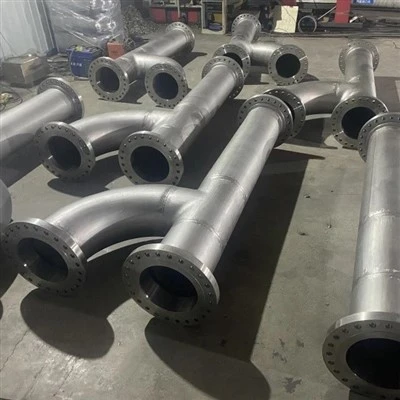
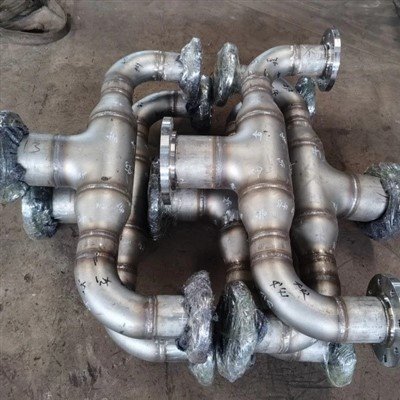
In the demanding world of high-pressure, high-corrosion environments, selecting the right material for critical forged components like flanges, fittings, and valves is non-negotiable. A182 F55, a super duplex stainless steel standardized under the ASTM A182 specification, stands out as a premier choice for the most severe conditions. This article delves deep into the essential physical, chemical, and mechanical properties that make A182 F55 an indispensable material for engineers and designers facing extreme challenges.

ASTM A182 F55 Introduction
ASTM A182 is the standard specification for forged or rolled alloy and stainless steel pipe flanges, forged fittings, and valves and parts intended for high-temperature service. Within this standard, A182 F55 designates a specific grade of super duplex stainless steel known by its Unified Numbering System (UNS) designation S32760. A182 F55 offers a remarkable combination of exceptional strength, outstanding corrosion resistance (particularly against pitting and chloride stress corrosion cracking), and good toughness, surpassing standard duplex grades like F51 (S31803) and austenitic grades like F316. Its primary applications span offshore oil and gas, chemical processing, desalination plants, flue gas desulfurization (FGD) systems, and marine engineering – environments where failure is not an option.
A182 F55 Chemical Composition
The exceptional performance of A182 F55 stems directly from its carefully balanced chemical composition. This high-alloy formulation significantly enhances its corrosion resistance and strength compared to standard duplex grades. Key elements include:
- Chromium (Cr): 24.0 - 26.0% - Forms a robust passive oxide layer, fundamental for general and localized corrosion resistance.
- Nickel (Ni): 6.0 - 8.0% - Stabilizes the austenitic phase, improves toughness, and enhances resistance to reducing acids.
- Molybdenum (Mo): 3.0 - 4.0% - Dramatically increases resistance to pitting and crevice corrosion, especially in chloride environments. A major differentiator for super duplex grades.
- Nitrogen (N): 0.20 - 0.30% - A potent strengthener and austenite stabilizer. Significantly boosts pitting resistance and yield strength.
- Tungsten (W): 0.50 - 1.00% - Further enhances resistance to pitting and crevice corrosion, acting synergistically with Molybdenum.
- Copper (Cu): 0.50 - 1.00% - Improves resistance to sulfuric acid and other reducing acids.
- Manganese (Mn): ≤ 1.00% - A deoxidizer and austenite stabilizer.
- Silicon (Si): ≤ 0.50% - A deoxidizer.
- Carbon (C): ≤ 0.030% - Kept low to minimize detrimental carbide precipitation during welding or heat treatment.
- Phosphorus (P): ≤ 0.030% - Controlled to minimize negative effects on toughness and corrosion.
- Sulfur (S): ≤ 0.010% - Kept very low to enhance hot workability and corrosion resistance.
- Iron (Fe): Balance.
This optimized a182 f55 chemical composition results in a very high Pitting Resistance Equivalent Number, calculated typically as PREN = %Cr + 3.3x(%Mo + 0.5x%W) + 16x%N. This high PREN is a key indicator of its superior performance in aggressive chloride-containing media.
A182 F55 Physical Properties
Understanding the physical characteristics of A182 F55 is crucial for design, fabrication, and service performance:
- Density: Approximately 7.8 g/cm³ (0.282 lb/in³)
- Melting Range: Typically 1420 - 1460 °C (2590 - 2660 °F).
- Thermal Expansion Coefficient (20 - 100°C): Approximately 13.0 x 10⁻⁶ /K.
- Thermal Conductivity (20°C): Around 15 W/(m·K).
- Specific Heat Capacity (20°C): Approximately 500 J/(kg·K).
- Electrical Resistivity: Approximately 0.80 µΩ·m.
- Modulus of Elasticity (Tension): Approximately 200 GPa (29 x 10⁶ psi).
These physical properties influence thermal stress during heating/cooling cycles, heat transfer efficiency, and electrical behavior in service.
A182 F55 Mechanical Properties
The mechanical properties of A182 F55 are a cornerstone of its value proposition, offering strength far exceeding standard austenitic and duplex grades:
- Tensile Strength: 750 MPa (109 ksi).
- Yield Strength: 550 MPa (80 ksi).
- Elongation: 25%.
- Reduction of Area: 45%.
- Hardness: Typically limited to 310 HB (Brinell), 32 HRC (Rockwell C), or 327 HV (Vickers).
- Impact Toughness: 45 J.
These impressive mechanical properties make A182 F55 forged components capable of handling high pressures and mechanical stresses while maintaining structural integrity.
Microstructure, Heat Treatment, and Fabrication
A182 F55 possesses a duplex microstructure, ideally comprising approximately 50% ferrite (body-centered cubic) and 50% austenite (face-centered cubic). This balanced structure is the source of its combined strength and corrosion resistance.
Achieving this optimal microstructure and dissolving harmful secondary phases (like sigma, chi) requires strict control during manufacturing:
Solution Annealing: The material is heated to a high temperature range typically 1100-1160°C to put all elements into solid solution.
Rapid Quenching: Immediately after annealing, the material is rapidly quenched, usually in water, to "freeze" the desired duplex microstructure and prevent precipitation of detrimental phases during slow cooling.
Forging, machining, welding of A182 F55 requires specialized expertise and procedures to maintain its properties. Precise control of heat input during welding and the use of suitable filler metals are critical to preserve corrosion resistance and toughness in the weld zone.
Corrosion Resistance
The a182 f55 chemical composition directly translates to exceptional corrosion resistance:
- Pitting and Crevice Corrosion: Excellent resistance in chloride environments due to high Cr, Mo, W, N. PREN >40 ensures performance beyond standard duplex and austenitic grades.
- Chloride Stress Corrosion Cracking: High resistance, making it suitable for hot chloride services where austenitic grades would fail.
- General Corrosion: Excellent resistance to a wide range of acids, including sulfuric, phosphoric, acetic, and organic acids, particularly when enhanced by the copper content.
- Erosion-Corrosion: The high strength combined with good corrosion resistance provides excellent resistance to erosion-corrosion in flowing media containing solids.
- Microbiologically Influenced Corrosion: Good resistance due to high Mo content.
Conclusion
A182 F55 (UNS S32760) super duplex stainless steel, defined by its stringent chemical composition and controlled processing, delivers an unmatched synergy of physical, chemical, and mechanical properties. Its exceptionally high strength (min. YS 550 MPa), superior corrosion resistance (PREN >40), particularly against pitting, crevice corrosion, and chloride SCC, combined with good toughness and weldability (when performed correctly), make it a material engineered for the extremes. When standard stainless steels or even standard duplex grades fall short, A182 F55 forged components provide the reliability, longevity, and safety demanded by the most critical applications in corrosive and high-stress environments. Understanding these fundamental properties is key to specifying and utilizing A182 F55 effectively, ensuring optimal performance and cost-efficiency over the asset's lifecycle.