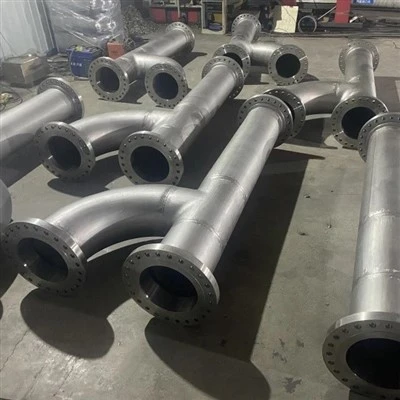
316 stainless steel pipe fittings are the backbone of countless industrial systems demanding superior corrosion resistance, strength, and longevity. The addition of molybdenum to the classic 18% chromium, 8% nickel base elevates 316 to a premier choice for aggressive environments. Understanding the diverse types of 316 stainless steel fittings is crucial for designing, maintaining, and repairing piping systems effectively in sectors like chemical processing, marine, pharmaceuticals, food and beverage, and offshore oil and gas.
Why Choose 316 Stainless Steel Fittings?
- Enhanced Corrosion Resistance: Molybdenum significantly boosts resistance to pitting and crevice corrosion, particularly against chlorides, acids, and saltwater. This makes it vastly superior to 304 in harsh conditions.
- High Temperature Strength: Maintains structural integrity and creep strength at elevated temperatures compared to carbon steel or 304.
- Excellent Formability and Weldability: Facilitates manufacturing complex fitting shapes and enables reliable joining.
- Hygienic Properties: Non-porous surface and ease of cleaning meet stringent sanitary standards especially 316L low-carbon variant.
- Aesthetic Appeal: Retains a clean, bright finish suitable for visible installations.
316 Stainless Steel Pipe Fittings Types
Fittings are primarily categorized by their connection method and their purpose within the piping system.
Connection Method Types
The way a fitting connects to the pipe dictates its installation and application:
Threaded Screwed Fittings:
- Description: Feature internal or external threads conforming to standards like NPT, BSPT, or BSPP.
- Common Types: Elbows, Tees, Couplings, Unions, Caps, Plugs, Bushings, Nipples.
- Applications: Smaller diameter pipes (typically < 4"), lower pressure systems, maintenance points, instrumentation lines, easily disassembled connections. Require thread sealant (tape or compound).
- Standards: ASME B1.20.1, ASME B16.11.
Socket Weld Fittings:
- Description: Pipe is inserted into a recessed "socket" in the fitting and fillet welded around the outer rim.
- Common Types: Elbows, Tees, Couplings, Unions, Caps, Plugs, Half-Couplings.
- Applications: Small to medium bore pipes (typically 1/8" to 4"), high-pressure syste, systems prone to vibration/fatigue. Smoother bore than threaded but requires precise pipe end prep and gap allowance.
- Standards: ASME B16.11.
Butt Weld Fittings:
- Description: The fitting and pipe have matching beveled ends that are butted together and welded fully around the circumference.
- Common Types: Elbows (90°, 45°, Long/Short Radius), Tees, Reducers, Caps, Stub Ends, Crosses.
- Applications: Larger diameter pipes, high-pressure/temperature systems, critical process lines, permanent installations. Provides the strongest, most reliable, and leak-proof connection with minimal flow restriction. Most common for industrial 316SS systems.
- Standards: ASME B16.9, ASME B16.28, MSS SP-43.
Flanged Fittings:
- Description: Feature integral forged or welded flanges that bolt to matching flanges on pipes, valves, or equipment.
- Common Types: Flanged Elbows, Flanged Tees, Flanged Reducers, Flanged Caps, Blind Flanges. Often use 316 Stainless Steel Flanges with matching 316 fittings.
- Applications: Systems requiring frequent disassembly (maintenance, inspection), connections to flanged equipment, large diameter lines. Require gaskets and bolts.
- Standards: ASME B16.5, ASME B16.47.
Specialty Connections:
- Compression Fittings: Use ferrules to seal onto the pipe OD. Common for instrumentation tubing. Not typically for high pressure/temperature.
- Push-to-Connect Fittings: Allow quick assembly/disassembly without tools. Used in specific low-pressure pneumatic or fluid applications. Material compatibility is critical.

Purpose Types
This classification defines what the fitting does in the system:
Elbows:
Function: Change the direction of flow.
Types: 90° Elbow, 45° Elbow, 180° Return. Butt weld elbows come in Long Radius and Short Radius. Threaded/SW elbows are typically SR.
Tees:
Function: Combine or split flow.
Types: Straight Tee, Reducing Tee, Barred Tee.
Reducers:
Function: Connect pipes of different diameters.
Types: Concentric Reducer: Centerlines aligned. Creates a symmetrical transition. Eccentric Reducer: One edge straight/flat. Used to maintain pipe rack elevation or eliminate air pockets.
Couplings:
Function: Connect two straight pipes of the same diameter.
Types: Full Coupling, Half Coupling.
Unions:
Function: Provide a demountable connection point for easy disassembly without rotating pipes. Consist of three parts: nut, female end, male end.
Applications: Essential for maintenance around valves, instruments, or equipment.
Caps:
Function: Seal the end of a pipe.
Crosses:
Function: Provide four-way flow connection. Less common than tees due to higher stress concentration. Primarily butt weld type.
Stub Ends (Lap Joint Stubs):
Function: Used with Lap Joint Flanges to create a flanged connection that allows easy alignment and rotation during assembly. The stub end is butt welded to the pipe, the loose flange slides over it.

Conclusion
The extensive range of 316 stainless steel pipe fittings types – from threaded elbows and socket weld tees to butt weld reducers and specialized olets – provides the flexibility and robustness needed to construct complex, reliable, and corrosion-resistant piping systems. By leveraging the superior properties of 316 stainless steel and choosing fittings engineered to exacting standards, engineers and designers can ensure system integrity, safety, and long-term performance in the most demanding industrial settings. Always prioritize quality materials and certified suppliers when sourcing these critical components.