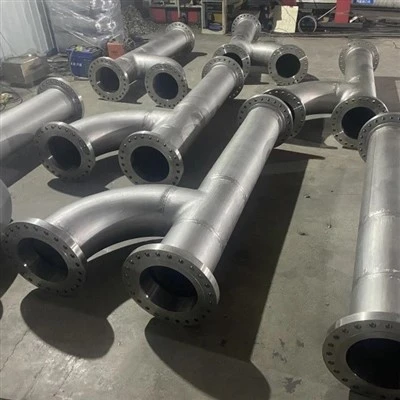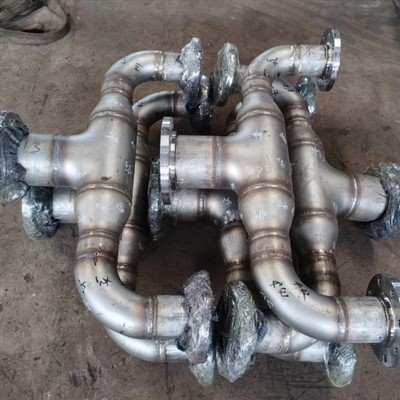
The key decision is the complete exposure envelope, not the normal operating concentration alone. A 904L component should be qualified for steady operation, start-up, rinsing, and any wet hold between cycles.
904L is a credible candidate for many sulfuric-acid duties, but "diluted acid" is not a material specification. Acid identity, temperature, chlorides, oxygen, surface condition, and geometry all affect the selection. Manufacturer corrosion data explicitly distinguish aerated from deaerated solutions and warn that laboratory results do not guarantee field performance.
What is 904L, and why is it considered for diluted acid service?
904L is a high-alloy austenitic stainless steel developed for sulfuric-acid service; it generally offers greater corrosion resistance than 316L, but it is not universally acid-proof.
904L is identified as UNS N08904 and EN 1.4539. Alleima's seamless-tube grade lists nominal contents of 20% chromium, 25% nickel, 4.5% molybdenum, and 1.5% copper, with carbon limited to 0.020%. These are producer nominal values, not a substitute for the composition limits in the applicable procurement standard.
Molybdenum and copper help explain its sulfuric-acid performance. Its resistance to pitting and crevice corrosion also exceeds that of conventional 316L in the manufacturer's comparisons. However, improved resistance is a margin, not immunity: the same datasheet recommends avoiding crevices in chloride-bearing solutions.
Why must start-up and rinse conditions be reviewed separately?
Start-up and rinsing can expose the metal to a different combination of acid concentration, temperature, contamination, and flow than the approved production condition.
The following matrix is an engineering review framework, not a prediction that every transient is more corrosive. A cold, clean, well-drained rinse may be less demanding than production. The concern is an unqualified exposure, not rinsing itself.
|
Exposure stage |
What to establish |
Why a separate review helps |
|
Steady production |
Actual acid composition, wall temperature, impurities, and flow |
Provides the reference condition for material selection. |
|
Start-up / first fill |
Residual water, dosing sequence, mixing, initial wall temperature, oxygen state |
Identifies intermediate compositions and locally different conditions. |
|
First rinse |
Retained acid, incoming water chemistry, contact time, temperature history |
Checks the acid–water transition instead of assuming the outlet represents every surface. |
|
Final rinse / wet hold |
Remaining salts, drainage, crevices, hold duration |
Checks whether retained liquid creates a separate exposure before restart. |
Alleima supplies separate sulfuric-acid isocorrosion diagrams for deaerated and naturally aerated conditions. Its acid–chloride tables mainly concern nearly air-saturated solutions and clean, annealed specimens. A nitrogen-blanketed start-up, a welded assembly, or a trapped pocket therefore needs an applicability check rather than automatic acceptance of a chart value.
Does diluting sulfuric acid always reduce the corrosion risk?
No. Lower sulfuric-acid concentration does not guarantee a lower corrosion rate; concentration must be evaluated together with temperature and impurities.
Published acid–chloride data show why a single "maximum acid percentage" is misleading. At 200 ppm chloride and 80°C, Alleima classifies its 904L grade below 0.1 mm/year in 1 wt% sulfuric acid, but above 1.0 mm/year in 5 wt% sulfuric acid. At 10 wt% acid and the same chloride level, the classification changes from below 0.1 mm/year at 70°C to above 1.0 mm/year at 80°C.
|
H₂SO₄, wt% |
Chloride, ppm |
Temperature |
904L general-corrosion category |
|
1 |
200 |
80°C |
<0.1 mm/year |
|
5 |
200 |
80°C |
>1.0 mm/year |
|
10 |
200 |
70°C |
<0.1 mm/year |
|
10 |
200 |
80°C |
>1.0 mm/year |
Source: Alleima's sulfuric acid + chlorides table. These are reported categories, not exact rates. They describe laboratory exposures under the source's stated conditions; they are not universal operating limits, transient measurements, or proof against localized corrosion.
For design review, trace the actual concentration–temperature path through each transition. Determine the mixing-zone and metal temperatures through the process heat balance and appropriate measurements; do not simply assign the final bulk temperature to the entire dilution step. This is a proposed engineering check, not a temperature rise calculated for a particular plant.
How do sulfuric, hydrochloric, and phosphoric acid streams differ?
904L's sulfuric-acid reputation cannot be transferred unchanged to hydrochloric acid, contaminated phosphoric acid, or mixed-acid cleaning solutions.
|
Acid environment |
What the evidence supports |
Selection implication |
|
Sulfuric acid |
904L was developed for this acid; aeration and concentration–temperature conditions matter. |
Use matching sulfuric-acid data, including relevant impurities. |
|
Hydrochloric acid |
904L is more resistant than 316L, but the producer describes use in process solutions containing small amounts of HCl and warns about pitting. |
Do not approve an HCl cleaning cycle from sulfuric-acid data. |
|
Wet-process phosphoric acid |
Chlorides and free fluorides can strongly affect corrosivity. |
Specify impurity chemistry, not only the phosphoric-acid percentage. |
|
Nitric acid |
The producer reports lower resistance than commonly used 304L and 310L types because of molybdenum. |
A higher-alloy grade is not automatically the better choice. |
These distinctions come from the same 904L manufacturer datasheet. They show why acid identity and contamination belong in the purchase enquiry and operating specification.
Why can rinse-water chlorides and crevices matter even when acidity falls?
A low-acid rinse still needs a localized-corrosion review if it contains chlorides or remains trapped in crevices.
General corrosion means relatively broad metal loss. Pitting is concentrated attack at small sites; crevice corrosion occurs in shielded gaps, such as beneath gaskets. A low average mass-loss rate does not by itself establish that these localized forms of attack are absent. Alleima separately identifies localized-corrosion risks in its tables and recommends minimizing crevices in chloride-bearing service.
904L has better crevice-corrosion resistance than 316L, but the manufacturer's favorable test results in neutral salt solution cannot be treated as an acidic-rinse qualification. Likewise, its reported critical pitting temperature in a specified neutral test is not a universal safe temperature for acid service.
A practical review should therefore include incoming rinse-water chloride, retained-liquid chemistry, gasket interfaces, low points, and dead legs. Set rinse acceptance criteria from the actual process and materials assessment. Neither a universal chloride limit nor a fixed rinse time can be justified from the available data alone.
How does 904L compare with 316L, duplex stainless steel, and nickel alloys?
Compare alloys at the same chemical and thermal conditions; there is no universal corrosion-resistance ranking.
316L is a useful baseline, while 904L provides a documented improvement in several acid and chloride environments. Duplex and higher-alloy stainless steels may offer alternatives, but their performance must be checked against the actual acid duty rather than inferred from strength or a grade label.
For example, at 5 wt% sulfuric acid, 200 ppm chloride, and 80°C, Alleima reports category 2 (>1.0 mm/year) for 904L but category 0 (<0.1 mm/year) for SAF 2507. Yet at 40 wt% acid, 200 ppm chloride, and 25°C, 904L is category 1 (0.1–1.0 mm/year) while SAF 2507 is category 2. The comparison reverses with the environment; neither example is a blanket approval.
For more demanding acid or mixed-halide exposures, a nickel–chromium–molybdenum alloy such as C-276 is a candidate for evaluation. Haynes documents strong acid and localized-corrosion resistance and substantial advantages over stainless steels in hydrochloric acid above about 5%. This does not make C-276 universally suitable: use its own concentration–temperature data and verify the actual process mixture.
The commercial decision should compare the installed and lifetime consequences of each qualified option: material cost, fabrication, inspection access, production interruptions, and leak consequences. A local alloy upgrade may deserve evaluation, but transitions and welds must be included in that assessment.
What should a defensible start-up and rinse qualification include?
A defensible qualification records each exposure stage and tests the conditions that published data do not adequately represent.
The following is a proposed qualification workflow. It translates the manufacturers' applicability limitations into practical review tasks; it is not a claim that a specific test program has already been completed.
1. Define chemistry by stage. Record acid identity and concentration basis, chlorides, fluorides where relevant, other contaminants, and expected oxygen or redox conditions.
2. Define the time–temperature path. Include normal conditions, credible upset temperatures, mixing zones, retained hot metal, rinse duration, wet holds, and expected cycle count.
3. Define the actual assembly. Include product form, weld and filler, surface finish, cleaning condition, gasket gaps, drainage, and stagnant sections.
4. Match evidence before extrapolating. Use producer data for the closest chemistry, temperature, aeration, and surface condition. Treat missing table entries as missing evidence, not zero corrosion.
5. Test unresolved exposures. Consider representative process liquid, welded specimens, crevice specimens, and repeated start-up/rinse cycles. Assess both mass loss and localized attack, including maximum penetration.
6. Set acceptance and operating controls. Agree allowable general loss, localized-corrosion criteria, contamination limits, inspection points, and the response when the validated envelope is exceeded.
Supplier guidance expressly limits confirmation of suitability to known actual service conditions. Laboratory acid–chloride data likewise carry a field-applicability disclaimer. An operating envelope supported by representative testing is therefore stronger evidence than a generic "904L is acid resistant" statement.
Can short rinse cycles be accepted from an annual corrosion rate alone?
No. An annualized rate can help estimate uniform wall loss, but it cannot independently qualify a cyclic exposure or rule out pitting.
A time-weighted uniform-loss estimate assumes that the selected rates represent the real exposure and remain applicable during the relevant intervals. Start-up transitions may not meet those assumptions. A short event repeated many times also needs cumulative exposure review. For localized attack, examine initiation and maximum penetration rather than relying on average loss alone; the source tables distinguish general-loss categories from localized-corrosion warnings.
What should buyers request before ordering 904L acid-service components?
Request a service-specific technical review that covers production, start-up, rinsing, and wet holds before fixing the alloy and fabrication requirements.
Provide the supplier with the stage-by-stage chemistry, temperature history, exposure frequency, drawings, and inspection requirements. Ask the supplier to identify supporting corrosion data, applicability limits, proposed welding and surface-condition controls, and any additional testing needed. Specify the applicable product standard and certification requirements separately from the alloy name.
904L should be selected because the complete exposure is supported-not because the normal stream is described as dilute. Where the first rinse or start-up falls outside the evidence, either validate and control that condition or evaluate another material. The manufacturer's own guidance requires actual service conditions for confirmation of suitability.