In the realm of corrosion-resistant austenitic stainless steels, the "L" grades signify a crucial enhancement: controlled low carbon content to minimize sensitization and intergranular corrosion during welding or high-temperature exposure.
316L is the foundational low-carbon variant of the workhorse 316 alloy, renowned for its excellent general corrosion resistance, particularly against chlorides, and good fabricability.
316LN builds directly upon this foundation, adding precisely controlled nitrogen (N) to the 316L composition. This intentional nitrogen addition imparts significant enhancements in key mechanical properties without sacrificing the core corrosion resistance or weldability that defines the 316 family.
This article delves into the definitions, compositions, mechanical properties, thermal behaviors, and practical distinctions between 316LN and 316L to guide your material selection process.

What is 316LN?
316LN is a nitrogen-enhanced, low-carbon austenitic stainless steel. It is fundamentally a modification of Type 316L, where controlled additions of nitrogen are made. The "N" in its designation explicitly denotes this nitrogen content.
The primary purpose of adding nitrogen is to increase the alloy's strength, particularly its yield strength, without compromising its inherent austenitic structure, corrosion resistance, or weldability. Nitrogen is a potent solid-solution strengthener in austenitic stainless steels. It dissolves interstitially in the iron-chromium-nickel matrix, creating lattice strains that significantly impede dislocation movement, thereby increasing strength and hardness.
Crucially, this strengthening occurs without the need for heat treatment and maintains the excellent toughness and ductility characteristic of austenitic grades. 316LN is standardized under specifications such as ASTM A240, ASTM A276/A479, ASTM A312/A358, and EN 1.4406.
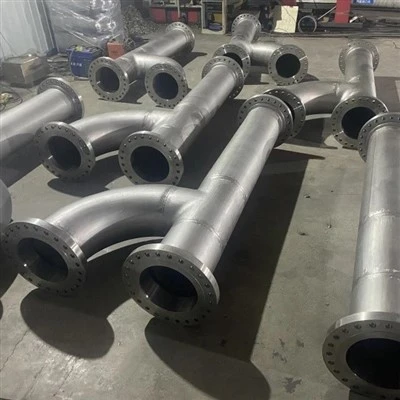
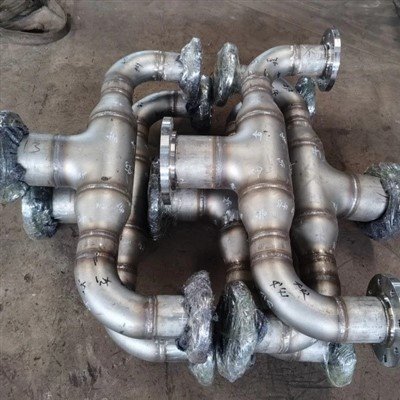
It finds critical applications in pressure vessels, structural components for chemical processing and marine environments, nuclear applications, heat exchangers, and components requiring higher strength than standard 316L can provide, especially at ambient and moderately elevated temperatures.
What is 316L?
316L is the low-carbon version of the widely used Type 316 austenitic stainless steel. The "L" stands for "Low Carbon," with its carbon content typically capped at a maximum of 0.030%. This deliberate reduction in carbon content is its defining characteristic compared to standard 316.
The primary benefit of low carbon is dramatically improved resistance to sensitization. Sensitization occurs when chromium carbides precipitate at grain boundaries during exposure to temperatures in the range of approximately 425°C to 850°C, such as during welding or high-temperature service. This precipitation depletes the chromium adjacent to the grain boundaries, making those areas susceptible to intergranular corrosion (IGC) or intergranular attack (IGA) in certain corrosive environments.
By minimizing carbon, 316L significantly reduces the formation of these detrimental carbides, preserving its corrosion resistance in the heat-affected zones (HAZ) of welds and during high-temperature exposure. It retains the excellent general corrosion resistance of Type 316, particularly against pitting and crevice corrosion in chloride-bearing environments due to its molybdenum content (2-3%).
316L is specified in standards like ASTM A240, A276/A479, A312/A358, and EN 1.4404 (formerly 1.4435). It is the go-to choice for welded fabrications, chemical processing equipment, pharmaceutical and food processing equipment, marine components, and architectural applications where welding is involved and corrosion resistance is paramount.
316LN vs. 316L: Composition Comparison
The core similarity between 316LN and 316L lies in their base composition: both are iron (Fe) based alloys centered around significant chromium (Cr: ~16-18%) for passive film formation and oxidation resistance, nickel (Ni: ~10-14%) to stabilize the austenitic structure, and molybdenum (Mo: ~2-3%) to enhance resistance to pitting and crevice corrosion, particularly in chlorides.
Crucially, both feature the essential low carbon content (C: ≤ 0.030% max) to combat sensitization. The defining compositional difference is the intentional nitrogen (N) addition in 316LN:
Nitrogen (N): This is the key discriminator. 316L typically has a nitrogen content in the range of 0.00% to 0.10%, often considered a residual element. In contrast, 316LN is specified with a deliberate nitrogen addition, typically ranging from 0.10% to 0.16% minimum, often capped around 0.22% max depending on the specific standard. This controlled nitrogen level is critical for achieving the desired mechanical property enhancements.
Manganese (Mn): Standards for 316LN often allow a slightly higher maximum manganese content compared to standard 316L specs. Manganese helps retain nitrogen in solution during melting and processing.
Other Elements: Levels of silicon (Si), phosphorus (P), sulfur (S), and other residual elements are generally very similar and tightly controlled in both alloys according to their respective specifications. Chromium and Nickel ranges are typically identical. Molybdenum ranges are also identical.
316LN vs. 316L: Mechanical Properties
The most significant practical difference between 316LN and 316L lies in their room temperature and elevated temperature mechanical strength, directly attributable to the nitrogen content:
Yield Strength: This is where 316LN shines. The solid-solution strengthening effect of nitrogen significantly boosts the 0.2% offset yield strength. Typical minimum yield strength for annealed 316L is around 170 MPa (25 ksi). For annealed 316LN, this jumps to approximately 240 MPa (35 ksi) or higher, representing a 40-50% increase.
Tensile Strength: Nitrogen also increases the ultimate tensile strength, though the proportional gain is less dramatic than for yield strength. Typical minimum UTS for 316L is 485 MPa (70 ksi), while 316LN achieves approximately 550 MPa (80 ksi) minimum – an increase of around 13-15%.
Ductility and Toughness: Remarkably, the significant increase in strength from nitrogen addition comes with minimal sacrifice in ductility or toughness. Both alloys exhibit excellent elongation and impact toughness at room temperature. The austenitic structure ensures good ductility down to cryogenic temperatures, with 316LN maintaining this characteristic.
Hardness: Nitrogen increases the hardness of 316LN compared to 316L in the annealed condition. Typical Brinell hardness (HBW) for 316L is around 160 max, while 316LN might be closer to 190 HBW.
Fatigue Strength: The increased yield strength of 316LN generally translates to improved fatigue strength compared to 316L, particularly under high-cycle fatigue conditions.
Work Hardening: Both alloys work harden readily during cold forming. The higher initial strength of 316LN means it reaches higher strength levels faster during cold working.
316LN vs. 316L: Thermal Properties
While nitrogen's primary influence is on mechanical strength, it also subtly affects some thermal behaviors:
Sensitization Resistance: Both alloys benefit equally from the low carbon content, providing excellent resistance to sensitization and subsequent intergranular corrosion during welding or exposure to the carbide precipitation temperature range. Nitrogen itself does not form detrimental carbides and does not negatively impact this crucial property.
High-Temperature Strength: 316LN maintains its significant strength advantage over 316L at moderately elevated temperatures. Its higher yield strength translates directly to better creep resistance and stress rupture strength in this range compared to 316L. Beyond this range, the advantage diminishes as thermal effects dominate.
Thermal Expansion: The coefficients of thermal expansion (CTE) for both alloys are virtually identical and typical for austenitic stainless steels.
Thermal Conductivity: Thermal conductivity values for both alloys are very similar and relatively low compared to carbon steels.
Melting Range: The melting ranges of both alloys are essentially identical, typically around 1370-1400°C.
Summary
Choosing between 316LN and 316L hinges on understanding their core similarity and key differentiating factor. Both alloys offer excellent general corrosion resistance, particularly against chlorides due to molybdenum, and outstanding resistance to sensitization and intergranular attack due to their controlled low carbon content. They share good fabricability, weldability, and cryogenic toughness.
The decisive advantage of 316LN is its significantly higher mechanical strength, especially yield strength, imparted by its controlled nitrogen addition. This strength advantage persists at moderately elevated temperatures, offering better resistance to creep and stress rupture.