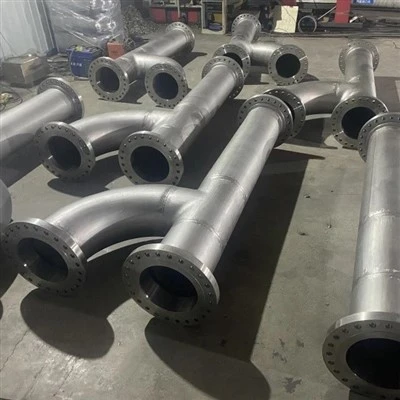
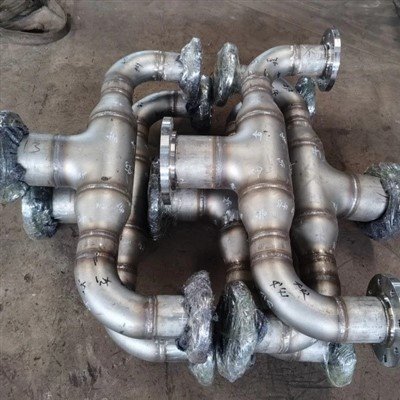
Choose 17-4PH when you need very high strength and hardness (yield up to 1,170 MPa, ~40 HRC) and can accept moderate corrosion resistance; choose 316L when corrosion resistance in chlorides/acids matters more than ultimate strength (yield ~170-310 MPa) and you want the easiest fabrication and welding.

In one sentence: 17-4PH is a heat-treatable, martensitic precipitation-hardening steel built for strength; 316L is an austenitic stainless built for corrosion resistance and formability. They solve different problems.
Key Takeaways
- 17-4PH (UNS S17400) reaches yield strengths of 1,000-1,200 MPa after aging; 316L (UNS S31603) reaches only ~170-310 MPa.
- 316L has better corrosion resistance: PREN 24-26 vs 17-4PH PREN ~17-18. 316L resists chlorides and acids far better.
- 17-4PH is hardened by a simple precipitation-hardening heat treatment (aging at 480-620 deg C); 316L is non-hardenable by heat treatment.
- 316L is far easier to weld and form; 17-4PH needs careful welding practice and often post-weld re-aging.
- Cost: 17-4PH typically runs 1.5-2.5x the price of 316L per kg, but lets you use less material through higher strength.
- Temperature ceiling: 316L serves up to ~870 deg C; 17-4PH should stay below ~300-400 deg C to keep its hardness.
What Are 17-4PH and 316L?
17-4PH is a martensitic precipitation-hardening stainless steel; 316L is an austenitic stainless steel. The difference in crystal structure decides everything else - strength, hardness, corrosion, and weldability.
17-4PH (UNS S17400)
17-4PH gets its name from its chemistry: roughly 17% chromium and 4% nickel (the "17-4"), plus about 3-5% copper and a small niobium addition. In its annealed (soft) state it is martensitic. After a low-temperature "aging" heat treatment, tiny copper-rich particles precipitate inside the steel and lock the structure, raising strength and hardness dramatically - like setting concrete with rebar inside.
316L (UNS S31603)
316L is the low-carbon version of the classic 316 austenitic stainless. It contains about 16-18% chromium, 10-14% nickel, and 2-3% molybdenum, with carbon kept very low (0.03% max - the "L"). Its crystal structure is austenite, which is soft, ductile, and stays stable at room temperature without heat treatment. Molybdenum is the key addition that gives 316L its superior resistance to chlorides and acids.
|
Property |
17-4PH (S17400) |
316L (S31603) |
|
Family |
Precipitation-hardening martensitic |
Austenitic |
|
Cr |
15-17.5% |
16-18% |
|
Ni |
3-5% |
10-14% |
|
Mo |
- |
2-3% |
|
Cu |
3-5% |
- |
|
C (max) |
0.07% |
0.03% |
|
Hardenable by heat treatment? |
Yes (aging) |
No |
|
Magnetic? |
Yes (martensitic) |
No (austenitic) |
Which Alloy Is Stronger - 17-4PH or 316L?
17-4PH is roughly 3 to 6 times stronger than 316L in yield strength, and reaches hardness up to ~40 HRC versus 316L at about 80 HRB (much softer).
Strength is where the two alloys are furthest apart. After the standard H900 aging treatment, 17-4PH delivers:
- Yield strength: ~1,170 MPa (170 ksi)
- Tensile strength: ~1,310 MPa (190 ksi)
- Hardness: ~38-42 HRC
316L, in its delivered (annealed) condition, delivers:
- Yield strength: ~170-310 MPa (25-45 ksi)
- Tensile strength: ~485-620 MPa (70-90 ksi)
- Hardness: ~70-90 HRB
For a shaft, fastener, or structural part that must survive high mechanical loads in a non-severely-corrosive environment, 17-4PH lets engineers use a smaller cross-section and still carry the load - saving weight and sometimes total cost.
|
Mechanical property |
17-4PH (H900) |
316L (annealed) |
|
Yield strength |
~1,170 MPa |
~170-310 MPa |
|
Tensile strength |
~1,310 MPa |
~485-620 MPa |
|
Hardness |
~40 HRC |
~80 HRB |
|
Elongation |
~10-15% |
~40-50% |
|
Relative strength |
3-6x of 316L |
Baseline |
How Does Corrosion Resistance Compare Between 17-4PH and 316L?

316L is clearly superior in corrosion resistance. Its PREN (pitting resistance equivalent number) is about 24-26, while 17-4PH is only about 17-18 - meaning 316L resists chloride pitting roughly 50% better.
PREN = %Cr + 3.3x%Mo + 16x%N. The molybdenum in 316L (2-3%) is the decisive factor; 17-4PH has essentially no molybdenum. Practical consequences:
Seawater and chlorides: 316L resists pitting and crevice corrosion far better; 17-4PH is prone to pitting in chloride environments and is not recommended for continuous seawater duty.
Acids: 316L handles dilute sulfuric, acetic, and phosphoric acids at moderate temperatures; 17-4PH is limited to mild atmospheres and fresh water.
Stress corrosion cracking (SCC): 17-4PH (martensitic, higher strength) is more sensitive to chloride SCC than 316L; 316L still needs care above ~60 deg C in chlorides but is generally safer.
General atmosphere: 17-4PH is fine for mild industrial and urban atmospheres - comparable to 410/420 martensitic grades but not to 316L.
|
Corrosion aspect |
17-4PH |
316L |
|
PREN |
~17-18 |
~24-26 |
|
Chloride pitting |
Poor |
Good |
|
Seawater |
Not recommended |
Acceptable (with limits) |
|
Dilute acids |
Limited |
Good |
|
SCC sensitivity |
Higher |
Lower |
What About Weldability and Fabrication?
316L is one of the easiest stainless steels to weld and form; 17-4PH is weldable but requires controlled procedures, matching filler, and usually a post-weld re-aging heat treatment to restore full strength.
316L fabrication
Welds with AWS ER316L filler; no pre-heat or post-weld heat treatment needed in most cases.
Excellent cold forming, bending, and deep drawing; low carbon prevents sensitization (carbide precipitation) in the heat-affected zone.
17-4PH fabrication
Weldable with matching 17-4PH (ER630) filler or overalloyed fillers; the weld heat-affected zone softens (over-aged).
A post-weld precipitation-hardening (aging) treatment is normally required to bring the joint back to full strength.
Machining: 17-4PH machines well in the annealed condition, better than in the aged (hard) condition - machine soft, then age.
Forming: limited cold formability because martensite is stiff; most shaping is done before aging.
How Do Heat Treatment and Hardness Work in 17-4PH?
17-4PH is supplied soft (annealed at ~1,040 deg C), then "aged" at 480-620 deg C for a few hours; the copper precipitates harden it. Different aging temperatures give different strength/hardness/ductility balances (H900, H1025, H1150, etc.).
The letter-number designation tells you the aging temperature in deg F:
|
Condition |
Aging temp |
Yield (approx) |
Hardness (approx) |
Use when |
|
H900 |
480 deg C / 900 deg F |
~1,170 MPa |
~40 HRC |
Maximum strength |
|
H1025 |
550 deg C / 1025 deg F |
~1,000 MPa |
~35 HRC |
Strength + toughness |
|
H1150 |
620 deg C / 1150 deg F |
~725 MPa |
~28 HRC |
Maximum ductility / SCC resistance |
316L, by contrast, cannot be hardened by heat treatment - its strength comes only from cold working (e.g., 316L can be supplied in work-hardened tempers such as 1/4H, 1/2H, but the base alloy itself is not heat-treatable).
What Are the Temperature Limits?
316L is the high-temperature choice (service up to ~870 deg C); 17-4PH must stay below roughly 300-400 deg C continuous because higher temperatures over-soften (over-age) the precipitation-hardened structure.
|
Aspect |
17-4PH |
316L |
|
Max continuous service |
~300-400 deg C |
~870 deg C |
|
Reason |
Over-aging softens structure |
Austenite stable, good oxidation resistance |
|
Low-temp use |
Down to -50 deg C (impact-tested) |
Cryogenic down to -196 deg C |
How Do Costs Compare - 17-4PH vs 316L?
17-4PH costs about 1.5 to 2.5 times more than 316L per kilogram, but its much higher strength can reduce the total material needed - so the part-level cost gap is often smaller than the per-kg gap suggests.
|
Cost factor |
17-4PH |
316L |
|
Material price (per kg) |
~1.5-2.5x of 316L |
Baseline (1.0x) |
|
Processing cost |
Higher (heat treat, machining) |
Lower (easy form/weld) |
|
Design benefit |
Use less material (high strength) |
Larger sections needed |
When Should You Choose 17-4PH vs 316L?
Pick 17-4PH for high-strength, wear-resistant, lightly-corrosive-duty parts (shafts, valves, fasteners, aerospace). Pick 316L for corrosive environments - chemical, marine, food, pharma, medical - where strength needs are modest.
|
If your need is... |
Choose |
|
Maximum strength / hardness |
17-4PH |
|
Wear resistance, shafts, gears |
17-4PH |
|
Seawater, chlorides, acids |
316L |
|
Easy welding / forming |
316L |
|
High-temperature service (>400 deg C) |
316L |
|
Food, pharma, medical |
316L |
|
Cryogenic service |
316L |
|
High strength + mild corrosion |
17-4PH |
Frequently Asked Questions
Q: Is 17-4PH stainless steel?
A: Yes. It is a martensitic precipitation-hardening stainless steel (UNS S17400) with about 15-17.5% chromium, so it meets the minimum chromium content (10.5%) definition of stainless.
Q: Can 17-4PH replace 316L?
A: Only when corrosion conditions are mild. 17-4PH is much stronger but far less resistant to chlorides and acids, so it cannot replace 316L in marine or chemical service.
Q: Is 316L stronger than 17-4PH?
A: No. 17-4PH is 3-6x stronger in yield strength. 316L wins on corrosion resistance and fabricability, not strength.
Q: Do you need to heat treat 316L?
A: No. 316L is used in the annealed condition and cannot be hardened by heat treatment; only cold working increases its strength.
Q: Which is better for seawater?
A: 316L is the better choice for seawater; 17-4PH lacks sufficient chloride pitting resistance and is not recommended for continuous seawater exposure.
Q: What does "PH" mean in 17-4PH?
A: "PH" stands for Precipitation Hardening - the steel gains strength from tiny precipitated particles formed during a low-temperature aging heat treatment.
Conclusion
17-4PH and 316L answer two different engineering questions. 17-4PH (UNS S17400) is the answer when strength and hardness dominate - it delivers yield strengths above 1,000 MPa through a simple aging treatment, at the cost of moderate corrosion resistance. 316L (UNS S31603) is the answer when corrosion resistance, weldability, and formability dominate - it resists chlorides and acids far better and is trivial to fabricate, at the cost of low strength.