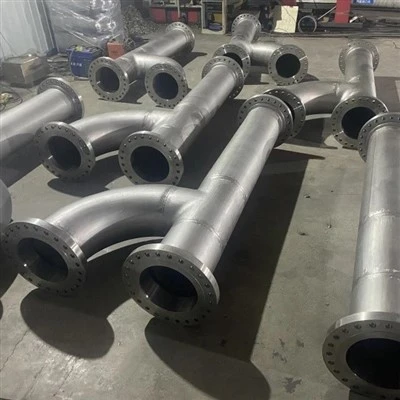
Choose Duplex 2205 (UNS S31803/S32205) for cost-effective strength and good chloride resistance up to about 60 deg C; choose Super Duplex 2507 (UNS S32750) when you need much higher pitting resistance (PREN ~40+), higher strength, and service in aggressive chlorides, seawater, or sour gas up to about 80-90 deg C.

In one sentence: 2507 is a "boosted" version of 2205 - more chromium, molybdenum, and nitrogen - giving roughly 50% higher PREN and ~25% higher strength, at a higher material cost.
Key Takeaways
- PREN: 2205 is about 34-36; 2507 is about 40-43 (roughly 20-25% more pitting resistant).
- Yield strength: 2205 ~450 MPa (min 450); 2507 ~550 MPa (min 550) - 2507 is about 20-25% stronger.
- 2507 tolerates higher chloride levels and warmer seawater; 2205 is limited to lower chloride concentration and temperature.
- Both are duplex (mixed austenite + ferrite); both offer roughly twice the strength of 316L at lower cost per unit strength.
- Cost: 2507 runs about 1.3-1.8x the price of 2205 per kg, but often enables thinner walls and longer life in harsh service.
- Weldability: both use matching fillers (ER2209 for 2205, ER2594 for 2507) and require controlled heat input and no post-weld heat treatment.
What Are Duplex 2205 and Super Duplex 2507?
Both are duplex stainless steels - a roughly 50/50 mix of austenite and ferrite - which gives them the strength of ferritic grades and the corrosion resistance of austenitic grades. 2507 is the "super duplex" grade with higher alloy content.
Duplex 2205 (UNS S31803 / S32205)
2205 is the workhorse duplex grade. It contains about 22% chromium, 5% nickel, 3% molybdenum, and ~0.15-0.20% nitrogen. The nitrogen is critical - it stabilizes the austenite phase and boosts strength and pitting resistance. S32205 is the "improved" version of S31803 with tighter chemistry control.
Super Duplex 2507 (UNS S32750)
2507 pushes the chemistry higher: about 25% chromium, 7% nickel, 4% molybdenum, and ~0.27% nitrogen. This higher alloy content is what earns it the "super duplex" name and lifts its PREN above 40. A related grade, S32760 (Zeron 100), adds tungsten for even more strength.
|
Element |
2205 (S31803/S32205) |
2507 (S32750) |
|
Chromium |
21-23% |
24-26% |
|
Nickel |
4.5-6.5% |
6-8% |
|
Molybdenum |
2.5-3.5% |
3.0-5.0% |
|
Nitrogen |
0.08-0.20% |
0.24-0.32% |
|
PREN (approx) |
34-36 |
40-43 |
|
Structure |
Duplex (austenite+ferrite) |
Super duplex (austenite+ferrite) |
Which Has Better Pitting Resistance - 2205 or 2507?
2507 has clearly better pitting resistance. Its PREN is about 40-43 versus 2205 at 34-36 - roughly 20-25% higher - so it resists chloride pitting in harsher, warmer, and more concentrated environments.
PREN = %Cr + 3.3x%Mo + 16x%N. Because 2507 has more Cr, Mo, and N, its PREN sits well above the 40 threshold that defines "super duplex." Practical meaning:
Critical Pitting Temperature (CPT): 2205 ~35-40 deg C in 6% FeCl3; 2507 ~55-70 deg C - 2507 survives much warmer chloride solutions.
Seawater: 2205 is accepted for many seawater duties below ~40 deg C; 2507 is preferred for warm seawater, splash zones, and high-velocity seawater.
Acids: 2507 handles dilute sulfuric and phosphoric acids better than 2205 due to higher Mo.
|
Corrosion metric |
2205 |
2507 |
|
PREN |
34-36 |
40-43 |
|
CPT (approx) |
~35-40 deg C |
~55-70 deg C |
|
Seawater suitability |
Good (moderate T) |
Excellent (warm/high Cl) |
|
Sour gas (H2S/CO2) |
Limited |
Good (NACE MR0175 listed) |
Which Is Stronger - 2205 or 2507?
2507 is about 20-25% stronger in yield strength than 2205, and both are roughly twice as strong as 316L austenitic stainless.
Minimum mechanical properties (annealed):
- 2205: yield ~450 MPa (min), tensile ~620-800 MPa, hardness ~290 HB.
- 2507: yield ~550 MPa (min), tensile ~795-965 MPa, hardness ~310 HB.
The extra nitrogen and alloying in 2507 raise its strength. For pressure vessels and piping, this lets designers use thinner walls - often offsetting the higher material price.
|
Property |
2205 |
2507 |
|
Yield strength (min) |
450 MPa |
550 MPa |
|
Tensile strength |
620-800 MPa |
795-965 MPa |
|
Hardness |
~290 HB |
~310 HB |
|
Relative to 316L |
~2x stronger |
~2.3x stronger |
What Are the Temperature and Corrosion Service Limits?
Keep both duplex grades between about -50 deg C and 250-300 deg C. Below -50 deg C the toughness drops; above ~300 deg C unwanted phases (sigma, chi) form and embrittle the steel. 2507 tolerates more aggressive chlorides and higher temperatures within that window.

Low temperature: both usable to about -50 deg C (charpy impact tested); do not use for LNG cryogenic duty (-162 deg C) - use 304L/316L instead.
High temperature: limit continuous service to ~250-300 deg C; avoid the 300-950 deg C range where sigma phase forms.
Chloride concentration: 2205 suits moderate chlorides; 2507 suits high chlorides, seawater, and produced water with H2S/CO2.
Weldability and Fabrication
Both weld well with matching duplex fillers and controlled heat input; neither needs post-weld heat treatment. The main risk is losing the ferrite/austenite balance or forming brittle phases if overheated.
- 2205 uses ER2209 filler; 2507 uses ER2594 filler (or ER2595 for S32760).
- Keep interpass temperature below ~150 deg C and heat input in the 0.5-2.5 kJ/mm range to preserve toughness and avoid sigma phase.
- Both are harder to cold-form than 316L; forming is typically done before final heat treatment.
- Pickling/passivation after welding restores the passive film and maximizes corrosion resistance.
Cost Comparison
2507 costs about 1.3 to 1.8 times more per kilogram than 2205, but its higher strength and corrosion life often make the total installed cost competitive in aggressive service.
|
Cost factor |
2205 |
2507 |
|
Material price (per kg) |
1.0x (baseline) |
1.3-1.8x |
|
Strength benefit |
2x of 316L |
2.3x of 316L |
|
Life in seawater |
Good |
Excellent (longer) |
|
Wall thickness saving |
Yes |
More (higher yield) |
When to Choose 2205 vs 2507
Choose 2205 for general duplex duty - moderate chlorides, mild seawater, chemical tanks, structural - where cost matters. Choose 2507 for aggressive duty: warm/high-velocity seawater, sour gas, desalination, FGD, and high chloride + high pressure.
|
If your need is... |
Choose |
|
Moderate chloride, cost-sensitive |
2205 |
|
Mild seawater (<40 deg C) |
2205 |
|
Warm / high-velocity seawater |
2507 |
|
Sour gas (H2S/CO2), NACE |
2507 |
|
Desalination / FGD scrubbers |
2507 |
|
Maximum strength-to-weight |
2507 |
|
Budget-grade duplex |
2205 |
Frequently Asked Questions
Q: Is 2507 better than 2205?
A: For corrosion and strength, yes - 2507 has higher PREN and yield strength. But 2205 is cheaper and sufficient for many duties, so "better" depends on the service conditions.
Q: Can 2205 replace 316L?
A: Often yes, where higher strength and chloride resistance are needed; 2205 offers about twice the strength and far better chloride pitting resistance than 316L.
Q: What does PREN mean?
A: Pitting Resistance Equivalent Number - a calculated index (%Cr + 3.3x%Mo + 16x%N) that predicts resistance to chloride pitting. Higher is better; 2205 is ~35, 2507 is ~40+.
Q: Is super duplex magnetic?
A: Yes. The ferritic portion makes both 2205 and 2507 magnetic (unlike fully austenitic 316L, which is non-magnetic).
Q: Can you weld 2507 to 2205?
A: Yes, typically using ER2594 (2507) filler or a compatible overalloyed filler, with controlled heat input and proper post-weld pickling.
Q: What is the temperature limit for duplex?
A: Use between about -50 deg C and 250-300 deg C. Avoid the 300-950 deg C range where brittle sigma phase forms.
Conclusion
Duplex 2205 and Super Duplex 2507 are close cousins. 2205 is the cost-effective all-rounder; 2507 is the high-performance grade for the harshest chloride and sour environments. The deciding factors are chloride concentration, temperature, sour-gas presence, and budget.
Rule of thumb: if the environment is moderately corrosive and cost-sensitive, 2205 is enough. If it is warm seawater, high chloride, or sour gas, step up to 2507.
Need help specifying? JN Alloy stocks both Duplex 2205 and Super Duplex 2507 in pipe, plate, bar, flanges, and fittings, with ISO 9001, ASME U, and PED/CE certifications and full material test reports. Contact our engineers: Market@jnalloy.com | +86-193-3990-0211 | www.jnalloy.com.