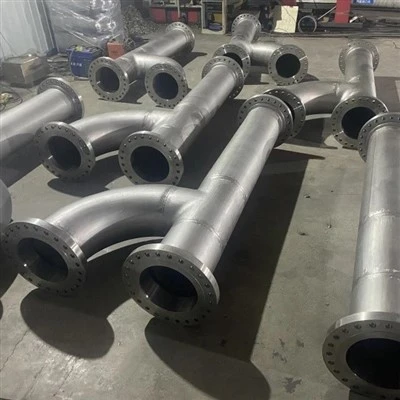
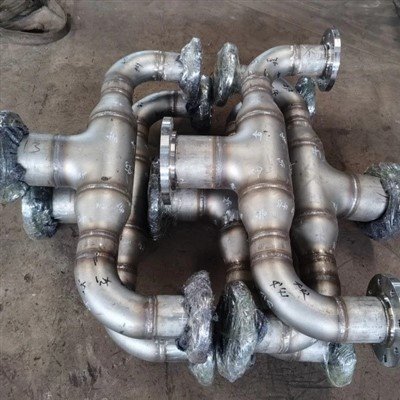
17-4PH stainless steel, also known as AISI Type 630, stands out due to its exceptional combination of high strength, good corrosion resistance, and mechanical properties that are maintained at temperatures up to 600°F.

This guide help you calculate the weight of a 17-4PH flange.
Understanding 17-4PH Material
17-4PH is a chromium-copper precipitation-hardening stainless steel. Its density is slightly different from standard austenitic steels like 304 or 316.
For the purposes of weight calculation, the density of 17-4PH is generally accepted as:Metric: 7.78 g/cm^3.
While heat treatments significantly alter the hardness and tensile strength of the flange, they have a negligible impact on the density. Therefore, the same density constant can be used across all heat-treated conditions.
17-4PH Flange Shape
17-4PH Flange is rarely a simple solid disc. For a standard slip-on or weld-neck flange, the total volume is the sum of its parts minus the voids created by the bore and bolt holes.
Dimensions Required:
Outer Diameter (OD): The total width of the flange.
Inner Diameter (ID) / Bore: The hole in the center where the pipe resides.
Thickness (T): The thickness of the main flange wall.
Hub Diameter: The diameter of the raised section (for Weld Neck or Long Weld Neck flanges).
Hub Height: The length of the raised section.
Bolt Hole Diameter: The size of the holes for fasteners.
Number of Bolt Holes: Typically 4, 8, 12, etc., depending on the pressure class.
17-4PH Flange Weight Calculation Formula
The weight of any flange is defined by the product of its volume and its density. To find the volume of a 17-4PH flange, we use the formula for a disc and subtract the cylinders representing the bore and the bolt holes.

Step 1: Calculate the Gross Volume of the Disc

Step 2: Calculate the Volume of the Bore

Step 3: Calculate the Volume of the Bolt Holes

(Where n is the number of holes and d_h is the hole diameter)
Step 4: Net Volume

Step-by-Step Calculation Example
Let us calculate the theoretical weight of a custom 17-4PH Slip-On Flange with the following specifications:
OD: 10 inches
ID (Bore): 4.5 inches
Thickness: 1.25 inches
Bolt Holes: 8 holes, each 0.75 inches in diameter
Calculation in Imperial Units:
Gross Volume:

Bore Volume:

Bolt Holes Volume:

Net Volume:

Final Weight:

The theoretical weight of this 17-4PH flange is approximately 20.76 lbs.
Factors Affecting 17-4PH Flange Weight

Machining Allowances
When we manufacture flanges from 17-4PH forgings, we start with a "rough weight." The forging is slightly oversized to allow for the removal of the decarburization layer and to ensure the final dimensions meet ASME B16.5 or custom tolerances. As a manager, I advise clients to budget for a shipping weight that is 5-10% higher than the theoretical finish weight if they are purchasing semi-finished products.
Manufacturing Tolerances
Standard specifications like ASTM A564 or ASME B16.5 allow for slight variations in thickness and diameter. A flange at the upper limit of the thickness tolerance will naturally weigh more than one at the lower limit.
Raised Face (RF) vs. Flat Face (FF)
Don't forget the "Raised Face." Most industrial flanges have a 0.06-inch or 0.25-inch raised section inside the bolt circle to concentrate pressure on the gasket. This adds a small amount of volume that should be included for high-precision weight requirements.
Why Weight Precision Matters in 17-4PH
17-4PH is a premium alloy. Unlike carbon steel, where weight discrepancies might be negligible in cost, the price per pound of nickel-bearing alloys is significant. Accurate weight calculation ensures accurate quoting.
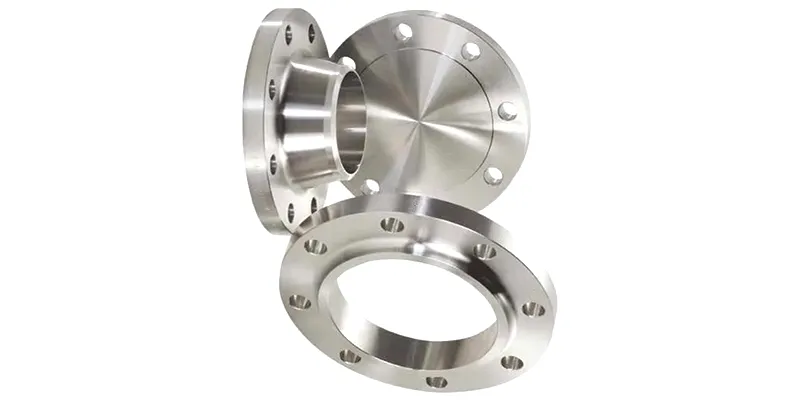
Flanges are often used in high-pressure systems. Weight is a proxy for mass; if a flange is significantly lighter than the theoretical weight, it may indicate a dimensional error that could compromise the pressure rating.
For offshore oil rigs or aerospace applications, weight is a critical constraint. Knowing the exact weight of a 17-4PH assembly is vital for crane capacities and freight costs.
Comparative Density Table
To provide context, here is how 17-4PH compares to other common materials we handle in our facility:
|
Material |
Density (g/cm3) |
Weight Relative to 17-4PH |
|
17-4PH Stainless |
7.78 |
1.00 |
|
304 Stainless |
7.93 |
1.02 |
|
316 Stainless |
7.98 |
1.03 |
|
Carbon Steel (A105) |
7.85 |
1.01 |
|
Nickel Alloy 625 |
8.44 |
1.08 |
As you can see, 17-4PH is slightly lighter than standard 300-series stainless steels. If you use a 316 stainless steel weight chart for 17-4PH, you will overestimate the weight by about 2-3%.
Conclusion
Calculating the weight of a 17-4PH flange is a straightforward process rooted in geometric discipline. By using the density and meticulously accounting for the volume of the disc, bore, and bolt holes, you can achieve a high degree of accuracy.As a manufacturer, I recommend that for large-scale projects, you always request the "estimated shipping weight" in addition to the "theoretical weight."
This accounts for the packaging and the specific manufacturing tolerances of the forge.Precision in calculation reflects precision in engineering.