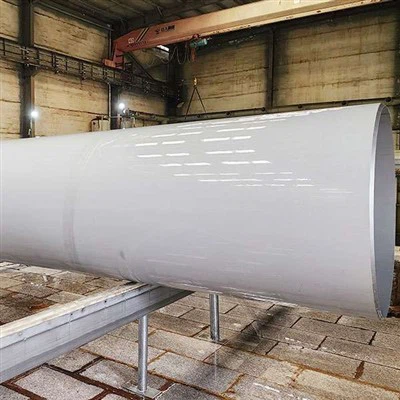
Hey there! As a supplier of UNS S30403, I often get asked about the impact toughness of this material, especially at low temperatures. So, let's dive right into it and explore what's going on with the impact toughness of UNS S30403 when things get chilly.
What's UNS S30403 Anyway?
First off, UNS S30403 is a type of stainless steel. It's a low-carbon version of the more well - known 304 stainless steel (UNS S30400), and its low carbon content helps prevent carbide precipitation during welding and high - temperature use. This makes it popular in a variety of applications, from food processing equipment to architectural structures and even in some chemical processing settings.
Understanding Impact Toughness
Before we dig into how UNS S30403 performs at low temps, let's quickly go over what impact toughness is. Impact toughness is a material's ability to absorb energy and deform plastically without breaking when it's hit by a sudden force. You can think of it as how well a material can handle a whack without shattering. It's super important in a bunch of industries, like aerospace, automotive, and construction, where materials might face sudden impacts.
Impact Toughness of UNS S30403 at Low Temperatures
At room temperature, UNS S30403 has pretty good impact toughness. It can take a fair amount of sudden force without cracking or breaking. But when the temperature drops, things start to change.
As the temperature goes down, the impact toughness of UNS S30403 generally decreases. This is because at low temperatures, the material becomes more brittle. The atoms in the steel have less energy, so they can't move around as easily to absorb the energy of an impact. Instead of deforming plastically, the material is more likely to crack.
However, it's not all bad news. The exact drop in impact toughness depends on a few factors. One of the big ones is the specific composition of the UNS S30403. Small variations in the amounts of elements like carbon, chromium, and nickel can affect how the material behaves at low temperatures.
Another factor is the heat treatment the steel has undergone. Proper heat treatment can improve the microstructure of the steel, which in turn can enhance its impact toughness, even at lower temperatures.
Applications and Considerations at Low Temperatures
When it comes to using UNS S30403 in low - temperature applications, it's crucial to understand its limitations. For example, in cryogenic applications where temperatures can drop way below freezing, UNS S30403 might not be the best choice on its own. But in some moderately cold environments, like refrigerated storage facilities, it can still work well if designed properly.
Engineers and designers need to take into account the expected temperature range, the type of impact the material will face (e.g., a single large impact or repeated small impacts), and the safety margins required. They might also need to consider using additional protective measures or combining UNS S30403 with other materials to improve the overall performance.
Comparing with Other Stainless Steels
It's always helpful to see how UNS S30403 stacks up against other stainless steels. For instance, Stainless Steel 321H / UNS S32109 / 1.4878 has better resistance to intergranular corrosion and can maintain its strength and toughness at higher temperatures compared to UNS S30403. However, in terms of low - temperature impact toughness, the difference might not be as significant, but it still depends on the exact application and the specific conditions.
Stainless Steel AL6XN / UNS N08367 / 1.4529 is a high - alloy stainless steel. It has excellent corrosion resistance and is often used in harsh environments. When it comes to low - temperature impact toughness, it can outperform UNS S30403 in extremely cold conditions.
Stainless Steel 904L / UNS N08904 / 1.4539 is another option. It has good corrosion resistance and decent mechanical properties. At low temperatures, it also has a different impact toughness profile compared to UNS S30403, and the choice between them will depend on the specific requirements of the project.
Our Role as a Supplier
As a supplier of UNS S30403, we understand the importance of providing high - quality material. We work closely with our customers to ensure they get the right product for their needs. Whether it's a project that requires good low - temperature impact toughness or something else, we have the expertise to help.


We source our UNS S30403 from reliable manufacturers and conduct strict quality control checks. We can also provide technical support and advice on how to use the material effectively, especially when it comes to low - temperature applications.
Conclusion and Call to Action
In conclusion, the impact toughness of UNS S30403 at low temperatures is an important consideration for many applications. While it does experience a decrease in toughness as the temperature drops, with proper understanding and design, it can still be a viable option in moderately cold environments.
If you're in the market for UNS S30403 or have questions about its performance at low temperatures, don't hesitate to reach out. We're here to help you make the best choice for your project. Let's have a chat and see how we can work together to meet your needs.
References
- ASM Handbook Volume 1: Properties and Selection: Irons, Steels, and High - Performance Alloys
- Stainless Steel Manual by The Nickel Institute