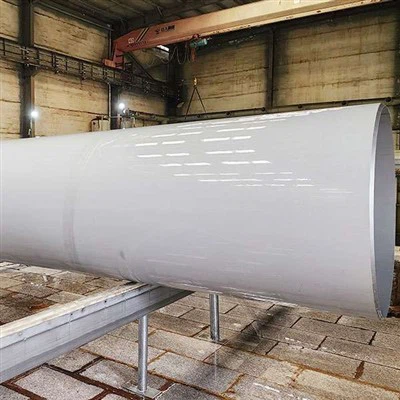
Hey there! As a supplier of UNS S31653, I often get asked about its formability. So, I thought I'd take a deep - dive into this topic and share everything you need to know.
Let's start with a bit of background. UNS S31653 is a type of stainless steel, which is part of the austenitic stainless - steel family. Austenitic stainless steels are known for their excellent corrosion resistance, good weldability, and relatively high ductility, which are all important factors when it comes to formability.
First off, what exactly is formability? In simple terms, formability refers to the ability of a material to be shaped or formed into a desired geometry without cracking, tearing, or experiencing other forms of failure. For a stainless - steel like UNS S31653, formability can involve processes such as bending, rolling, deep drawing, and stretching.
One of the key reasons why UNS S31653 has good formability is its chemical composition. This steel contains elements like chromium, nickel, and molybdenum. Chromium forms a passive oxide layer on the surface of the steel, which gives it its corrosion - resistant properties. Nickel enhances the ductility and toughness of the steel, while molybdenum further improves its corrosion resistance, especially in environments containing chloride ions.
When it comes to bending, UNS S31653 can be bent with relative ease compared to some other metals. The bending process needs to be carefully controlled, though. The bend radius should be appropriate for the thickness of the material. For thinner sheets of UNS S31653, a smaller bend radius can be achieved, but as the thickness increases, the bend radius needs to be larger to avoid cracking. In general, cold bending can be done for many applications, but for more complex or tight bends, pre - heating the material slightly can sometimes help improve the formability.
Rolling is another common forming process. UNS S31653 can be rolled into different shapes, such as sheets, plates, and strips. During the rolling process, the steel is passed through a series of rollers that gradually reduce its thickness and change its shape. The rolling speed, pressure, and temperature all need to be carefully monitored. Hot rolling can be used to achieve larger reductions in thickness, while cold rolling is often used to improve the surface finish and dimensional accuracy of the final product.
Deep drawing is a more challenging forming process, but UNS S31653 is still quite capable. Deep drawing involves pulling a flat sheet of metal into a die to create a cup - shaped or other complex three - dimensional part. The success of deep drawing depends on factors like the draw ratio (the ratio of the diameter of the blank to the diameter of the drawn part), the lubrication used, and the quality of the material. UNS S31653 has good work - hardening characteristics, which means that as it is deformed during deep drawing, its strength increases. However, this also means that there is a limit to how much it can be drawn before it starts to crack. So, proper die design and process control are crucial.
Stretching is also possible with UNS S31653. In stretching operations, the material is pulled in one or more directions to increase its length or width. The austenitic structure of UNS S31653 allows it to stretch to a certain extent without fracturing. But just like in other forming processes, the amount of stretching needs to be carefully controlled.
Now, let's compare UNS S31653 with some related stainless - steel grades. You can find more information about these grades on the following links: Stainless Steel 316LN / UNS S31653 / 1.4406, 1.4429, Stainless Steel 316L / UNS S31603 / 1.4404, and Stainless Steel 316 / UNS S31600 / 1.4401.
Compared to Stainless Steel 316L (UNS S31603), UNS S31653 has a higher nitrogen content. The addition of nitrogen in UNS S31653 improves its strength and pitting corrosion resistance. In terms of formability, both grades are quite similar, but the slightly higher strength of UNS S31653 might require a bit more force during forming operations.


When compared to Stainless Steel 316 (UNS S31600), UNS S31653 again has the advantage of better corrosion resistance due to its nitrogen addition. In terms of formability, the basic principles are the same, but the differences in composition can lead to slight variations in how they respond to forming processes.
Another aspect to consider is the surface finish of UNS S31653. A smooth surface finish can improve formability as it reduces friction during forming operations. After forming, the surface finish can also affect the appearance and corrosion resistance of the final product. So, proper surface treatment before and after forming is important.
In addition, the heat treatment of UNS S31653 can also impact its formability. Annealing is a common heat - treatment process for austenitic stainless steels. Annealing can relieve internal stresses in the material, improve its ductility, and make it more formable. However, the annealing process needs to be carefully controlled to avoid over - annealing, which can lead to grain growth and a reduction in strength.
When you're working with UNS S31653, it's also important to consider the tools and equipment you're using. The dies, punches, and rollers should be in good condition and properly designed for the specific forming process. Lubricants can also play a big role in improving formability. They reduce friction between the material and the forming tools, which can prevent cracking and improve the surface finish of the formed part.
So, if you're in the market for a stainless - steel with good formability, corrosion resistance, and strength, UNS S31653 is definitely a great option. As a supplier, I can offer high - quality UNS S31653 products that are suitable for a wide range of forming applications. Whether you're looking to make simple bends or complex deep - drawn parts, our UNS S31653 can meet your needs.
If you're interested in learning more about UNS S31653 or are thinking about making a purchase, don't hesitate to reach out. We can discuss your specific requirements, provide samples, and offer technical support to ensure that you get the best results from our product.
References:
- ASM Handbook, Volume 6: Welding, Brazing, and Soldering
- Metals Handbook Desk Edition, 3rd Edition
- Stainless Steel: A Technical Guide, by The Nickel Institute