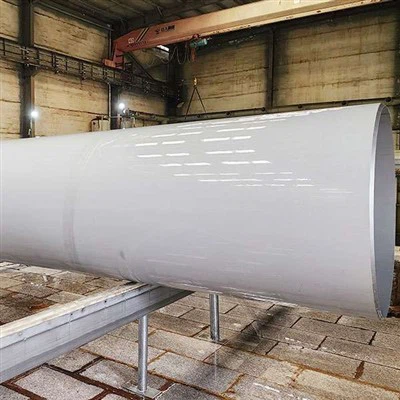
As a trusted supplier of UNS S31635, I am often asked about the formability of this remarkable stainless - steel alloy. In this blog, I will delve into the details of what formability means for UNS S31635, exploring its characteristics, influencing factors, and how it compares to other related stainless - steel alloys.
Understanding Formability
Formability refers to the ability of a material to undergo plastic deformation without cracking or failing. For metals like UNS S31635, it is a crucial property as it determines how easily the material can be shaped into various forms during manufacturing processes such as bending, stretching, deep - drawing, and rolling. Good formability allows manufacturers to create complex and precise components, which is essential in industries like automotive, aerospace, and construction.
Chemical Composition and Its Impact on Formability
UNS S31635 is a type of austenitic stainless steel. Its chemical composition plays a significant role in its formability. The alloy contains approximately 16 - 18% chromium, 10 - 14% nickel, and 2 - 3% molybdenum. Chromium provides corrosion resistance, while nickel enhances ductility and toughness, which are key factors for formability. Molybdenum further improves corrosion resistance, especially in environments containing chlorides.


The low carbon content in UNS S31635 (max 0.03%) helps prevent the formation of chromium carbides during welding and heat - treatment processes. This reduces the risk of intergranular corrosion and maintains the material's formability and corrosion resistance.
Factors Affecting the Formability of UNS S31635
1. Temperature
Temperature has a profound influence on the formability of UNS S31635. At room temperature, the alloy exhibits good ductility, which allows for simple forming operations such as bending and light stretching. However, for more complex forming processes like deep - drawing, increasing the temperature can significantly improve formability. When heated, the material's yield strength decreases, and its elongation increases, making it easier to deform without cracking.
2. Strain Rate
The strain rate, which is the rate at which deformation occurs, also affects formability. In general, UNS S31635 can tolerate a relatively wide range of strain rates. At low strain rates, the material has more time to adjust to the deformation, reducing the likelihood of cracking. High - speed forming processes may require careful control to ensure that the material can withstand the rapid deformation without failure.
3. Grain Size
The grain size of UNS S31635 has an impact on its formability. A fine - grained structure typically offers better formability compared to a coarse - grained one. Fine grains provide more grain boundaries, which can act as barriers to dislocation movement. This helps distribute the stress more evenly during deformation, reducing the risk of localized deformation and cracking.
Comparison with Other Stainless - Steel Alloys
Comparison with Stainless Steel 321H / UNS S32109 / 1.4878
Stainless Steel 321H contains titanium, which stabilizes the alloy against intergranular corrosion. While both UNS S31635 and Stainless Steel 321H have good formability, 321H may have slightly better high - temperature strength due to the presence of titanium. However, UNS S31635 offers better corrosion resistance in chloride - containing environments because of its molybdenum content.
Comparison with Stainless Steel 316 / UNS S31600 / 1.4401
UNS S31635 is a low - carbon version of Stainless Steel 316. The low carbon content in UNS S31635 makes it more suitable for welding and applications where intergranular corrosion is a concern. In terms of formability, both alloys are similar, but UNS S31635 may have an edge in maintaining its formability after welding due to its reduced carbon content.
Comparison with Stainless Steel 347 / UNS S34700 / 1.4550
Stainless Steel 347 contains niobium, which stabilizes the alloy against intergranular corrosion. Similar to the comparison with 321H, while 347 has good high - temperature properties, UNS S31635 offers better corrosion resistance in chloride - rich environments. In terms of formability, both alloys are capable of being formed, but the specific requirements of the forming process may favor one over the other.
Forming Processes for UNS S31635
Bending
Bending is one of the most common forming processes for UNS S31635. The alloy can be bent using various methods, such as air bending, bottom bending, and coining. The bend radius should be carefully selected based on the material thickness and the required degree of bending. A larger bend radius generally reduces the risk of cracking.
Deep - Drawing
Deep - drawing is a more complex forming process that involves pulling a flat sheet of material into a die cavity to create a cup - shaped or box - shaped component. For UNS S31635, pre - heating the material can improve its deep - drawability. Lubrication is also crucial during deep - drawing to reduce friction between the material and the die, preventing tearing and improving the surface finish of the formed part.
Rolling
Rolling is used to reduce the thickness of the material or to change its shape. UNS S31635 can be hot - rolled or cold - rolled. Hot - rolling is typically used for initial thickness reduction, while cold - rolling can be used to achieve a smooth surface finish and precise dimensional control.
Applications and the Importance of Formability
The good formability of UNS S31635 makes it suitable for a wide range of applications. In the food and beverage industry, it is used to manufacture equipment such as tanks, pipes, and fittings. The ability to form complex shapes allows for the design of efficient and hygienic processing equipment. In the pharmaceutical industry, the alloy's formability and corrosion resistance make it ideal for manufacturing storage vessels and processing equipment.
In the architectural field, UNS S31635 is used for decorative elements, handrails, and structural components. Its formability enables architects to create unique and aesthetically pleasing designs.
Conclusion
The formability of UNS S31635 is a result of its chemical composition, along with various influencing factors such as temperature, strain rate, and grain size. It offers good formability, which allows for a wide range of manufacturing processes and applications. Compared to other stainless - steel alloys, it has its own unique advantages in terms of corrosion resistance and formability after welding.
If you are in need of high - quality UNS S31635 for your manufacturing processes, I encourage you to reach out to discuss your requirements. Our team of experts can provide you with detailed information on the alloy's properties and help you select the most suitable product for your specific needs.
References
- ASM Handbook Volume 2: Properties and Selection: Nonferrous Alloys and Special - Purpose Materials.
- Stainless Steel Handbook, The Nickel Institute.
- Various technical data sheets provided by stainless - steel manufacturers.