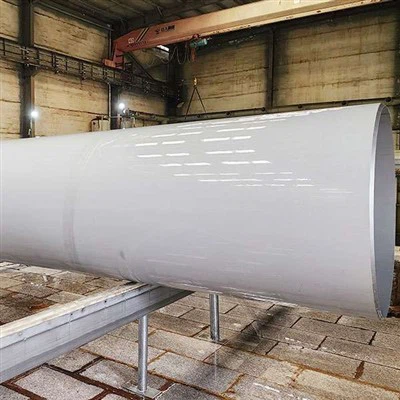
Hey there! As a supplier of UNS S31254, I've been getting a lot of questions lately about how hydrochloric acid affects the corrosion of this super austenitic stainless steel. So, I thought I'd write this blog to share what I've learned and experienced in the industry.
First off, let's talk a bit about UNS S31254. It's a high-performance stainless steel with a unique chemical composition. It contains high levels of chromium, nickel, molybdenum, and nitrogen, which give it excellent resistance to corrosion in a wide range of environments. This makes it a popular choice for various applications, especially in industries where corrosion resistance is crucial, like chemical processing, desalination plants, and marine engineering.
Now, let's dive into the main topic: the effect of hydrochloric acid on the corrosion of UNS S31254. Hydrochloric acid is a strong and highly corrosive acid commonly used in many industrial processes. When it comes into contact with metals, it can cause significant damage if the metal isn't properly protected or resistant.
In the case of UNS S31254, its high alloying elements play a vital role in its corrosion resistance against hydrochloric acid. The chromium in UNS S31254 forms a passive oxide layer on the surface of the steel. This layer acts as a barrier, preventing the hydrochloric acid from directly attacking the underlying metal. The nickel enhances the steel's toughness and ductility, while also improving its resistance to certain types of corrosion. The molybdenum further increases the steel's resistance to pitting and crevice corrosion, which are common forms of corrosion caused by hydrochloric acid. And the nitrogen helps to strengthen the passive layer and improve the overall corrosion resistance of the steel.
However, it's important to note that the corrosion resistance of UNS S31254 in hydrochloric acid isn't absolute. The severity of corrosion depends on several factors, such as the concentration of the hydrochloric acid, the temperature, and the exposure time.
At low concentrations of hydrochloric acid and relatively low temperatures, UNS S31254 generally shows good resistance. The passive oxide layer can withstand the acid attack to a certain extent, and the corrosion rate is relatively slow. But as the concentration of the hydrochloric acid increases or the temperature rises, the corrosive effect becomes more pronounced.
For example, in highly concentrated hydrochloric acid solutions, the passive layer may break down, allowing the acid to directly react with the metal. This can lead to pitting corrosion, where small holes or pits form on the surface of the steel. Pitting corrosion can be particularly dangerous because it can penetrate deep into the metal, weakening its structural integrity. Crevice corrosion can also occur in areas where there are gaps or crevices, such as at joints or under gaskets. In these areas, the hydrochloric acid can become trapped, leading to a more aggressive corrosion environment.
To better understand the corrosion behavior of UNS S31254 in hydrochloric acid, many studies have been conducted. These studies often involve exposing samples of UNS S31254 to different concentrations of hydrochloric acid at various temperatures for a set period of time. The samples are then analyzed to measure the corrosion rate, the extent of pitting and crevice corrosion, and the changes in the surface morphology of the steel.
One of the key findings from these studies is that the corrosion rate of UNS S31254 increases exponentially with increasing acid concentration and temperature. This means that even a small increase in the concentration or temperature can have a significant impact on the corrosion resistance of the steel.
When comparing UNS S31254 with other stainless steels in terms of their corrosion resistance to hydrochloric acid, it stands out as a superior choice in many cases. For instance, Stainless Steel 316 / UNS S31600 / 1.4401 is a commonly used stainless steel, but it has lower levels of alloying elements compared to UNS S31254. As a result, its corrosion resistance in hydrochloric acid is not as good, especially at higher concentrations and temperatures.
Stainless Steel 17 - 4PH / UNS S17400 / 1.4542 is a precipitation - hardening stainless steel. While it has good mechanical properties, its corrosion resistance in hydrochloric acid is also inferior to that of UNS S31254.


Stainless Steel AL6XN / UNS N08367 / 1.4529 is another high - performance stainless steel. It has a similar level of corrosion resistance to UNS S31254 in some environments, but UNS S31254 may have an edge in certain conditions, especially when it comes to pitting and crevice corrosion resistance.
So, if you're in an industry that deals with hydrochloric acid and you're looking for a stainless steel that can withstand its corrosive effects, UNS S31254 is definitely worth considering. As a supplier, I've seen firsthand how UNS S31254 has helped many of my customers solve their corrosion problems.
Whether you're building a new chemical processing plant, upgrading your desalination equipment, or working on a marine project, choosing the right material is crucial. UNS S31254 can provide you with long - term reliability and performance in harsh hydrochloric acid environments.
If you're interested in learning more about UNS S31254 or are thinking about using it in your project, I'd love to have a chat with you. We can discuss your specific requirements, and I can help you determine if UNS S31254 is the right choice for you. Don't hesitate to reach out and start a conversation about your procurement needs.
References
- "Corrosion Resistance of Stainless Steels in Acidic Environments" - Journal of Materials Science
- "Effect of Alloying Elements on the Corrosion Behavior of Super Austenitic Stainless Steels" - Corrosion Science
- Industry reports on the performance of UNS S31254 in various applications.