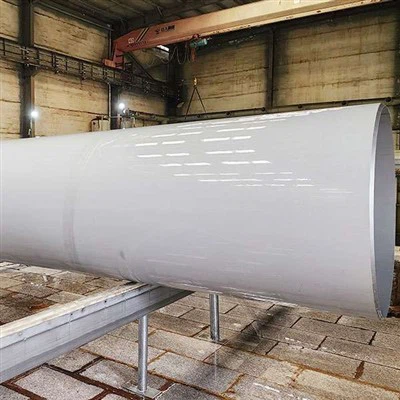
The corrosion behavior of metals is a crucial aspect that significantly impacts their performance and durability in various applications. Among the many alloys available, UNS S17400, also known as Stainless Steel 17 - 4PH / UNS S17400 / 1.4542, is a precipitation - hardening stainless steel widely used in industries such as aerospace, marine, and chemical processing due to its excellent strength, corrosion resistance, and ease of fabrication. As a supplier of UNS S17400, I have witnessed firsthand the importance of understanding how the environment affects its corrosion behavior.
General Characteristics of UNS S17400
UNS S17400 contains approximately 15 - 17.5% chromium, 3 - 5% nickel, 3 - 5% copper, and small amounts of other elements such as niobium and tantalum. Chromium is the key element that provides the alloy with its basic corrosion - resistant properties by forming a passive oxide film on the surface. Nickel enhances the toughness and ductility of the alloy, while copper contributes to its precipitation - hardening ability, which allows for the achievement of high strength levels through heat treatment.
The alloy can be heat - treated to different conditions, such as H900, H1025, and H1150, each offering a different combination of strength and corrosion resistance. For example, the H900 condition provides the highest strength but relatively lower corrosion resistance compared to the H1150 condition, which offers better corrosion resistance at the expense of some strength.
Impact of Different Environments on Corrosion Behavior
1. Atmospheric Environment
In a normal atmospheric environment, UNS S17400 generally exhibits good corrosion resistance. The passive oxide film formed on the surface protects the alloy from the mild corrosive agents present in the air, such as oxygen, moisture, and pollutants. However, the corrosion resistance can be affected by factors such as humidity, temperature, and the presence of pollutants.
High humidity levels can increase the rate of corrosion as moisture provides a medium for the electrochemical reactions that lead to corrosion. In coastal areas, where the air contains salt particles, the corrosion rate of UNS S17400 may be higher due to the presence of chloride ions. Chloride ions can break down the passive oxide film, exposing the underlying metal to further corrosion. For example, in a study conducted in a coastal region, samples of UNS S17400 showed signs of pitting corrosion after a relatively short period of exposure to the marine - influenced atmosphere.
2. Aqueous Environments
- Neutral Aqueous Solutions: In neutral aqueous solutions, such as pure water or mildly alkaline solutions, UNS S17400 usually maintains its corrosion - resistant properties. The passive oxide film remains stable, and the corrosion rate is relatively low. However, the presence of certain ions in the solution can affect the corrosion behavior. For instance, the presence of sulfate ions can increase the corrosion rate slightly, especially at higher concentrations.
- Acidic Aqueous Solutions: In acidic environments, the corrosion resistance of UNS S17400 is more challenging. Strong acids can dissolve the passive oxide film, leading to active corrosion. For example, in sulfuric acid solutions, the alloy may experience significant corrosion, especially at high acid concentrations and elevated temperatures. The corrosion mechanism in acidic solutions involves the dissolution of the metal matrix and the formation of metal ions in the solution.
- Chloride - Containing Aqueous Solutions: Chloride ions are one of the most aggressive species that can cause corrosion in UNS S17400. In chloride - containing solutions, such as seawater or salt - water cooling systems, the alloy is prone to pitting corrosion and stress - corrosion cracking (SCC). Pitting corrosion occurs when chloride ions penetrate the passive oxide film at local sites, creating small pits on the surface. These pits can grow over time and eventually lead to the failure of the component. SCC is a more severe form of corrosion that occurs under the combined action of tensile stress and a corrosive environment. In chloride - containing solutions, the stress - corrosion cracking of UNS S17400 is often associated with the presence of residual stresses from fabrication or service - induced stresses.
3. High - Temperature Environments
At high temperatures, the corrosion behavior of UNS S17400 is also affected. In oxidizing environments, the alloy forms a thicker oxide scale on the surface. While this oxide scale can provide some protection against further oxidation, it may also spall off under certain conditions, exposing the underlying metal to corrosion. In addition, high - temperature environments can accelerate the diffusion of elements within the alloy, which may affect its microstructure and corrosion resistance.
In reducing environments, such as those containing hydrogen or carbon monoxide, the alloy may experience carburization or decarburization, which can change its chemical composition and mechanical properties. For example, carburization can lead to the formation of brittle carbides at the grain boundaries, reducing the toughness and corrosion resistance of the alloy.
Comparison with Other Stainless Steels
It is also useful to compare the corrosion behavior of UNS S17400 with other stainless steels. For example, Stainless Steel 316L Mod / UNS S31603 / 1.4435 is another widely used stainless steel known for its excellent corrosion resistance, especially in chloride - containing environments. Compared to UNS S17400, Stainless Steel 316L Mod generally has better resistance to pitting and crevice corrosion in seawater. However, UNS S17400 can achieve much higher strength levels through precipitation hardening, making it more suitable for applications where high strength is required.
Stainless Steel 316H / UNS 31609 / 1.4919 is similar to Stainless Steel 316L Mod but with a higher carbon content, which provides better high - temperature strength. In high - temperature applications, Stainless Steel 316H may perform better than UNS S17400 in terms of oxidation resistance. However, UNS S17400's precipitation - hardening ability allows it to maintain high strength at lower temperatures, which is an advantage in some applications.
Mitigation Strategies for Corrosion
To enhance the corrosion resistance of UNS S17400 in different environments, several mitigation strategies can be employed.
- Surface Treatment: Applying surface treatments such as passivation can improve the corrosion resistance of the alloy. Passivation involves the removal of free iron and other contaminants from the surface and the enhancement of the passive oxide film. This can be achieved by treating the alloy with a nitric acid - based solution.
- Coating: Coating the alloy with a protective layer, such as paint or a polymer coating, can provide an additional barrier against corrosion. Coatings can prevent direct contact between the alloy and the corrosive environment, reducing the corrosion rate.
- Material Selection and Design: Proper material selection and design are also crucial. For example, in chloride - containing environments, choosing the appropriate heat - treatment condition of UNS S17400 can improve its resistance to pitting and SCC. Designing components to avoid crevices and stagnant areas can also reduce the risk of corrosion.
Conclusion and Call to Action
Understanding the effect of the environment on the corrosion behavior of UNS S17400 is essential for ensuring its reliable performance in various applications. As a supplier of UNS S17400, I am committed to providing high - quality products and technical support to help our customers make the most of this alloy. Whether you are in the aerospace, marine, or chemical processing industry, we can offer the right solutions to meet your specific requirements.
If you are interested in purchasing UNS S17400 or have any questions about its corrosion behavior and applications, please feel free to contact us for further discussion and procurement negotiation. We look forward to working with you to achieve your project goals.


References
- Jones, D. A. (1992). Principles and Prevention of Corrosion. Prentice - Hall.
- Uhlig, H. H., & Revie, R. W. (1985). Corrosion and Corrosion Control: An Introduction to Corrosion Science and Engineering. Wiley - Interscience.
- ASM Handbook, Volume 13A: Corrosion: Fundamentals, Testing, and Protection. ASM International.