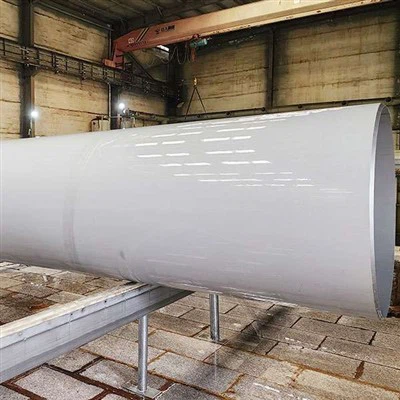
Hey there! As a supplier of UNS S31700, I often get asked about its compatibility with other materials. Well, today I'm gonna break it down for you in a simple and easy - to - understand way.
What is UNS S31700?
First off, let's quickly go over what UNS S31700 is. It's a type of austenitic stainless steel. Austenitic steels are known for their great corrosion resistance, good formability, and high toughness. UNS S31700 has a higher molybdenum content compared to some other common stainless steels, which gives it enhanced resistance to pitting and crevice corrosion in chloride - containing environments. This makes it a popular choice in industries like chemical processing, marine, and food processing.
Compatibility with Other Stainless Steels
Stainless Steel 347H / UNS S34709 / 1.4961
When it comes to compatibility with Stainless Steel 347H / UNS S34709 / 1.4961, these two materials generally play well together. Both are austenitic stainless steels, so they have similar thermal expansion coefficients. This means that when they're exposed to temperature changes, they'll expand and contract at a similar rate, reducing the risk of stress buildup at the joint.
In terms of corrosion resistance, while 347H has good general corrosion resistance due to its chromium and nickel content, UNS S31700 has an edge in chloride - rich environments because of its higher molybdenum. However, in most non - aggressive applications, they can be used in contact without significant issues. For example, in some heat exchanger applications where different parts might be made of these two materials, the combination can work effectively.
Stainless Steel 316H / UNS 31609 / 1.4919
Stainless Steel 316H / UNS 31609 / 1.4919 is another austenitic stainless steel that's commonly used. It's a bit like a cousin to UNS S31700. The main difference is the molybdenum content. 316H has a lower molybdenum level, so UNS S31700 offers better resistance to pitting and crevice corrosion.
In terms of joining, they can be welded together relatively easily. The similar austenitic structure means that the welds can have good mechanical properties. But in highly corrosive environments, especially those with high chloride concentrations, you might want to be a bit more cautious. If you're using them in a marine application, for instance, the areas where they're in contact should be properly protected to prevent any galvanic corrosion.
Compatibility with Non - Stainless Metals
Carbon Steel
When it comes to carbon steel, things get a bit more complicated. Carbon steel is much more prone to corrosion compared to UNS S31700. When these two are in contact in the presence of an electrolyte (like water), a galvanic cell can form. The carbon steel acts as the anode and will corrode at an accelerated rate.
If you need to use them together, you can use insulation materials to separate them. For example, in some structural applications where a carbon steel support might be used with a UNS S31700 component, a rubber or plastic gasket can be placed between them to prevent direct electrical contact. Another option is to use a protective coating on the carbon steel to slow down the corrosion process.


Aluminum
Aluminum is also a bit of a tricky one to pair with UNS S31700. Aluminum is more electrochemically active than the stainless steel. In a moist environment, galvanic corrosion can occur, with the aluminum corroding.
However, in some dry or low - humidity applications, they can be used together with proper precautions. For example, in some aerospace applications where weight is a major concern, aluminum and UNS S31700 might be used in different parts of a structure. In these cases, surface treatments like anodizing the aluminum can help improve its corrosion resistance and reduce the risk of galvanic corrosion.
Compatibility with Other Alloys
Stainless Steel 17 - 4PH / UNS S17400 / 1.4542
Stainless Steel 17 - 4PH / UNS S17400 / 1.4542 is a precipitation - hardening stainless steel. It has different mechanical properties compared to the austenitic UNS S31700. 17 - 4PH can be heat - treated to achieve high strength.
When it comes to compatibility, in terms of corrosion resistance, both have good resistance in different ways. 17 - 4PH has good general corrosion resistance, but UNS S31700 is better in chloride - rich environments. They can be used together in applications where different parts need different levels of strength and corrosion resistance. For example, in some tooling applications, a 17 - 4PH component for its high strength and a UNS S31700 part for its corrosion resistance can be combined.
Factors Affecting Compatibility
There are a few factors that can really affect the compatibility of UNS S31700 with other materials.
Environment
The environment plays a huge role. As I've mentioned before, in a highly corrosive environment like a salt - water marine setting, the compatibility rules change. Chloride ions can cause pitting and crevice corrosion, so materials that might be compatible in a dry, non - corrosive environment might not work well together in a marine environment.
Temperature
Temperature can also have an impact. High temperatures can affect the mechanical properties of materials and can also change the rate of corrosion. For example, at elevated temperatures, the thermal expansion differences between two materials can become more significant, leading to stress and potential cracking.
Surface Finish
The surface finish of the materials can matter too. A rough surface can trap moisture and contaminants, increasing the risk of corrosion. If the surfaces of UNS S31700 and another material are smooth and clean, the chances of corrosion are reduced.
Conclusion
So, as you can see, the compatibility of UNS S31700 with other materials depends on a bunch of factors. It can be paired well with some other stainless steels in many applications, but when it comes to non - stainless metals, precautions need to be taken.
If you're thinking about using UNS S31700 in your project and need to know more about its compatibility with other materials, or if you're interested in purchasing UNS S31700, feel free to reach out. We're here to help you make the best choices for your specific needs.
References
- ASM Handbook, Volume 13A: Corrosion: Fundamentals, Testing, and Protection
- Stainless Steel: A Practical Guide by Lenny T. Kurdziel