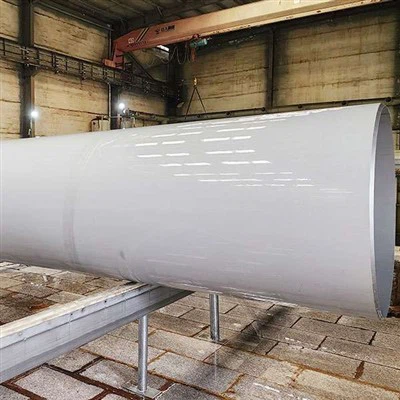
As a dedicated supplier of UNS S34709, I've witnessed firsthand the growing interest in this remarkable stainless - steel alloy. In this blog, I'll delve into the concept of impact toughness and explore how it pertains to UNS S34709.


Understanding Impact Toughness
Impact toughness is a crucial mechanical property that measures a material's ability to absorb energy and deform plastically before fracturing under impact loading. It is of utmost importance in applications where sudden and high - energy impacts are likely to occur. Unlike static strength, which deals with slow and gradual loading, impact toughness focuses on the material's response to rapid and often unpredictable forces.
Materials with high impact toughness can withstand significant deformation without breaking, making them ideal for use in structures and components that need to endure shock and vibration. On the other hand, materials with low impact toughness are more prone to brittle fracture, which can lead to catastrophic failures in real - world applications.
The Composition of UNS S34709
UNS S34709, also known as Type 347H stainless steel, is a stabilized austenitic stainless steel. Its chemical composition plays a vital role in determining its impact toughness and other mechanical properties. The alloy contains approximately 17 - 19% chromium, 9 - 13% nickel, and a small amount of niobium (columbium). The addition of niobium stabilizes the alloy against intergranular corrosion, especially when exposed to high - temperature environments.
The austenitic structure of UNS S34709 provides excellent ductility and toughness at both room and elevated temperatures. Austenite is a face - centered cubic (FCC) crystal structure that allows for easy movement of dislocations, which is essential for plastic deformation and energy absorption during impact.
Factors Affecting the Impact Toughness of UNS S34709
Temperature
Temperature has a significant influence on the impact toughness of UNS S34709. At room temperature, the alloy exhibits good impact toughness due to its austenitic structure. However, as the temperature decreases, the material may experience a transition from ductile to brittle behavior. This phenomenon is known as the ductile - brittle transition temperature (DBTT).
In general, the impact toughness of UNS S34709 decreases with decreasing temperature. At very low temperatures, the mobility of dislocations is restricted, and the material becomes more prone to brittle fracture. Therefore, in applications where the alloy is exposed to low - temperature environments, it is essential to ensure that the design takes into account the potential reduction in impact toughness.
Grain Size
The grain size of UNS S34709 also affects its impact toughness. A fine - grained structure typically results in higher impact toughness compared to a coarse - grained structure. This is because fine grains provide more grain boundaries, which act as barriers to dislocation movement and can absorb energy during impact.
During the manufacturing process, controlling the grain size is crucial. Heat treatment and hot working can be used to refine the grain structure of UNS S34709, thereby improving its impact toughness. For example, proper annealing can help to achieve a fine and uniform grain size, enhancing the material's ability to withstand impact loading.
Microstructure and Phase Transformations
The microstructure of UNS S34709 can be influenced by factors such as heat treatment and welding. In some cases, the formation of secondary phases, such as sigma phase or carbide precipitation, can reduce the impact toughness of the alloy.
Sigma phase is a brittle intermetallic compound that can form during long - term exposure to high temperatures. Its presence can lead to a significant decrease in impact toughness and ductility. Similarly, carbide precipitation at grain boundaries can cause intergranular embrittlement, making the material more susceptible to cracking under impact.
To prevent the formation of these detrimental phases, proper heat treatment and welding procedures should be followed. For instance, solution annealing after welding can help to dissolve the precipitates and restore the alloy's impact toughness.
Applications of UNS S34709 Based on Impact Toughness
Power Generation
In the power generation industry, UNS S34709 is widely used in high - temperature components such as boiler tubes and superheaters. These components are subjected to high - pressure steam and thermal cycling, which can generate significant impact forces. The good impact toughness of UNS S34709 at elevated temperatures ensures that these components can withstand the harsh operating conditions without failure.
Chemical Processing
UNS S34709 is also used in chemical processing equipment, where it may be exposed to corrosive chemicals and mechanical impacts. The alloy's resistance to corrosion, combined with its impact toughness, makes it suitable for use in reactors, heat exchangers, and piping systems. For example, in a chemical plant, the alloy can withstand the sudden impact of a fluid flow or the vibration caused by pumps and agitators.
Aerospace
In the aerospace industry, materials need to have high strength - to - weight ratios and excellent impact toughness. Although UNS S34709 may not be as lightweight as some other aerospace alloys, its impact toughness makes it suitable for certain applications. For instance, it can be used in structural components that need to withstand the shock and vibration during takeoff, flight, and landing.
Comparison with Other Stainless Steel Alloys
When comparing the impact toughness of UNS S34709 with other stainless steel alloys, it's important to consider the specific application requirements. For example, Stainless Steel 317L / UNS S31703 / 1.4438 is another austenitic stainless steel with good corrosion resistance. However, its impact toughness may vary depending on factors such as composition and heat treatment.
Stainless Steel 17 - 4PH / UNS S17400 / 1.4542 is a precipitation - hardening stainless steel. It offers high strength but may have different impact toughness characteristics compared to UNS S34709. The martensitic structure of 17 - 4PH can result in a different ductile - brittle transition behavior.
Stainless Steel AL6XN / UNS N08367 / 1.4529 is a high - alloy austenitic stainless steel with excellent corrosion resistance in aggressive environments. Its impact toughness is also influenced by factors such as temperature and microstructure.
Quality Assurance and Testing for Impact Toughness
As a supplier of UNS S34709, we understand the importance of ensuring the impact toughness of the material. We conduct rigorous quality assurance tests to verify the mechanical properties of our products.
One of the most common tests for impact toughness is the Charpy V - notch test. In this test, a standardized specimen with a V - shaped notch is subjected to a single - blow impact from a pendulum hammer. The energy absorbed during the fracture of the specimen is measured, which provides an indication of the material's impact toughness.
We also perform other tests, such as tensile testing and hardness testing, to ensure that the UNS S34709 meets the required specifications. By adhering to strict quality control procedures, we can guarantee that our customers receive high - quality UNS S34709 with consistent impact toughness.
Conclusion
The impact toughness of UNS S34709 is a critical property that determines its suitability for various applications. Factors such as temperature, grain size, and microstructure can significantly influence the alloy's ability to withstand impact loading. As a supplier, we are committed to providing high - quality UNS S34709 that meets the demanding requirements of our customers.
If you are looking for a reliable source of UNS S34709 with excellent impact toughness, we invite you to contact us for procurement and further discussion. Our team of experts is ready to assist you in selecting the right material for your specific needs.
References
- ASM Handbook, Volume 1: Properties and Selection: Irons, Steels, and High - Performance Alloys.
- Stainless Steel Handbook, edited by L. C. Smith.
- Technical literature on UNS S34709 from major stainless steel manufacturers.