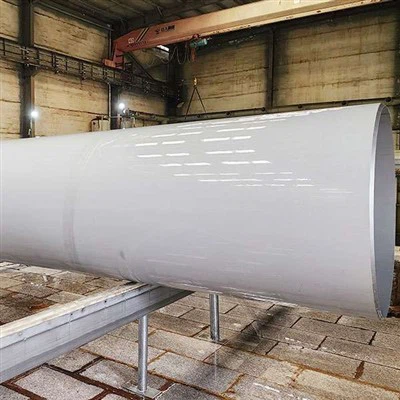
UNS S30403, often referred to as a type of stainless steel, is a popular choice in various industries. As a supplier of UNS S30403, I've got a good deal of knowledge about its mechanical properties. Let's dive right in and explore what makes this material so special.
Tensile Strength
One of the key mechanical properties of UNS S30403 is its tensile strength. Tensile strength is the maximum stress that a material can withstand while being stretched or pulled before breaking. For UNS S30403, the typical tensile strength ranges from about 515 MPa (megapascals) to 655 MPa. This means it can handle a fair amount of pulling force without failing.
In practical applications, this high tensile strength makes UNS S30403 suitable for structures that need to bear heavy loads. For example, in the construction industry, it can be used in the fabrication of support beams and columns. It's also used in the manufacturing of automotive parts, where components need to withstand the forces generated during vehicle operation.
Yield Strength
The yield strength of a material is the stress at which it begins to deform plastically. In simpler terms, it's the point where the material starts to change shape permanently under stress. UNS S30403 has a yield strength of around 205 MPa. This indicates that it can resist deformation up to a certain level of stress.
This property is crucial in applications where dimensional stability is important. For instance, in the production of precision machinery parts, the components made from UNS S30403 need to maintain their shape under normal operating conditions. The relatively high yield strength ensures that these parts won't deform easily, which helps in maintaining the accuracy and performance of the machinery.
Elongation
Elongation is another important mechanical property. It measures the percentage increase in the length of a material when it's pulled until it breaks. UNS S30403 typically has an elongation of around 40% to 60%. This high elongation means that the material can stretch quite a bit before it fractures.
This property is beneficial in applications where the material needs to be formed into different shapes. For example, in the metalworking industry, UNS S30403 can be easily bent, rolled, or drawn into various profiles without cracking. It's also useful in applications where the material may experience some degree of stretching or deformation during use, such as in flexible piping systems.
Hardness
The hardness of UNS S30403 is an important factor in determining its wear resistance and machinability. The typical hardness of this material is around 95 HRB (Rockwell B scale). This level of hardness makes it resistant to abrasion and wear, which is essential in applications where the material comes into contact with other surfaces or particles.
In the manufacturing of cutting tools and dies, the hardness of UNS S30403 helps in maintaining the sharpness and durability of the tools. It also allows for better machinability, as the material can be cut, drilled, and machined with relative ease compared to some harder materials.


Impact Resistance
UNS S30403 has good impact resistance, which means it can absorb energy when it's subjected to sudden impacts without breaking. This property is important in applications where the material may be exposed to shock loads. For example, in the transportation industry, it can be used in the construction of vehicle frames and bumpers to withstand the impact of collisions.
The impact resistance of UNS S30403 is due to its austenitic structure, which provides a certain degree of toughness. This toughness allows the material to deform and absorb energy rather than shattering upon impact.
Comparison with Other Stainless Steels
When comparing UNS S30403 with other stainless steels, it's important to note its unique properties. For example, compared to Stainless Steel 316L / UNS S31603 / 1.4404, UNS S30403 has a lower corrosion resistance in some aggressive environments. However, it is generally more cost - effective and has similar mechanical properties in terms of tensile and yield strength.
Stainless Steel 254SMO / F44 / UNS S31254 / 1.4547 is a high - alloy stainless steel with superior corrosion resistance. But UNS S30403 can still be a better choice in applications where corrosion is not the primary concern and cost is a major factor.
Stainless Steel AL6XN / UNS N08367 / 1.4529 is known for its excellent resistance to pitting and crevice corrosion. While UNS S30403 may not match its corrosion performance, it offers good mechanical properties at a lower price point.
Applications Based on Mechanical Properties
The mechanical properties of UNS S30403 make it suitable for a wide range of applications. In the food and beverage industry, its high corrosion resistance (even if not as high as some other stainless steels) and good mechanical properties make it ideal for the manufacturing of storage tanks, processing equipment, and piping systems.
In the architectural industry, it's used for decorative purposes as well as structural elements. Its ability to be formed into different shapes and its relatively good appearance make it a popular choice for building facades, handrails, and interior fixtures.
In the chemical industry, although it may not be suitable for highly corrosive environments, it can be used in less aggressive applications such as the construction of mild chemical storage vessels and some types of processing equipment.
Why Choose Our UNS S30403
As a supplier of UNS S30403, we ensure that our products meet the highest quality standards. We source our materials from reliable manufacturers and conduct strict quality control checks to guarantee the mechanical properties of our UNS S30403.
Our team of experts can provide technical support and advice on the best applications of UNS S30403 based on your specific requirements. Whether you need a small quantity for a prototype or a large volume for a large - scale project, we can meet your needs.
Contact for Procurement
If you're interested in purchasing UNS S30403 for your project, we'd love to have a chat with you. We can discuss your specific requirements, provide you with a quote, and answer any questions you may have about the material. Don't hesitate to reach out and start the conversation about how our UNS S30403 can be the perfect solution for your needs.
References
- ASM Handbook, Volume 1: Properties and Selection: Irons, Steels, and High - Performance Alloys
- "Stainless Steel: A Practical Guide" by George E. Totten