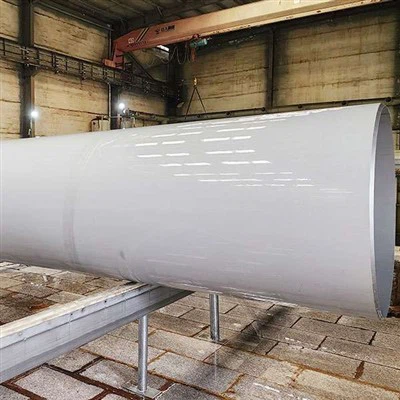
Hey there! As a supplier of UNS S34700, I often get asked about the transportation requirements for this awesome stainless - steel alloy. So, I thought I'd write this blog to share all the ins and outs of transporting UNS S34700.
First off, let's talk a bit about what UNS S34700 is. It's a stabilized austenitic stainless steel that's got great corrosion resistance, especially in environments where there's a risk of intergranular corrosion. This makes it super useful in a bunch of industries like chemical processing, food and beverage, and even architecture.
Packaging
The first step in transporting UNS S34700 is proper packaging. This alloy is usually supplied in various forms such as sheets, plates, bars, and pipes. For sheets and plates, they're often wrapped in protective plastic or paper to prevent scratches and surface damage during transit. We also use wooden pallets to stack them up, which makes it easier to handle with forklifts and other equipment.
When it comes to bars and pipes, they're typically bundled together with steel straps. To avoid any abrasion between the bars or pipes, we insert some soft materials like rubber pads or cardboard in between. And just like the sheets and plates, they're also placed on pallets for better handling.
Loading and Unloading
Loading and unloading UNS S34700 require careful attention. We always use appropriate lifting equipment, like cranes or forklifts with the right capacity. For example, if we're dealing with heavy plates, we need a crane that can handle the weight without any issues.
During loading, we make sure to distribute the weight evenly on the transport vehicle. This is crucial to prevent any imbalance that could lead to accidents during transit. And when unloading, we follow the same careful procedures to avoid any damage to the alloy.
Mode of Transportation
There are several modes of transportation available for UNS S34700, and the choice depends on a few factors like the quantity, destination, and urgency.
Road Transport
Road transport is one of the most common ways to move UNS S34700, especially for local or regional deliveries. Trucks are a great option because they offer flexibility in terms of pick - up and delivery locations. They can reach places that other modes of transport might not be able to access easily.
However, when using road transport, we need to consider the road conditions. Bumpy roads can cause vibrations that might damage the alloy. So, we often choose well - maintained routes and use trucks with good suspension systems.
Rail Transport
For larger quantities and longer distances, rail transport can be a good choice. Trains can carry a significant amount of cargo at once, which is cost - effective. But rail transport also has its limitations. The delivery time might be a bit longer compared to road transport, and there could be issues with the availability of railcars.
Sea Transport
If the destination is overseas, sea transport is the way to go. UNS S34700 is usually shipped in containers. Containers provide an extra layer of protection against the harsh marine environment. They're also sealed to prevent any moisture or saltwater from getting in, which could cause corrosion.
But sea transport also has its challenges. The journey can be long, and there's always a risk of rough seas. So, we make sure to secure the containers properly on the ship to prevent them from shifting during the voyage.
Environmental Considerations
UNS S34700 is sensitive to certain environmental conditions during transportation. For example, it should be kept away from excessive moisture and humidity. High humidity can lead to the formation of rust on the surface of the alloy, which can affect its quality.
In areas with high humidity, we might use desiccants inside the packaging to absorb any moisture. And during storage at transit points, we choose dry and well - ventilated warehouses.
Another environmental factor is temperature. Extreme temperatures can cause the alloy to expand or contract, which might lead to internal stresses. So, we try to avoid exposing UNS S34700 to very high or very low temperatures for extended periods.
Documentation
Proper documentation is essential for transporting UNS S34700. We need to have a bill of lading that includes details like the quantity, weight, and dimensions of the alloy. This document is used to track the shipment and also serves as proof of ownership.
We also provide a material certification that shows the chemical composition and mechanical properties of the UNS S34700. This is important for the customers to ensure that they're getting the right product.
Comparison with Other Alloys
It's interesting to compare the transportation requirements of UNS S34700 with other stainless - steel alloys. For example, Stainless Steel 317 / UNS S31700 / 1.4449 and Stainless Steel 317L / UNS S31703 / 1.4438 have similar corrosion - resistant properties, but their transportation requirements might vary slightly.


317 and 317L are also used in similar industries, but they might be more susceptible to certain types of corrosion in specific environments. So, their packaging and environmental protection during transportation might need to be adjusted accordingly.
Another alloy is Stainless Steel 17 - 4PH / UNS S17400 / 1.4542. It's a precipitation - hardened stainless steel with different mechanical properties compared to UNS S34700. The transportation of 17 - 4PH might require more attention to prevent any damage to its hard - ened structure.
Regulatory Requirements
There are also some regulatory requirements that we need to follow when transporting UNS S34700. These regulations can vary depending on the country and region. For example, in some areas, there are restrictions on the maximum weight and dimensions of the cargo that can be transported on public roads.
We also need to comply with international shipping regulations if we're sending the alloy overseas. These regulations cover things like safety standards, customs documentation, and environmental protection.
Conclusion
Transporting UNS S34700 requires careful planning and attention to detail. From proper packaging to choosing the right mode of transportation, every step is crucial to ensure that the alloy reaches its destination in perfect condition.
If you're in the market for UNS S34700 and have any questions about transportation or the product itself, don't hesitate to reach out. We're here to help you with all your procurement needs and ensure a smooth and hassle - free experience.
References
- ASM Handbook Volume 13A: Corrosion: Fundamentals, Testing, and Protection
- Stainless Steel Handbook by The Nickel Institute