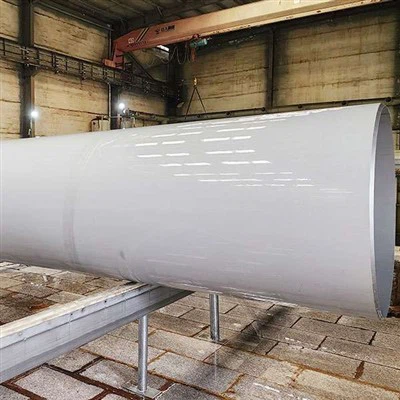
As a supplier of UNS S31703, I've witnessed firsthand the importance of managing residual stress in this high - performance stainless steel alloy. Residual stress can significantly affect the mechanical properties, dimensional stability, and corrosion resistance of UNS S31703 components. In this blog, I'll share some effective strategies to reduce residual stress in UNS S31703.
Understanding Residual Stress in UNS S31703
Residual stress in UNS S31703 is mainly generated during manufacturing processes such as welding, machining, and cold working. Welding, for example, involves rapid heating and cooling cycles. When the weld area cools down, it contracts at a different rate compared to the surrounding base metal. This differential contraction creates internal stresses, known as residual stresses. Machining operations like turning, milling, and grinding can also induce residual stress due to the cutting forces and the deformation of the material. Cold working, such as rolling or forging, plastically deforms the metal, which can lead to the build - up of residual stress as well.
These residual stresses can have detrimental effects on the performance of UNS S31703. They can cause premature failure of components, especially under cyclic loading conditions. Residual stress can also increase the susceptibility of the material to stress - corrosion cracking, which is a major concern in applications where the alloy is exposed to corrosive environments.
Heat Treatment
One of the most common and effective methods to reduce residual stress in UNS S31703 is heat treatment. Stress - relieving heat treatment involves heating the material to a specific temperature below its critical range and holding it at that temperature for a certain period of time, followed by a slow cooling process.


For UNS S31703, a typical stress - relieving temperature range is between 550°C and 650°C. At these temperatures, the atoms in the material have enough thermal energy to rearrange themselves, which helps to relieve the internal stresses. The holding time depends on the thickness and size of the component. Generally, a longer holding time is required for thicker components. After the holding period, the material is slowly cooled to room temperature. This slow cooling rate prevents the re - formation of residual stress due to rapid temperature changes.
Heat treatment not only reduces residual stress but also improves the dimensional stability of the UNS S31703 components. It can also enhance the material's resistance to stress - corrosion cracking, making it more suitable for applications in harsh environments.
Shot Peening
Shot peening is a mechanical surface treatment method that can be used to reduce residual stress in UNS S31703. In this process, small spherical particles, called shots, are propelled at high velocity onto the surface of the material. The impact of the shots causes plastic deformation of the surface layer, which in turn creates compressive residual stress on the surface.
Compressive residual stress on the surface is beneficial because it counteracts the tensile residual stress that may be present in the material. It can improve the fatigue life of UNS S31703 components by preventing the initiation and propagation of cracks. Shot peening can also enhance the wear resistance of the material's surface.
The effectiveness of shot peening depends on several factors, such as the size and hardness of the shots, the peening intensity, and the coverage. A proper combination of these parameters needs to be selected based on the specific requirements of the UNS S31703 component.
Machining Optimization
Optimizing the machining process can also help to reduce residual stress in UNS S31703. One approach is to use appropriate cutting parameters. For example, a lower cutting speed and feed rate can reduce the cutting forces and the amount of heat generated during machining. This can minimize the deformation of the material and the build - up of residual stress.
Using sharp cutting tools is also crucial. Dull tools can cause excessive cutting forces and generate more heat, which can lead to higher residual stress. Regular tool replacement and proper tool geometry selection can ensure efficient machining and reduce the impact on residual stress.
In addition, the sequence of machining operations can be optimized. For example, rough machining should be followed by a stress - relieving heat treatment before the final finishing operations. This can help to remove the majority of the residual stress generated during rough machining and prevent it from being locked in during the final finishing.
Comparison with Other Alloys
It's interesting to compare the residual stress management of UNS S31703 with other stainless steel alloys. For instance, Stainless Steel 316 / UNS S31600 / 1.4401 has similar austenitic structure but different chemical composition. The heat treatment parameters for stress - relieving may vary slightly between the two alloys. UNS S31703 has a higher molybdenum content, which gives it better corrosion resistance but may also affect the heat treatment response.
Stainless Steel 17 - 4PH / UNS S17400 / 1.4542 is a precipitation - hardening stainless steel. The residual stress reduction methods for this alloy may involve a combination of solution annealing, aging, and stress - relieving heat treatments. Compared to UNS S31703, the heat treatment process for 17 - 4PH is more complex due to the precipitation - hardening mechanism.
Stainless Steel 321 / UNS S32100 / 1.4541 contains titanium, which stabilizes the alloy against intergranular corrosion. When it comes to reducing residual stress, the heat treatment temperature and time for 321 may be different from UNS S31703. Understanding these differences can help engineers and manufacturers choose the most appropriate alloy and residual stress reduction method for their specific applications.
Conclusion
Reducing residual stress in UNS S31703 is essential for ensuring the long - term performance and reliability of components made from this alloy. Heat treatment, shot peening, and machining optimization are all effective strategies that can be used alone or in combination. By carefully selecting and applying these methods, we can minimize the negative effects of residual stress and improve the overall quality of UNS S31703 products.
If you're in the market for high - quality UNS S31703 products and want to discuss how to manage residual stress in your specific applications, I encourage you to reach out for a procurement negotiation. We have a team of experts who can provide you with detailed technical support and customized solutions.
References
- ASM Handbook, Volume 4: Heat Treating, ASM International.
- Welding Handbook, American Welding Society.
- Machining Technology: An Introduction, Kalpakjian and Schmid.