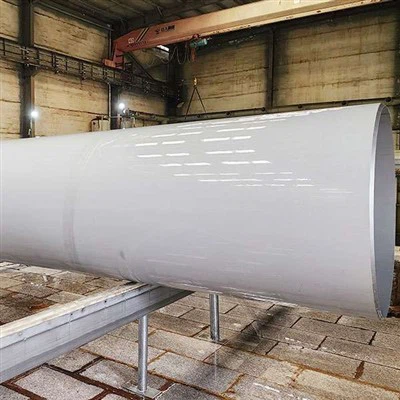
Hey there! As a supplier of UNS S30403, I've been getting a lot of questions lately about how the electrical conductivity of this material changes with temperature. So, I thought I'd take a deep dive into this topic and share some insights with you all.
First off, let's talk a bit about UNS S30403. It's a type of stainless steel, specifically known as Stainless Steel 304L / UNS S30403 / 1.4306, 1.4307 Check out more details here. This material is widely used in various industries because of its excellent corrosion resistance, good formability, and weldability. But when it comes to electrical conductivity, how does it behave as the temperature changes?
The Basics of Electrical Conductivity
Before we get into the temperature - related changes, let's quickly go over what electrical conductivity is. In simple terms, electrical conductivity is a measure of how easily an electric current can pass through a material. Metals, in general, are good conductors of electricity because they have free electrons that can move around easily. Stainless steel, including UNS S30403, is a metal alloy, so it has some level of electrical conductivity.
How Temperature Affects Electrical Conductivity in Metals
In most metals, electrical conductivity decreases as the temperature increases. This is mainly due to the increased thermal vibrations of the atoms in the metal lattice. As the temperature goes up, the atoms start to vibrate more vigorously. These vibrations act as obstacles to the flow of free electrons. The free electrons collide more frequently with the vibrating atoms, which makes it harder for them to move in an organized way and carry an electric current.
Electrical Conductivity of UNS S30403 and Temperature
For UNS S30403, the same general principle applies. At lower temperatures, the electrical conductivity is relatively higher. The atoms in the stainless - steel lattice are vibrating less, so the free electrons can move through the material more easily. As the temperature starts to rise, the conductivity begins to drop.
Let's break it down a bit further. At room temperature (around 20 - 25°C), UNS S30403 has a certain level of electrical conductivity. But as we start to heat it up, say to around 100°C, the conductivity will have decreased slightly. The increase in temperature causes the atoms to vibrate more, and the free electrons face more resistance.
If we keep increasing the temperature, for example, up to 500°C or even higher, the drop in conductivity becomes more significant. At these high temperatures, the thermal vibrations of the atoms are so intense that the free electrons have a really hard time moving through the material.
Real - World Implications
The change in electrical conductivity with temperature has some important implications in real - world applications. For instance, in electrical wiring or components made from UNS S30403, the performance can be affected by temperature changes. If a device is operating in a high - temperature environment, the decrease in electrical conductivity might lead to increased power losses. This could result in the device heating up even more, which can further degrade its performance and potentially cause damage over time.
On the other hand, in some applications where electrical conductivity needs to be stable over a range of temperatures, engineers need to take this property of UNS S30403 into account. They might need to design cooling systems or use other materials in combination with UNS S30403 to ensure that the electrical performance remains within the desired limits.
Comparing with Other Stainless Steels
It's also interesting to compare the temperature - dependent electrical conductivity of UNS S30403 with other stainless steels. For example, Stainless Steel 321H / UNS S32109 / 1.4878 Learn more about it here and Stainless Steel 904L / UNS N08904 / 1.4539 Check it out here have different alloy compositions. These different compositions can lead to different behaviors in terms of electrical conductivity and its change with temperature.
Stainless Steel 321H has titanium added to it, which can affect the atomic structure and the way free electrons move. So, its electrical conductivity might change with temperature in a slightly different way compared to UNS S30403. Similarly, Stainless Steel 904L, which has a higher nickel and molybdenum content, also has its own unique electrical conductivity - temperature relationship.
Our Role as a Supplier
As a supplier of UNS S30403, we understand the importance of these properties. We can provide you with detailed information about the electrical conductivity of the material at different temperatures. Whether you're an engineer designing a new product or a manufacturer looking for the right material for your application, we can help you make an informed decision.
We can also offer samples for you to test and verify the electrical conductivity under your specific temperature conditions. Our team of experts is always ready to answer your questions and provide technical support.
Why Choose Our UNS S30403?
We source our UNS S30403 from reliable mills that follow strict quality control standards. This ensures that the material you get has consistent properties, including electrical conductivity. We can also offer competitive pricing and flexible delivery options to meet your business needs.
If you're interested in learning more about UNS S30403 or have any questions about its electrical conductivity and how it relates to your project, don't hesitate to reach out. We're here to help you find the best solution for your requirements. Whether it's for a small - scale project or a large - scale industrial application, we've got you covered.
So, if you're in the market for high - quality UNS S30403, get in touch with us. We'll be more than happy to discuss your needs and start a fruitful business relationship.

References
- [1] Metals Handbook: Properties and Selection: Irons, Steels, and High - Performance Alloys. ASM International.
- [2] "Electrical Conductivity of Stainless Steels" - Journal of Materials Science and Engineering.