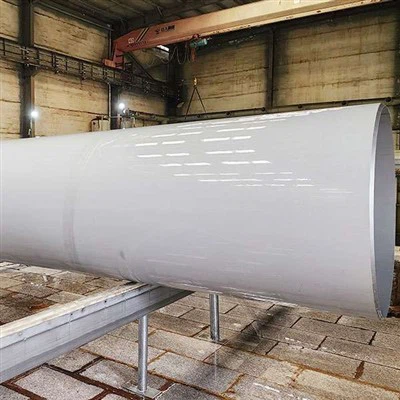
Hey there! As a supplier of UNS S30400, I often get asked about how this material resists radiation damage. So, I thought I'd take a moment to break it down for you in a way that's easy to understand.
First off, let's talk a bit about what UNS S30400 is. It's a type of austenitic stainless steel, which is super popular because of its great corrosion resistance and good mechanical properties. You'll find it in all sorts of applications, from kitchenware to chemical processing equipment.
Now, onto the big question: how does it resist radiation damage? Well, it all comes down to its microstructure and chemical composition.
Microstructure
The austenitic structure of UNS S30400 plays a huge role in its radiation resistance. Austenite is a face - centered cubic (FCC) crystal structure. This structure is really good at absorbing and dissipating the energy from radiation. When radiation hits the material, it creates defects like vacancies (missing atoms) and interstitials (extra atoms in the lattice). In an FCC structure, these defects can move around relatively easily. They can recombine with each other, which helps to reduce the overall damage caused by the radiation.
Think of it like a game of bumper cars. The defects are the cars, and the FCC lattice is the arena. The cars can move around and bump into each other, and when they do, they can cancel each other out. This means that the material can withstand a fair amount of radiation without significant degradation.
Chemical Composition
The chemical composition of UNS S30400 also contributes to its radiation resistance. It mainly consists of iron (Fe), chromium (Cr), and nickel (Ni).
Chromium is a key player here. It forms a thin, protective oxide layer on the surface of the steel called a passive film. This film acts as a barrier between the steel and the environment, including radiation. It prevents the radiation from directly attacking the underlying metal. The passive film is self - healing, too. If it gets damaged, it can reform as long as there's enough oxygen present.
Nickel is another important element. It helps to stabilize the austenitic structure. A stable austenitic structure is better at resisting radiation - induced phase changes. Some materials can change their crystal structure when exposed to radiation, which can lead to embrittlement and other forms of damage. But the nickel in UNS S30400 helps to keep the austenite stable, so the material maintains its mechanical properties even under radiation.
Comparing with Other Stainless Steels
It's interesting to compare UNS S30400 with other stainless steels in terms of radiation resistance. For example, Stainless Steel 316L Mod / UNS S31603 / 1.4435 and Stainless Steel 316 / UNS S31600 / 1.4401 contain molybdenum (Mo) in addition to the elements in UNS S30400. Molybdenum further enhances the corrosion resistance of these steels, but in terms of radiation resistance, the basic principles are similar. The austenitic structure and the protective oxide layer still do the heavy lifting.
On the other hand, Stainless Steel 904L / UNS N08904 / 1.4539 has a higher nickel and copper content. This gives it excellent corrosion resistance in highly aggressive environments. However, when it comes to radiation resistance, UNS S30400 can still hold its own due to its well - balanced microstructure and composition.
Applications in Radiation - Prone Environments
UNS S30400 is used in several applications where radiation resistance is important. In the nuclear industry, it can be used in the construction of some components in nuclear power plants. For example, it can be used in pipes and fittings that carry coolant water. The radiation resistance of the steel ensures that these components can last a long time without significant degradation.
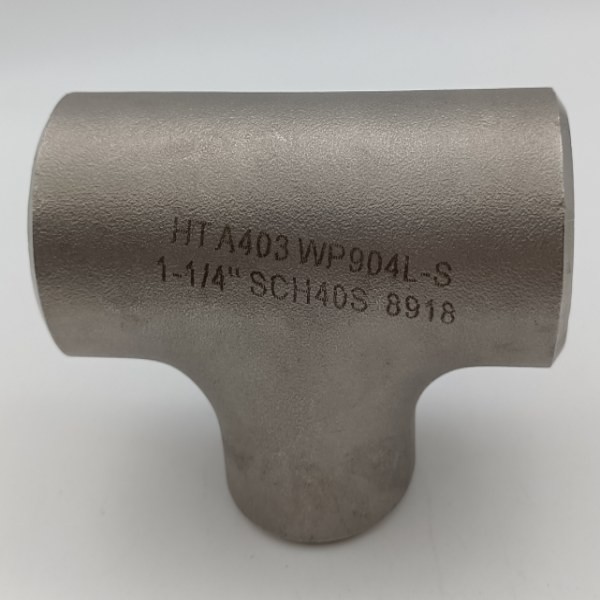

It's also used in medical applications. In radiation therapy, some equipment parts are made from UNS S30400. The material needs to be able to withstand the high - energy radiation used in these treatments without losing its integrity.
Limitations
Of course, UNS S30400 isn't invincible. If the radiation dose is extremely high or the exposure time is very long, it will eventually start to show signs of damage. The passive film can break down, and the microstructure can be severely disrupted. This can lead to things like corrosion, embrittlement, and a decrease in mechanical strength.
But for most normal - level radiation environments, UNS S30400 is a great choice. It offers a good balance between cost, availability, and radiation resistance.
Why Choose Our UNS S30400?
As a supplier, I can tell you that our UNS S30400 is of the highest quality. We carefully control the manufacturing process to ensure that the chemical composition and microstructure are just right. This means that you can count on our material to perform well in radiation - prone environments.
We also offer a wide range of products in different forms, like sheets, plates, bars, and pipes. So, no matter what your specific application is, we can probably provide the right product for you.
If you're in the market for UNS S30400 and need a material that can resist radiation damage, don't hesitate to reach out. Whether you're working on a nuclear project or a medical device, we're here to help you get the best - suited material for your needs. Let's start a conversation about your requirements, and we can figure out the best solution together.
References
- ASM Handbook Volume 13A: Corrosion: Fundamentals, Testing, and Protection.
- Stainless Steel Handbook by L. W. Roberts.
So, there you have it! That's how UNS S30400 resists radiation damage. If you have any more questions, feel free to ask. Looking forward to hearing from you about your UNS S30400 procurement needs.