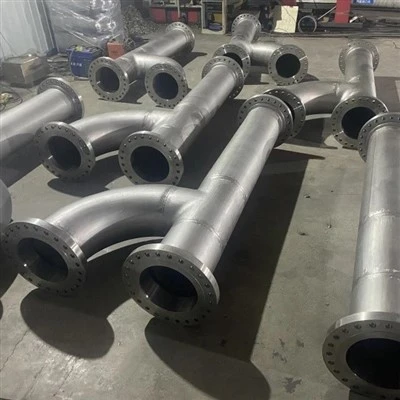
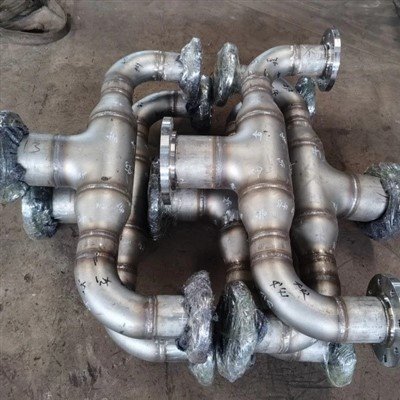
To understand why Hastelloy C22 is the industry standard for high-corrosion environments, one must look at its chemical composition. Hastelloy C22 is a versatile nickel-chromium-molybdenum-tungsten alloy with better overall corrosion resistance than other Ni-Cr-Mo alloys available today, including Hastelloy C276, C4, and A622.

The brilliance of C22 lies in its precise elemental ratios. It typically contains:
Chromium (20.0–22.5%): Provides exceptional resistance to oxidizing media.
Molybdenum (12.5–14.5%): Offers robust protection against reducing environments.
Tungsten (2.5–3.5%): Enhances resistance to localized attacks like pitting.
Iron (2.0–6.0%): Balances the structural integrity of the alloy.
This "all-around" chemical profile ensures that the flange performs equally well in a variety of chemical "upset" conditions where the environment might shift from oxidizing to reducing.
Hastelloy C22 Flange Benefits
Resistance to Localized Attack
In many chemical processes, the most dangerous threats are invisible. Pitting and crevice corrosion can lead to catastrophic failure without warning.
Hastelloy C22 possesses a high Pitting Resistance Equivalent Number (PREN), making it nearly immune to chloride-induced pitting-a common nemesis in seawater and pharmaceutical applications.
Exceptional Weldability and Thermal Stability
One of the greatest challenges with high-performance alloys is "sensitization" during welding, where carbide precipitates form at the grain boundaries, making the joint vulnerable to corrosion.
Hastelloy C22 is designed to resist the formation of these precipitates in the weld heat-affected zone. This allows our factory to produce flanges that maintain their full corrosion resistance in the "as-welded" condition, ensuring the joint is just as strong as the pipe itself.
Stress Corrosion Cracking (SCC) Immunity
Nickel-base alloys are inherently resistant to chloride-stress corrosion cracking. In high-pressure systems where mechanical stress meets corrosive fluids, C22 flanges provide a safety margin that standard steels simply cannot match.
Types of Hastelloy C22 Flanges
At our manufacturing facility, we produce Hastelloy C22 flanges in a variety of configurations to meet specific mechanical and pressure requirements. Selecting the right type of flange is as important as selecting the right material.

Weld Neck Flanges (WNRF)
These are the "gold standard" for high-pressure and extreme temperature applications. The long tapered hub provides an ideal transition of stress from the flange to the pipe, reducing the risk of fatigue failure.
Blind Flanges
Used to seal the end of a piping system or a pressure vessel opening. In a Hastelloy C22 system, the blind flange must withstand the full force of the corrosive media sitting stagnant against its face.
Slip-On Flanges (SORF)
Easier to align and often used in lower-pressure applications. While they require welding on both the inside and outside, C22's excellent weldability makes this process seamless.
Socket Weld Flanges
Preferred for small-diameter, high-pressure piping. The pipe is inserted into a recessed area, and a fillet weld is applied, providing a smooth flow of fluid inside the pipe.
Lap Joint Flanges
Ideal for systems that require frequent dismantling for inspection. The flange consists of a "stub end" made of Hastelloy C22 and a backing flange, allowing for easy bolt hole alignment.
Hastelloy C22 Flange Applications
Where does the "need" for Hastelloy C22 become absolute? Our clients typically specify this grade in sectors where a leak is not just a maintenance issue but a major environmental or safety hazard.

Pharmaceutical and Biotech
In the pharmaceutical industry, purity is paramount. The "cleanability" and corrosion resistance of C22 prevent metallic contamination of the product. It is frequently used in reactors, heat exchangers, and distillation columns where organic acids and chlorides are present.
Chemical Processing
Hastelloy C22 is the workhorse of the chemical industry. It handles aggressive media such as
Ferric and cupric chlorides
Hot contaminated mineral acids (sulfuric, nitric, hydrochloric)
Chlorine-contaminated media
Acetic acid and formic acid
Flue Gas Desulfurization (FGD)
Power plants use scrubbers to remove sulfur dioxide from exhaust gases. The environment inside these scrubbers is a brutal mix of acids and chlorides. Hastelloy C22 flanges are used in the most critical "wet" zones where other materials would fail in weeks.
Waste Treatment
Incineration of hazardous waste creates highly corrosive flue gases. C22 is often the only material capable of surviving the combination of high temperatures and acidic condensation.
Manufacturing Standards and Quality Assurance
To ensure our Hastelloy C22 flanges meet global safety standards, we adhere to rigorous protocols.
Our flanges are manufactured in accordance with:
ASME B16.5: For sizes up to 24".
ASME B16.47: For large-diameter flanges (Series A and B).
ASTM B564 / ASME SB564: Material specifications for nickel alloy forgings.
Quality Assurance
Before a flange leaves our factory, it undergoes a battery of tests:
Positive Material Identification (PMI): To verify the 22% chromium and 13% molybdenum content.
Ultrasonic Testing (UT): To detect internal flaws in the forging.
Dimensional Inspection: Ensuring the gasket face and bolt holes are within micron-level tolerances.
Hydrostatic Testing: Verifying the pressure-containing integrity of the component.
Comparing C22 vs. C276
A common question I receive from procurement officers is, "Why should I pay for C22 when C276 is available?"
While Hastelloy C276 is an excellent alloy, Hastelloy C22 offers superior protection in oxidizing environments. Because C22 contains significantly more chromium (22% vs 16% in C276), it forms a more stable passive film when exposed to oxidizing acids like nitric acid or wet chlorine.
Furthermore, C22 has better overall weldability. If your project involves extensive field welding or exposure to varied chemical streams, C22 is the more "forgiving" and versatile investment. It is essentially an insurance policy for your piping system.
Contact us today for a detailed quotation, technical data package, or material recommendation.