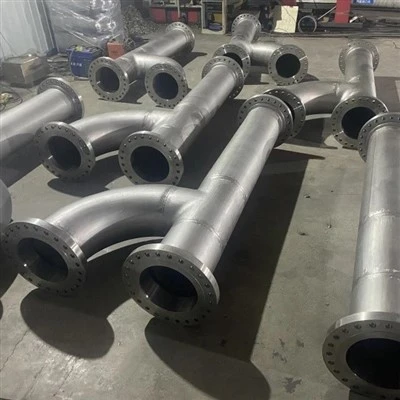
What Is 321H Stainless Steel?
321H stainless steel is a titanium-stabilized austenitic stainless steel with higher carbon content for enhanced high-temperature strength.

The "H" stands for "High carbon," distinguishing it from standard 321. Key characteristics include:
Titanium stabilization: Prevents chromium carbide formation during welding
Higher carbon: Improves strength at temperatures above 500°C
Excellent oxidation resistance: Performs reliably in continuous service up to 870°C
Common Standards: ASTM A240, ASME SA240, UNS S32109
Chemical Composition of 321H Stainless Steel Plate
Understanding the chemical composition helps in appreciating the performance advantages of 321H. Typical composition per ASTM A240 standards includes:
|
Element |
Content (%) |
|
Carbon (C) |
0.04 – 0.10 |
|
Chromium (Cr) |
17.0 – 19.0 |
|
Nickel (Ni) |
9.0 – 12.0 |
|
Manganese (Mn) |
≤ 2.0 |
|
Silicon (Si) |
≤ 1.0 |
|
Titanium (Ti) |
≥ 5 × C content |
|
Phosphorus (P) |
≤ 0.045 |
|
Sulfur (S) |
≤ 0.03 |
The addition of titanium stabilizes the microstructure, preventing chromium carbide formation along grain boundaries. This ensures long-term resistance to intergranular corrosion, especially after exposure to high temperatures.
Mechanical Properties of 321H Plates
Steel 321H plates combine strength and toughness, even at elevated temperatures. Typical mechanical properties include:
|
Property |
Value |
|
Tensile Strength (MPa) |
515 – 690 |
|
Yield Strength (MPa) |
205 – 275 |
|
Elongation (%) |
40 – 50 |
|
Hardness (HRB) |
90 – 100 |
|
Max Operating Temp |
~870°C (1600°F) |
The combination of high tensile strength, elongation, and thermal stability makes 321H plates suitable for pressure vessels, heat exchangers, and industrial boilers.
Key Properties of 321H Stainless Steel Plate

High-Temperature Resistance
321H is designed to maintain mechanical strength and corrosion resistance at elevated temperatures, typically up to 870°C (1600°F). The increased carbon content and titanium stabilization prevent sensitization, making it suitable for long-term exposure in hot environments.
Corrosion Resistance
The chromium and nickel content provides excellent resistance to:
Oxidation
Hot gases
Mildly corrosive chemicals
This makes 321H plates ideal for chemical processing equipment and exhaust systems.
Weldability
Unlike some high-carbon steels, 321H plates can be welded using standard techniques, including:
TIG (GTAW)
MIG (GMAW)
Resistance welding
After welding, the material retains its high-temperature performance and corrosion resistance, making it practical for fabrication and assembly.
Formability
321H stainless steel plates are easy to cut, bend, and shape, enabling flexibility in custom industrial applications, including tanks, flanges, and structural components.
Common Applications of 321H Plates

1. High-Temperature Process Equipment
321H plates fabricate reactors, furnaces, and heat exchangers operating above 500°C.
The alloy maintains strength and resists oxidation in continuous high-heat environments. Typical uses include petrochemical crackers, ammonia converters, and thermal oxidizers.
2. Aerospace and Jet Engine Components
321H plates manufacture exhaust systems, heat shields, and structural parts for aircraft.
Lightweight, strong, and oxidation-resistant, 321H handles the thermal cycling and vibration demands of aerospace applications.
3. Power Generation Equipment
321H plates construct boiler components, superheater tubes, and steam piping in power plants.
Resistance to steam oxidation and thermal fatigue makes 321H reliable for fossil fuel and biomass power systems.
4. Automotive Exhaust Systems
321H plates form manifolds, catalytic converter housings, and exhaust pipes.
The material withstands repeated heating/cooling cycles and corrosive exhaust gases without cracking or thinning.
5. Welded Fabrications for Corrosive Service
321H plates build tanks, ducting, and piping where welding is required and corrosion resistance matters.
Titanium stabilization prevents "weld decay"-a form of corrosion that can occur in non-stabilized grades after welding.
Available Sizes and Ordering Information
Standard Plate Dimensions
|
Thickness |
Width |
Length |
Typical Application |
|
3-6 mm |
1000-2000 mm |
2000-6000 mm |
Sheet metal, ducting |
|
6-20 mm |
1000-2500 mm |
2000-6000 mm |
Tanks, vessels, structural |
|
20-50 mm |
1000-2000 mm |
2000-4000 mm |
Heavy equipment, high-pressure |
Surface Finish Options
2B: Cold-rolled, annealed, pickled (standard industrial finish)
No. 4: Brushed/polished (architectural, food grade)
BA: Bright annealed (decorative, high-purity)
Hot-Rolled: As-rolled, pickled (structural, heavy industrial)
How to Order
When requesting a quote, please specify:
Dimensions: Thickness × Width × Length
Quantity: Pieces or total weight
Finish: 2B, No. 4, BA, or hot-rolled
Certification: MTR per EN 10204 3.1 (included standard)
Testing: Any additional mechanical or corrosion tests required
Delivery: Destination and required date
Typical Lead Time: 3-6 weeks for non-stock sizes; stock items ship in 3-7 days.
Frequently Asked Questions
Q1: Can 321H be welded using standard methods?
A: Yes. 321H welds readily using GTAW (TIG), GMAW (MIG), or SMAW processes. Use 321 or 347 filler metals for best results.
Q2: Is 321H magnetic?
A: No. Like other austenitic stainless steels, 321H is non-magnetic in the annealed condition.
Q3: What is the maximum service temperature for 321H?
A: 321H performs reliably in continuous service up to 870°C (1600°F) and intermittent service up to 925°C (1700°F).
Q4: How does 321H resist corrosion after welding?
A: Titanium in the alloy binds with carbon, preventing chromium depletion at grain boundaries-this stops intergranular corrosion.
Q5: Is 321H more expensive than 304?
A: Yes, typically 15-25% higher due to titanium addition and specialized production. However, its performance in demanding applications often justifies the premium.