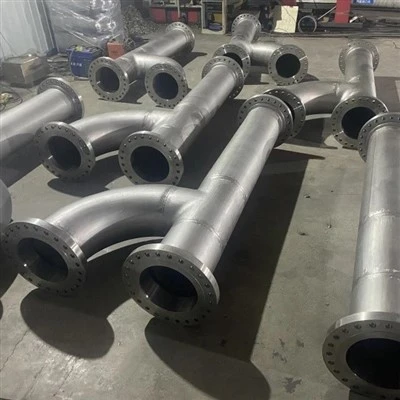
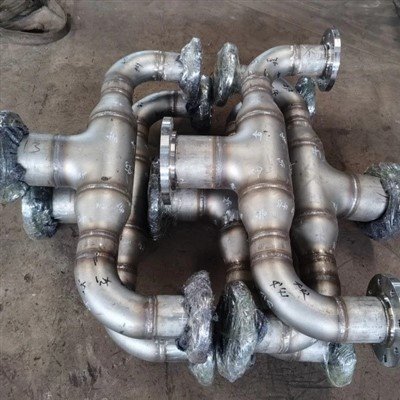
Within the complex three-dimensional networks of industrial, commercial, and residential piping systems, efficiently managing the combination of flow branching and pipe size changes is a frequent challenge. This is where the Reducing Tee proves indispensable. As a specialized type of pipe fitting, the Reducing Tee offers a compact, reliable solution for creating branch connections where the branch pipe diameter differs from the main run. Understanding its characteristics, variations, and proper application is crucial for efficient and reliable piping design.

Whats Is Reducing Tee?
A Reducing Tee, also known as a Reducing Branch Tee or Unequal Tee, is a T-shaped pipe fitting with three openings. Its defining characteristic is that one opening has a different nominal pipe size than the other two openings on the main run. This distinguishes it from a standard Equal Tee, where all three openings are the same size.
Function: Branch Flow: Split or combine fluid flow from a main pipeline into a branch line or vice versa.
Change Pipe Size: Transition the pipe diameter specifically at the point of branching.
Reducing Tees Key Characteristics
Connection Types: Reducing tees are manufactured to suit various connection methods:
- Butt Weld (BW): Most common for high-pressure/temperature industrial applications (oil & gas, chemical, power). Ends are beveled for welding directly to pipe. Governed by standards like ASME B16.9.
- Socket Weld (SW): Smaller sizes, moderate pressure. Pipe inserts into the socket and is fillet welded. ASME B16.11.
- Threaded (Screwed): Low-pressure applications, easier assembly/disassembly. Male (NPT) threads. ASME B16.11.
- Flanged: For systems requiring frequent disconnection. Bolt holes match specific flange standards (ASME B16.5).
Materials: Available in a vast range to match piping system requirements:
- Metals: Carbon Steel (A234 WPB), Stainless Steel (A403 WP304/304L, 316/316L), Alloy Steel (WP5, WP9, WP11), Duplex/Super Duplex, Nickel Alloys, Copper, Brass.
- No Metals: PVC, CPVC, PP, PVDF.
Pressure Ratings: Defined by the material grade, wall thickness (schedule - SCH40, SCH80, XS, XXS), and manufacturing standard. Must be carefully selected to match the system's design pressure and temperature.
Flow Dynamics: The abrupt change in diameter at the branch connection inherently creates turbulence and a higher localized pressure drop compared to a straight run or an equal tee. Flow patterns can be complex, especially at the branch inlet/outlet.
Types of Reducing Tees
Reducing tees are primarily categorized based on the size relationship between their openings:
Straight Reducing Tee:
- This is the most common type.
- The two outlets on the main run (run outlets) are the same size.
- The branch outlet (at 90° to the run) is a different size (usually smaller).
- Example: 6" x 6" x 4" - Main run is 6", branch outlet is 4".
Concentric Reducing Tee vs. Eccentric Reducing Tee:
- While "concentric" and "eccentric" are terms most often associated with reducers, they can apply to the branch outlet of a reducing tee in specific contexts:
- Concentric Branch: The centerline of the branch outlet is aligned with the centerline of the main run pipe. This is the standard and most common configuration for reducing tees.
- Eccentric Branch: The centerline of the branch outlet is offset horizontally from the centerline of the main run. This is far less common than eccentric reducers. Its primary use would be in horizontal lines where the branch connection needs to maintain the top or bottom of pipe elevation (BOPE or TOPE) relative to the main run to prevent trapping air or sediment specifically at the branch connection point. Requires careful specification.
Double Reducing Tee:
- All three openings have different sizes.
- Example: 8" x 6" x 4" - One run end is 8", the opposite run end is 6", and the branch is 4".
- Used in specific situations requiring size transitions on both the main run and the branch simultaneously within a single fitting.
Reducing Tees Applications
Reducing tees are ubiquitous in piping systems across numerous industries:
Connecting Smaller Branch Lines: The most frequent use. Examples include:
- Taking a smaller service line (instrument air, utility water, chemical injection) off a larger main header.
- Connecting smaller diameter drain or vent lines to a primary process line.
- Branching off to smaller equipment nozzles from a larger supply line.
- Pump Bypass Lines: Installing a smaller diameter recirculation or minimum flow bypass line around a pump.
- Instrument Connections: Connecting pressure gauges, temperature sensors (thermowells), sample points, or level taps, which typically require smaller diameter connections, to larger process lines.
- Utility Distribution: In HVAC systems for branching smaller duct/pipe runs for heating/cooling zones. In domestic water systems for branching to smaller fixtures.
- Tank Connections: Connecting inlet/outlet nozzles of different sizes on tanks or vessels to piping headers.
- Reducing Pipe Size Along a Run with a Branch: When a pipeline needs to reduce in diameter and have a branch connection at the same location, a double reducing tee can sometimes be used instead of a reducer plus a separate tee, saving space and welds though flow dynamics need consideration.
Advantages of Using Reducing Tee
- Space Efficiency: Combines the function of a tee and a reducer (or two reducers in the case of a double reducing tee) into a single fitting, saving valuable space, especially in tight areas.
- Reduced Welds/Joints: Fewer welds or threaded connections compared to installing a separate reducer and tee, potentially improving system integrity, reducing labor, and minimizing leak points.
- Structural Rigidity: A single welded reducing tee can provide better alignment and structural support at a complex junction than separate components.
- Cost-Effectiveness: Often more economical than purchasing and installing two separate fittings (tee + reducer).
Conclusion
The Reducing Tee is a fundamental and highly versatile component in piping system design. Its ability to efficiently handle both branching and pipe size reduction within a single, compact fitting makes it invaluable across countless applications, from high-pressure oil and gas pipelines to domestic water systems. Understanding its distinct characteristics – the asymmetrical design, various connection types and materials, and the common configurations – is essential for engineers, designers, and installers.
By carefully considering the size requirements, fluid properties, pressure/temperature conditions, and flow dynamics, the appropriate Reducing Tee can be selected to ensure a safe, efficient, and reliable piping network junction. Always refer to applicable codes and standards and consult with material specialists when dealing with demanding service conditions.