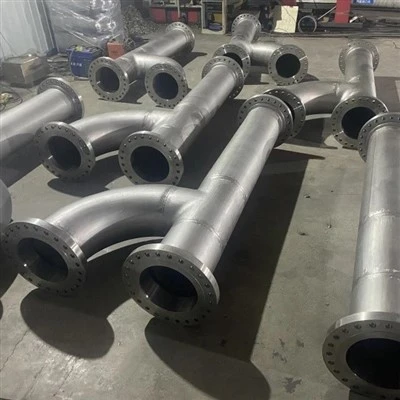
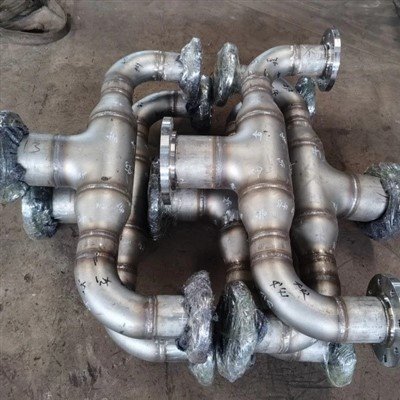
Socket weld remains a vital joining technique, particularly for small-bore (typically NPS 2" and below) piping systems in demanding industries like oil & gas, chemical processing, power generation, and high-purity hydraulics. This method involves inserting a pipe end into a recessed "socket" within a fitting, flange, valve, or other component, establishing a precise 1/16" (1.5mm) gap, and then applying a circumferential fillet weld around the exterior joint. Understanding its inherent strengths and limitations is crucial for specifying reliable, cost-effective, and long-lasting fluid handling systems, especially when utilizing advanced stainless steels and nickel alloys prevalent in corrosive or high-pressure environments.

Advantages of Socket Weld
Socket welding offers several compelling benefits that ensure its continued relevance. Firstly, it provides exceptional joint strength and leak integrity under high internal pressure and significant vibration loads.
The fillet weld, when properly executed, creates a robust mechanical bond, while the internal shoulder of the socket offers inherent support, preventing pipe collapse or misalignment under stress – a critical factor in high-pressure instrument lines or pulsating services.
Secondly, the design facilitates easier assembly and alignment compared to butt welding. The socket acts as a natural guide for the pipe, significantly simplifying fit-up, especially in tight spaces or for complex configurations, reducing fabrication time and labor costs for small-diameter systems.
Thirdly, socket weld connections boast a highly compact profile. They require considerably less radial space than comparable flanged connections, making them ideal for skid-mounted equipment, densely packed manifolds, and applications where space optimization is paramount.
Finally, while requiring skilled welders, the fillet weld technique is generally less complex and time-consuming than achieving full-penetration groove welds (as in butt welding) for small sizes. This translates to faster installation and lower overall fabrication costs for the target size range, without compromising the essential strength and leak-tightness required for critical services.
Disadvantages of Socket Welding
Despite its advantages, socket welding presents significant drawbacks that must be carefully evaluated.
The most critical limitation is the inherent crevice created between the pipe's outer diameter and the socket's inner wall, exacerbated by the mandatory 1/16" gap. This crevice is highly susceptible to trapping stagnant process fluids, chlorides, or corrosive contaminants, leading to aggressive Crevice Corrosion, particularly problematic for stainless steels and nickel alloys in chloride-bearing or acidic environments. Mitigation requires stringent post-weld purging or specialized weld procedures, adding complexity and cost.
Secondly, the joint design severely limits effective Non-Destructive Examination (NDE). Radiographic Testing cannot adequately inspect the root of the weld or the critical crevice area. Reliance is primarily on Visual Testing (VT) and surface methods like Liquid Penetrant (PT) or Magnetic Particle Testing (MT), potentially leaving internal defects undetected – a major concern for safety-critical systems.
Thirdly, socket welds are fundamentally permanent connections. Disassembly for maintenance, inspection, or modification requires destructive cutting, rendering the fittings unusable and increasing long-term lifecycle costs compared to flanged systems.
Fourthly, the internal step created at the socket shoulder introduces turbulence and a potential flow restriction. This can accelerate erosion-corrosion in abrasive services or cavitation in high-velocity liquids and is unacceptable in ultra-high-purity or sanitary applications where smooth, uninterrupted flow paths are mandatory.
Finally, omitting or incorrectly setting the 1/16" expansion gap is a common fabrication error with severe consequences. Insufficient gap can lead to weld root cracking due to shrinkage stresses upon cooling, compromising joint integrity immediately or in service.
Stainless Steels vs Nickel Alloys: How To Choose
The choice of base material significantly interacts with socket weld advantages and disadvantages. While carbon steel is common, stainless steels (304/316L, Duplex 2205, Super Duplex S32750, 6% Moly alloys) and nickel alloys (Alloy 400, 625, C276) are frequently chosen for corrosion resistance.
However, their susceptibility to crevice corrosion in the socket weld crevice is often higher than carbon steel. High-alloy materials mitigate but do not eliminate this risk; meticulous procedure control (purge welding, strict gap setting) becomes even more critical. Conversely, the high strength of duplex and nickel alloys complements the robust mechanical nature of the socket weld joint. Welding these alloys requires specialized procedures and filler metals to prevent detrimental phase formation or loss of corrosion properties in the Heat Affected Zone (HAZ).
Conclusion
Socket welding is a powerful technique with distinct advantages in strength, compactness, ease of assembly, and cost-effectiveness for small-bore, high-pressure, high-vibration piping systems. Its inherent robustness makes it suitable for critical instrument lines, hydraulic systems, and connections on valves and pumps. However, the severe limitations regarding crevice corrosion risk, restricted inspectability, permanent nature, flow disruption, and sensitivity to gap setting cannot be overlooked.
Successful deployment hinges on strategic application: rigorously evaluating the process fluid corrosivity, prioritizing systems where crevice corrosion can be effectively managed or is an acceptable risk within the maintenance plan, ensuring strict adherence to welding procedures, and accepting the limitations on inspectability and disassembly.
For services where crevice corrosion is intolerable, full penetration butt welds or carefully selected flanged connections often present a more reliable, inspectable, and maintainable long-term solution despite potentially higher initial costs. Understanding these trade-offs is essential for optimal piping system design and integrity management.