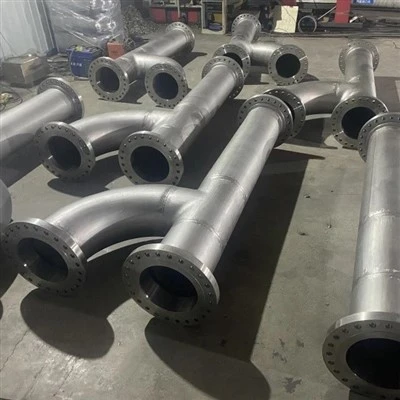
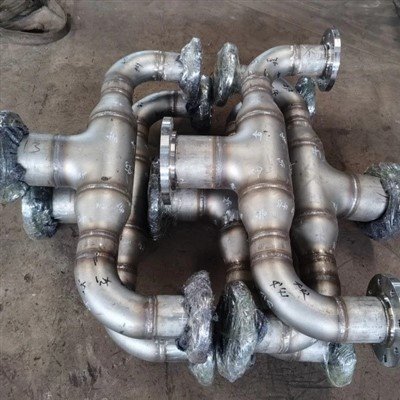
At our factory, we produce Alloy 31 plate and sheet to the tightest tolerances under ASTM B625, ASME BPVC Section VIII, and NACE MR0175/ISO 15156, ensuring every piece meets the rigorous demands of critical service. The material's low carbon content (0.015% max) preserves excellent weldability and corrosion resistance in the as-welded condition, while its high strength and ductility allow fabricators to form complex components without cracking.

Below, I summarize the primary applications of Alloy 31 sheet plate.
Chemical Processing Industry Applications
Alloy 31 sheet and plate provide superior resistance to highly corrosive chemical environments, particularly those involving sulfuric, phosphoric, and nitric acids contaminated with chlorides.
In chemical processing plants, equipment faces constant exposure to aggressive media at elevated temperatures. Alloy 31 excels in handling sulfuric acid across a broad concentration range, maintaining excellent corrosion resistance up to 80°C. This makes it the material of choice for components in pickling plants using sulfuric acid and nitric-hydrofluoric acid mixtures.
The alloy's resistance to both reducing and oxidizing media proves invaluable in organic acid synthesis and ester production facilities. We have documented numerous cases where Alloy 31 reactors and heat exchangers outperformed 316L and 904L by factors of 5-10 in service life when processing chloride-contaminated process streams.
Specifically, Alloy 31 sheet is widely specified for:
Reactor vessels handling mixed acid streams containing chlorides.
Heat exchanger plates exposed to cooling waters with high chloride content.
Piping systems transporting aggressive chemical intermediates.
Distillation columns processing organic acids and their derivatives.
Phosphoric Acid Production
Alloy 31 sheet and plate delivers exceptional resistance to erosion-corrosion in phosphoric acid production via the wet digestion process.
The production of phosphoric acid through wet digestion creates uniquely challenging conditions, combining abrasive solid particles with highly corrosive phosphoric acid containing fluoride and chloride impurities. Alloy 31's high molybdenum and chromium content provides outstanding protection against both general corrosion and erosion-corrosion mechanisms.
In our experience supplying material to major fertilizer complexes, Alloy 31 plates used in reactor agitators, digester tanks, and heat recovery systems demonstrate service lives 3-4 times longer than conventional stainless steels. The alloy's resistance to aggressive phosphoric acid media at elevated temperatures makes it the preferred material for critical components in this demanding industry.
Flue Gas Desulfurization (FGD) Systems
Alloy 31 sheet and plate serve as a cost-effective solution for FGD system components in coal-fired power plants, particularly in areas with moderately aggressive conditions.
The evolution of FGD technology since the Clean Air Act amendments of the 1970s and 1990s has driven continuous improvement in materials selection. While highly aggressive zones may require nickel alloys like C-276 or Alloy 59, Alloy 31 has proven itself in less critical areas and for damper applications.
The simulated scrubber environment testing demonstrates Alloy 31's excellent performance in conditions replicating marine exhaust scrubbers-pH 0.5 with 110,000 ppm chlorides at 80°C. This performance translates directly to coal-fired power plant scrubbers handling similar condensate chemistries.
Key FGD applications for Alloy 31 plates include:
Absorber tower inlet ducts where temperatures moderate.
Outlet ducts and stack liners requiring resistance to acid condensate.
Damper components exposed to intermittent corrosive conditions.
Spray headers and support structures in less aggressive zones.
Marine Engineering and Seawater Service
Alloy 31 sheet and plate offer superior resistance to localized corrosion in seawater systems, maintaining high pitting potentials up to 90°C.
Investigations of Alloy 31 in natural seawater environments, including both North Sea and Baltic Sea testing, demonstrate its exceptional performance. In chlorinated seawater conditions, the threshold conditions for Alloy 31 are at 40°C with 1 ppm chlorine-significantly superior to conventional 6% molybdenum stainless grades.
This performance makes Alloy 31 plates ideal for:
Seawater heat exchanger plates and tube sheets.
Process cooler components exposed to brackish water.
Marine scrubber systems for ship diesel engines.
Piping systems handling ocean water and brackish water.
Condensers and chillers in marine vessels and coastal facilities.
The combination of high resistance to chloride-induced pitting and crevice corrosion, coupled with excellent performance in both oxidizing and reducing conditions, makes Alloy 31 uniquely suited for marine heat transfer equipment.
Oil and Gas Industry Applications
Alloy 31 sheet and plate meet stringent requirements for sour gas service, holding ISO 15156/NACE MR0175 certification up to Level VI for severe environments.
The oil and gas industry presents some of the most challenging combinations of corrosive species-hydrogen sulfide, carbon dioxide, chlorides, and elemental sulfur at elevated pressures and temperatures. Alloy 31's certification to NACE MR0175/ISO 15156 Level VI confirms its suitability for the most demanding sour service applications.
Specific applications in oil and gas production include:
Strain-hardened transport and feed pipes for corrosive hydrocarbon streams.
Slicklines, wirelines, and flowlines for oil and gas transport in sour environments.
Separation vessel components exposed to produced water with high chloride content.
Heat exchanger plates in refineries processing high-sulfur crude oils.
Pulp and Paper Industry
Alloy 31 sheet and plate provide outstanding resistance to both general and localized corrosion in chlorine dioxide bleaching plants.
The pulp and paper industry's transition to elemental chlorine-free bleaching processes created new corrosion challenges, with chlorine dioxide environments proving particularly aggressive. Alloy 31's high chromium and molybdenum content provides exceptional resistance to the oxidizing conditions characteristic of ClO₂ bleaching stages.
In chlorine dioxide bleaching plants, Alloy 31 plates are commonly specified for:
Bleaching tower components exposed to ClO₂ solutions.
Filter drums and washer components in the bleach plant.
Storage tank linings for chlorine dioxide solutions.
Piping systems transporting aggressive bleaching chemicals.
The alloy's performance in these environments significantly exceeds that of standard austenitic grades like 317L and even many higher-alloyed materials.
Mining and Ore Processing
Alloy 31 sheet and plate excels in high-pressure acid leaching (HIPAL) applications for laterite ore digestion.
The mining industry's move toward hydrometallurgical processing of low-grade ores has created demand for materials capable of withstanding hot sulfuric acid at elevated pressures. Alloy 31 has proven particularly effective in HIPAL plants for nickel laterite ore digestion.
The combination of erosion resistance from ore slurries and corrosion resistance from hot sulfuric acid makes this application uniquely demanding. Alloy 31 plates are used extensively in:
Autoclave flash tank components where pressure let-down creates turbulent conditions.
Slurry heat exchangers recovering heat from process streams.
Pregnant leach solution storage tanks and piping.
Neutralization vessels handling partially neutralized acid slurries.
Salt Processing and Evaporation
Alloy 31 sheet and plate provide excellent resistance to aggressive halide environments encountered in salt evaporation and crystallization.
The production of salts through evaporation and crystallization creates highly concentrated chloride brines at elevated temperatures-conditions ideally suited to Alloy 31's exceptional localized corrosion resistance. The alloy's high PREN value ensures protection against pitting and crevice attack even in near-saturated brine solutions.
Applications in salt processing include:
Evaporator bodies and heat exchanger plates for salt crystallizers.
Crystallizer vessel linings exposed to concentrated brines.
Piping systems handling recycled mother liquors.
Centrifuge feed tanks and distribution piping.
Pressure Vessel Applications
Alloy 31 sheet and plate is approved for pressure vessel construction across an exceptional temperature range from -196°C to 550°C.
The VdTÜV approval for pressure vessels operating from cryogenic temperatures to 550°C demonstrates Alloy 31's versatility and reliability. The ASME Boiler and Pressure Vessel Code, Section VIII, includes Alloy 31 for Division 1 construction, with established maximum allowable stress values up to 427°C.
This broad temperature capability, combined with exceptional corrosion resistance, makes Alloy 31 plates suitable for:
Cryogenic storage vessels for liquefied gases requiring both low-temperature toughness and corrosion resistance.
High-temperature process vessels handling corrosive media.
Transport containers for hazardous goods.
Reactor vessels requiring both pressure containment and corrosion resistance.
Contact us for the latest steel plate prices!