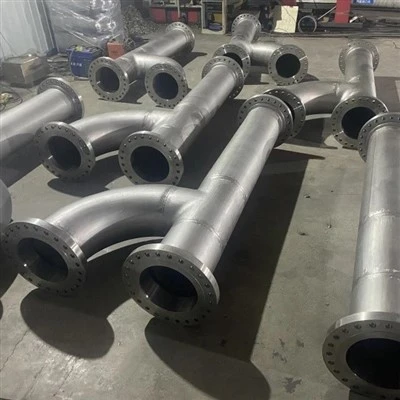
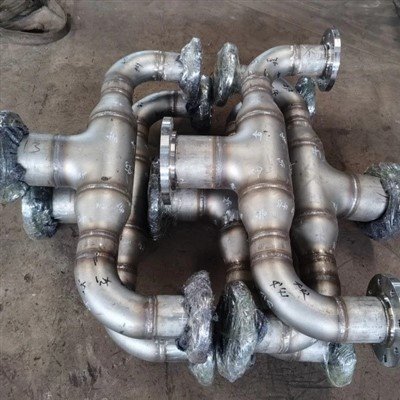
Stainless steel 304 (SS304) flange is a piping component manufactured from the austenitic stainless steel alloy designated as UNS S30400 or DIN 1.4301, characterized by its nominal composition of 18% chromium and 8% nickel, with the balance primarily iron.
This article introduces the precise composition of SS304 flanges.

Chemical Composition of SS304 Flanges
According to ASTM A182, the specification governing forged stainless steel flanges, the chemical composition of SS304 must conform to strict percentage ranges.
Chromium (Cr): 18.0%–20.0%
Chromium is the essential element that makes stainless steel "stainless." In SS304 flanges, chromium content ranges from 18.0% to 20.0% by weight. Chromium reacts with oxygen to form a thin, adherent chromium oxide passive layer on the flange surface. This layer, approximately 3 nanometers thick, is self-healing in oxidizing environments and provides the flange with its fundamental corrosion resistance. When damaged, the chromium in the alloy rapidly reforms this protective film, provided oxygen is present. The minimum 18% chromium content in SS304 ensures robust passive layer formation across a wide range of service environments.
Nickel (Ni): 8.0%–11.0%
Nickel is the second most critical alloying element in SS304 flanges, typically present between 8.0% and 11.0%. Nickel stabilizes the austenitic microstructure at room temperature, which would otherwise transform to martensite upon cooling. This austenitic structure provides exceptional toughness, ductility, and formability. Nickel also enhances corrosion resistance in reducing environments and improves high-temperature performance. The 8% minimum nickel content is what allows SS304 flanges to remain non-magnetic in the annealed condition and maintain ductility at cryogenic temperatures.
Carbon (C): 0.08% Maximum
Carbon content in SS304 flanges is restricted to a maximum of 0.08%. This relatively low carbon level serves a critical metallurgical function: it minimizes the precipitation of chromium carbides at grain boundaries during welding or elevated temperature exposure. When chromium carbides form, they deplete adjacent areas of chromium below the 12% threshold required for passive layer formation, leading to intergranular corrosion known as sensitization. The 0.08% maximum represents a balance between strength requirements and sensitization resistance.
Manganese (Mn): 2.00% Maximum
Manganese serves multiple functions in SS304 flanges. It acts as a deoxidizer during steelmaking, combines with sulfur to improve hot workability, and contributes to austenite stability . While manganese is less potent than nickel for austenite formation, it provides supplemental stabilization and improves strength. The 2.00% maximum ensures these benefits without compromising corrosion resistance.
Silicon (Si): 0.75% – 1.00% Maximum
Silicon is present as a deoxidizing agent residual from steelmaking, typically limited to 0.75% maximum in most specifications . It improves oxidation resistance at elevated temperatures and increases fluidity during casting or forging operations. Some SS304 flange specifications allow up to 1.00% silicon, though the lower range is more common for general corrosion service.
Phosphorus (P): 0.045% Maximum and Sulfur (S): 0.030% Maximum
Phosphorus and sulfur are impurity elements in SS304 flanges. Phosphorus can cause cold shortness and reduce weldability, while sulfur forms sulfide inclusions that reduce corrosion resistance and hot workability. The strict maximums of 0.045% for phosphorus and 0.030% for sulfur ensure optimal fabricability and corrosion performance.
Iron (Fe): Balance
Iron constitutes the remaining percentage of the alloy, typically 66% to 74% of the total composition. While iron provides the base metallic matrix, its properties are completely transformed by the combined presence of chromium and nickel. The iron-chromium-nickel solid solution forms the austenitic structure that gives SS304 flanges their characteristic combination of strength, toughness, and corrosion resistance.
What is a SS304 Flange Made Of?
SS304 flanges are manufactured to stringent material standards that govern not only chemical composition but also mechanical properties and heat treatment requirements. The primary specification for wrought SS304 flanges is ASTM A182 / ASME SA-182, which covers forged or rolled alloy and stainless steel pipe flanges intended for high-temperature service.

This specification requires that SS304 flanges undergo solution annealing heat treatment. The flanges must be heated to a minimum temperature of 1900°F (1040°C) to dissolve any precipitated carbides and ensure complete austenitization, followed by rapid quenching in water or other suitable media to retain the carbon in solid solution. This heat treatment produces the characteristic uniform austenitic microstructure and optimizes corrosion resistance.
The chemical composition requirements in ASTM A182 align with the limits discussed above but may vary slightly between different revisions or supplementary requirements. For critical applications, purchasers may specify additional controls, such as lower carbon limits for improved weldability or tighter sulfur ranges for enhanced machinability.
Equivalent designations for SS304 flange material include:
|
Standard |
Designation |
|
UNS |
S30400 |
|
DIN |
1.4301 |
|
EN |
X5CrNi18-10 |
|
JIS |
SUS 304 |
|
BS |
304S31 |
SS304 Flange Mechanical Properties
The chemical composition of SS304 flanges translates directly into measurable mechanical properties that determine component performance. Minimum requirements per ASTM A182 include:
- Tensile Strength: 515 MPa (75,000 psi) minimum
- Yield Strength (0.2% offset): 205 MPa (30,000 psi) minimum
- Elongation: 30%–40% minimum in 50mm
- Hardness: Rockwell B 92 maximum (Brinell 201 maximum)
The austenitic structure imparted by the chromium-nickel combination provides excellent ductility and toughness across a wide temperature range, from cryogenic service to elevated temperatures approaching 800°C in continuous service. The density of SS304 flanges is approximately 8.0 g/cm³, with a melting range of 1400°C – 1450°C.
Conclusion
SS304 flanges are manufactured from a precisely controlled austenitic stainless steel alloy containing 18% – 20% chromium, 8% – 11% nickel, maximum 0.08% carbon, and iron as the balance.
Whether specified in its standard form or as low-carbon 304L for enhanced weldability, the SS304 flange remains a workhorse component across industries ranging from food processing to chemical manufacturing and power generation.