1.4301 defined by the European EN 10088 standard, represents the foundational austenitic stainless steel grade known globally as AISI 304 or UNS S30400. Its prevalence borders on ubiquity – from the kitchen sink in your home to the intricate piping networks of chemical plants and the structural elements of modern architecture.
The "1" indicates it's a corrosion-resistant steel, "43" places it within the chromium-nickel-manganese austenitic group, and "01" specifies this particular formulation. Characterized by its excellent formability, good weldability, and reliable corrosion resistance in a wide range of environments, 1.4301 is often the default choice when stainless steel is required.
Its balance of performance, availability, and cost-effectiveness has cemented its status as the workhorse of the stainless steel industry, serving as the benchmark against which many other grades are compared.
Understanding 1.4301 is essential for engineers, procurement specialists, fabricators, and anyone specifying materials for demanding applications.


1.4301 Stainless Steel Data Sheet
The defining characteristics of 1.4301 are quantifiably captured in its technical data sheet, governed primarily by standards like EN 10088-2 and 10088-3.
Chemically, its composition is meticulously controlled: a minimum of 17.5% to 19.5% Chromium (Cr) provides the fundamental passive oxide layer for corrosion resistance, while 8.0% to 10.5% Nickel (Ni) stabilizes the austenitic structure, ensuring ductility and toughness at cryogenic temperatures. Key limitations include a maximum 0.07% Carbon (C) to minimize sensitization risk during welding, up to 2.0% Manganese (Mn), up to 1.0% Silicon (Si), max 0.045% Phosphorus (P), and max 0.015% Sulfur (S).
Physically, it boasts a density of approximately 7.9 g/cm³, a melting range of 1400-1450°C, and a specific electrical resistance significantly higher than carbon steel.
Mechanically, in the common annealed condition, it delivers a minimum 0.2% proof strength of 190-220 MPa, a tensile strength of 500-700 MPa, and outstanding elongation at fracture typically exceeding 45%, highlighting its exceptional formability. Its thermal conductivity and expansion values are crucial for design involving temperature fluctuations.
1.4301 Stainless Steel Characteristics
The widespread adoption of 1.4301 stems from its well-balanced set of inherent characteristics.
Foremost is its good general corrosion resistance in mildly corrosive environments like atmosphere, freshwater, many foodstuffs, organic chemicals, and dilute oxidizing acids. This resistance relies on the formation of a robust, self-repairing chromium oxide passive film. It exhibits superior formability and fabrication characteristics.
Its excellent weldability by all common fusion and resistance methods makes it highly versatile for fabrication. The austenitic structure grants exceptional toughness, even down to cryogenic temperatures, and good fatigue strength.
Furthermore, it offers good cleanability and hygiene, making it ideal for food and pharmaceutical contact.
However, critical limitations exist: it is susceptible to pitting and crevice corrosion in chloride-containing environments and is vulnerable to Stress Corrosion Cracking under sustained tensile stress in the presence of chlorides and elevated temperatures.
1.4301 Material Applications
The versatility of 1.4301 translates into an immense breadth of applications across virtually every industrial sector.
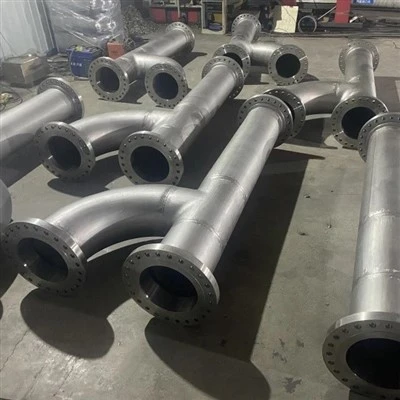
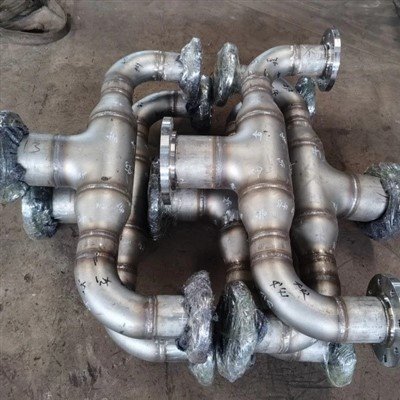
Within piping and fittings, it's the standard material for general-purpose process lines handling water, steam, air, oils, fuels, and many chemicals in non-severe environments.
The food, beverage, and dairy industries rely heavily on it for tanks, piping, vats, conveyors, and processing equipment due to its hygiene and cleanability.
Architectural and building hardware applications abound, including handrails, trim, fasteners, sinks, countertops, and cladding, benefiting from its aesthetic appeal and atmospheric resistance.
Automotive components such as exhaust systems, trim, and fuel lines utilize it. It's common in domestic appliances, cryogenic vessels, chemical containers, and medical equipment requiring sterility.
Essentially, wherever good corrosion resistance, formability, and weldability are needed without extreme chloride exposure, 1.4301 is a prime candidate.
How to Choose 1.4301 Steel?
Selecting 1.4301 requires careful consideration of the service environment and demands.
Choose it confidently for applications involving: atmospheric exposure, freshwater systems, steam, food processing, mild chemicals, and cryogenic service. Its excellent formability makes it ideal for complex fabrications.
Avoid 1.4301 when the environment contains significant chlorides, highly acidic conditions, or when Stress Corrosion Cracking risk is present. For these scenarios, consider higher alloyed grades like 1.4401/316.
Evaluate temperature limits; while it performs well from cryogenic up to ~870°C intermittently, oxidation resistance decreases significantly above ~800°C continuously, and SCC risk rises with temperature. Always confirm compliance with regulatory standards relevant to your industry.
Finally, balance performance needs against cost; 1.4301 offers significant savings over higher alloys where its properties suffice.
1.4301 Steel Product Forms
1.4301 is ubiquitously available in a vast array of product forms, making it incredibly convenient for procurement and fabrication. In the realm of fluid handling, it is predominantly supplied as seamless and welded pipes/tubes, forged and butt-welding fittings, flanges, and associated fasteners.
It is also widely produced as sheet, plate, and strip, essential for tanks, vessels, and structural components. Bar stock and wire are standard for machining components, shafts, springs, and fasteners.
Further processing yields expanded metal, grating, and wire mesh. Surface finishes range from annealed, through various polished finishes, to specialized brushed or bead-blasted textures.
Accessories like EPDM/FKM/PTFE gaskets and graphite-based lubricants are readily available for assembly. This comprehensive availability ensures designers and engineers can source virtually any component needed for a 1.4301-based system.
Summary
1.4301, the European designation for the universally recognized AISI 304 stainless steel, stands as the cornerstone of the austenitic stainless steel family. Its enduring popularity stems from a powerful combination of good general corrosion resistance, exceptional formability, excellent weldability, high toughness, and relative cost-effectiveness.
Governed by strict chemical composition and mechanical property standards, it delivers reliable performance in a staggering variety of applications, from architectural features and domestic appliances to critical process piping and food processing equipment. Its availability in virtually every conceivable product form further enhances its utility.
However, its selection is not universal; awareness of its susceptibility to chloride-induced pitting, crevice corrosion, and Stress Corrosion Cracking is paramount. When the operating environment is free from significant chlorides and elevated stresses in corrosive conditions, 1.4301 remains an outstanding, economical choice.
Understanding its designation, properties, strengths, and limitations empowers professionals to leverage this versatile material effectively, ensuring safe, durable, and cost-efficient solutions across countless industries. It truly is the indispensable alloy.