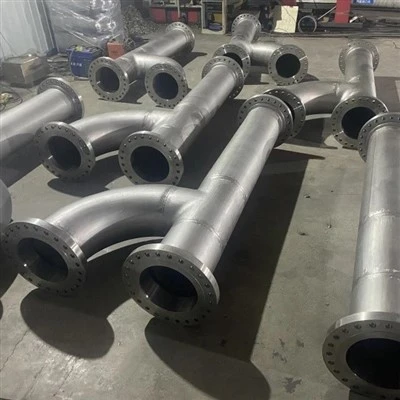
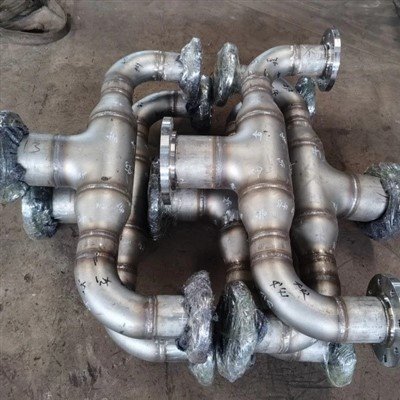
In demanding industrial sectors like offshore oil & gas, chemical processing, desalination, and subsea engineering, standard materials often fail under extreme pressure, corrosion, and stress. This is where Super Duplex ASTM A182 F53 steps in as a critical engineered solution. Let's break down what this material specification means and why it matters for high-performance applications.

Understanding ASTM A182 F53
ASTM A182 is a globally recognized standard covering forged or rolled alloy and stainless steel pipe flanges, forged fittings, and valves and parts for high-temperature service. Specifically, "F53" refers to the material grade within this standard. F53 denotes the highest common grade of Super Duplex Stainless Steel (SDSS) covered under A182. This grade is chemically defined by the Unified Numbering System (UNS) designation S32750.
ASTM A182 F53 Chemical Composition
What makes A182 F53 "Super" Duplex lies in its advanced chemical makeup. Compared to standard duplex grades (like UNS S31803/S32205), F53 has significantly higher levels of key alloying elements:
- Chromium (Cr): Around 25% for exceptional resistance to a wide range of corrosive media, especially oxidizing acids and chloride environments.
- Molybdenum (Mo): Approximately 4% for enhanced resistance to pitting and crevice corrosion, crucial in salty or acidic conditions.
- Nickel (Ni): About 7% to balance the microstructure, improve toughness, and provide general corrosion resistance.
- Nitrogen (N): An essential addition (~0.3%) that dramatically increases strength (especially yield strength) and improves pitting resistance.
This unique combination creates a material significantly stronger and tougher than standard austenitic stainless steels (like 316) or standard duplex, while also offering far superior corrosion resistance.
F53 Mechanical Strength
Super Duplex F53 boasts exceptional mechanical properties derived from its composition and controlled manufacturing:
- Very High Yield Strength: Typically greater than 550 MPa (80 ksi), almost double that of regular austenitic stainless steels like 316L. This allows for designing thinner-walled, lighter-weight components that can withstand enormous pressures and loads – a major advantage in deep-water applications or high-pressure systems.
- High Tensile Strength: Often exceeding 750 MPa (110 ksi).
- Good Toughness and Ductility: Despite high strength, it retains sufficient ductility (elongation ~25%) for demanding service.
- High Resistance to Stress Corrosion Cracking: Its duplex structure provides much greater resistance to cracking under stress in environments containing chlorides compared to austenitic steels.
ASTM 182 F53 Corrosion Resistance
ASTM A182 F53 achieves its "super duplex" status primarily because of its corrosion performance, measured by the Pitting Resistance Equivalent Number (PREN).
- High PREN (>40+): F53 has a typical PREN (PREN = %Cr + 3.3x(%Mo + 0.5x%W) + 16x%N) value exceeding 40 (often ~42-45). This quantifies its outstanding resistance to pitting and crevice corrosion in chloride and sea water environments, far outperforming 316 (PREN ~25) and standard duplex S32205 (PREN ~34-38). It competes closely with high-nickel alloys like Alloy 625 in many aggressive conditions.
- Resistance to Acids: Performs exceptionally well in diluted reducing acids (e.g., sulphuric, phosphoric) and oxidizing acids (e.g., nitric, chromic) across various concentrations and temperatures.
F53 Forging for Flanges, Fittings and Valves
The F53 designation specifically applies to products manufactured by forging. The A182 standard strictly governs how F53 material is processed:
- Melting: Typically via Electric Arc Furnace (EAF) followed by Argon Oxygen Decarburization (AOD) and/or Vacuum refining to achieve precise chemistry and low impurities.
- Forging: Solid billets are heated and shaped under great pressure using presses or hammers. This forging process refines the grain structure, eliminates porosity/defects, and significantly enhances mechanical strength and integrity compared to cast equivalents.
- Heat Treatment: A critical, non-negotiable step for duplex and super duplex grades. The forged parts are heated to a very high temperature (~1030-1120°C) to dissolve unwanted brittle phases and ensure a balanced microstructure of roughly 50% ferrite and 50% austenite. This is followed by rapid quenching (usually in water) to lock in this refined microstructure and restore full corrosion resistance.
- Testing and Inspection: Strict quality control ensures compliance. This includes chemical analysis, tensile/yield/hardness testing, impact (Charpy) toughness testing at low temperatures (often -46°C or -60°C), 100% visual inspection, non-destructive testing (like Ultrasonic or Liquid Penetrant), and Micrographic examination to verify phase balance and absence of detrimental phases.
ASTM A182 F53 Applications
This combination of strength, corrosion resistance, and toughness makes F53 indispensable for critical components in harsh environments:
- Offshore Oil and Gas: Subsea manifolds, Christmas trees, valves, wellhead components, bolts, high-pressure piping systems.
- Subsea Equipment: Pipeline connection flanges, fittings, umbilical terminations.
- Chemical and Petrochemical: Reactors, pressure vessels, piping systems handling highly corrosive chemicals.
- Desalination and Seawater Systems: High-pressure pumps, headers, valves, RO membranes housings.
- Flue Gas Desulfurization (FGD): Absorber tower internals where chlorides and acids attack lesser materials.
High-Pressure/High-Temperature (HPHT) Production Environments.
Choosing and specifying ASTM A182 F53 correctly is vital:
- Certification: Demand mill certificates certifying compliance with ASTM A182 F53. Crucially, look for certification to the Supplemental Requirements S1 which mandates impact (Charpy V-notch) toughness testing at low temperature. Certificates should comply with EN 10204 3.1 Type Certification.
- Source Reputable Mills: The complex metallurgy requires advanced processes. Select suppliers with proven expertise in super duplex manufacturing.
- Fabrication Expertise: Welding and machining F53 requires specialized procedures due to its sensitivity to heat input and risk of forming brittle intermetallic phases. Ensure the machine shop possesses documented procedures for super duplex grades.
- Inspection: Verify independent testing reports for critical properties like chemistry, tensile/yield strength, Charpy impact values, and micrographic structure.
Conclusion
Super Duplex ASTM A182 F53 (UNS S32750) is not just another stainless steel; it's a precisely engineered, high-performance alloy processed under rigorous standards specifically for forging. Its remarkable blend of extreme strength, outstanding corrosion resistance especially in chlorides (PREN >40), and excellent toughness, achieved through meticulous composition control, forging, and heat treatment, makes it the "go-to" choice when standard materials fail under pressure – both literally and figuratively.
When deep wells, corrosive seawater, acidic chemicals, or high-pressure demand the ultimate reliability from forged components like flanges, fittings, valves, and pump shafts demanding the ultimate reliability, ASTM A182 F53 Super Duplex Steel delivers the performance and durability critical for success in the world's most challenging industrial environments.