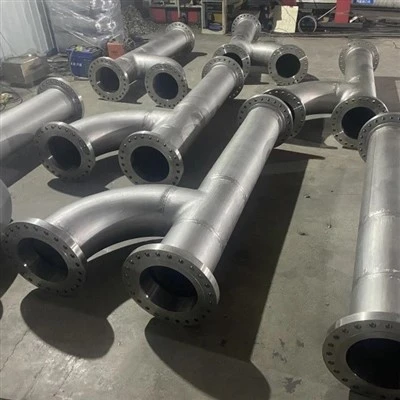
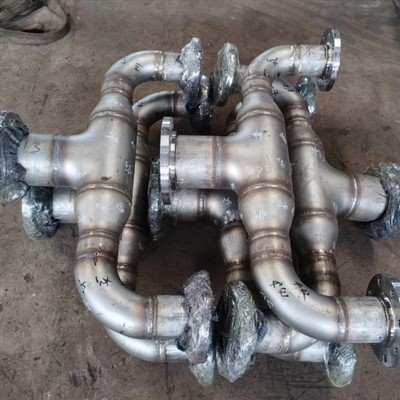
Hastelloy C276 (UNS N10276, EN 2.4819) is one of the most corrosion-resistant nickel alloys available, widely used in chemical processing, oil & gas, pollution control, and pharmaceutical industries. However, its exceptional corrosion resistance can be compromised by improper welding.
The key to successful C-276 fabrication is selecting the correct filler metal and qualifying the welding procedure to preserve the alloy's unique chemistry - particularly its high molybdenum and low carbon content. This article provides a complete guide to filler metal selection, welding process parameters, procedure qualification, and quality control for C276.
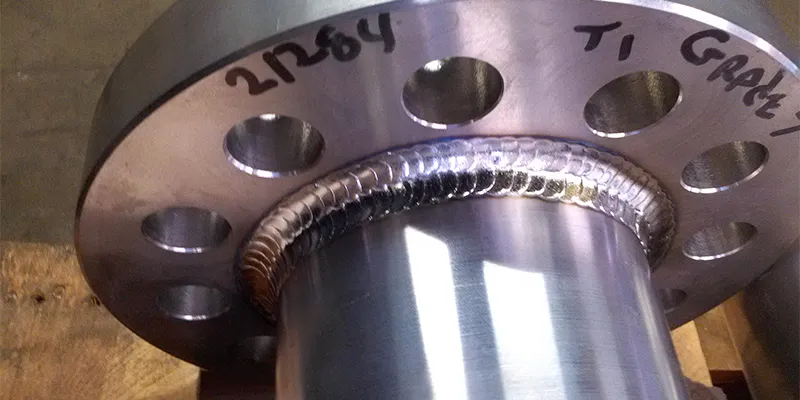
Use ERNiCrMo-4 filler metal for matching C276 base metal. Qualify the welding procedure per ASME Section IX with chemical analysis of the weld metal to verify Cr, Mo, and Fe content. Control heat input below 1.5 kJ/mm to minimize segregation and preserve corrosion resistance.
Hastelloy C276 Introduction
Hastelloy C-276 is a nickel-molybdenum-chromium alloy with additions of tungsten. Its key feature is extremely low carbon content (≤ 0.01%), which virtually eliminates carbide precipitation during welding and heat treatment. This makes C-276 resistant to intergranular corrosion in the heat-affected zone (HAZ) - a problem that plagued earlier grades like Hastelloy C (UNS N10002).
Chemical Composition
Table. Chemical Composition of Hastelloy C-276 (UNS N10276 / EN 2.4819)
|
Element |
Ni |
Cr |
Mo |
Fe |
W |
Co |
C |
Si |
Mn |
|
Weight % |
Balance |
14.5–16.5 |
15–17 |
4–7 |
3–4.5 |
≤ 2.5 |
≤ 0.01 |
≤ 0.08 |
≤ 1.0 |
|
Role |
Matrix |
Oxidation resistance |
Reducing acid resistance |
Cost reduction |
Acid resistance |
Residual |
Minimized for weldability |
Minimized for weldability |
Deoxidizer |
Source: ASTM B575-22 'Standard Specification for Nickel and Nickel-Cobalt Alloy Plate, Sheet, and Strip'; Haynes International 'HASTELLOY® C-276 Alloy' Technical Data Sheet (2023); Special Metals 'HASTELLOY® C-276' Product Handbook (2023).
Corrosion Resistance by Environment
Table. Corrosion Resistance of Hastelloy C-276 by Environment
|
Environment |
Corrosion Mode |
Concentration |
Temperature (°C) |
Corrosion Rate (mm/yr) |
Rating |
|
Hydrochloric acid (HCl) |
General corrosion |
1–37% |
RT–70 |
< 0.13 |
Excellent |
|
Sulfuric acid (H₂SO₄) |
General corrosion |
1–50% |
RT–80 |
< 0.25 |
Excellent |
|
Phosphoric acid (H₃PO₄) |
General corrosion |
1–85% |
RT–100 |
< 0.10 |
Excellent |
|
Hydrofluoric acid (HF) |
General corrosion |
1–48% |
RT–50 |
< 0.50 |
Good |
|
Nitric acid (HNO₃) |
Oxidizing corrosion |
1–65% |
RT–80 |
< 0.25 |
Good |
|
Chlorine gas (wet) |
Pitting/crevice |
Saturated |
RT–100 |
< 0.10 |
Excellent |
|
Seawater |
Pitting/crevice |
3.5% Cl⁻ |
RT–100 |
< 0.01 |
Excellent |
|
Sour gas (H₂S) |
SSC, SOHIC |
pH₂S > 1 bar |
RT–200 |
Immune |
Excellent |
Source: Haynes International 'Corrosion Data for HASTELLOY® C-276' (2023); NACE Corrosion Data Survey, 6th Ed. (2020); Outokumpu 'Corrosion Handbook for Stainless Steels and Nickel Alloys' (2021).
C276 excels in reducing acids (HCl, H₂SO₄) and chloride-containing environments where stainless steels fail. Its low carbon content eliminates sensitization during welding, making it the preferred choice for severe corrosion applications.
ERNiCrMo-4 Filler Metal for C276 Welding
For welding Hastelloy C-276, the correct filler metal is ERNiCrMo-4 (AWS A5.14 classification). This filler metal has essentially the same composition as C-276 base metal, ensuring that the weld metal has matching corrosion resistance. Using incorrect filler - such as ERNiCrMo-3 (Alloy 625) or ERNiCr-3 (Alloy 82) - will result in weld metal with lower molybdenum content and reduced corrosion resistance in reducing acids.
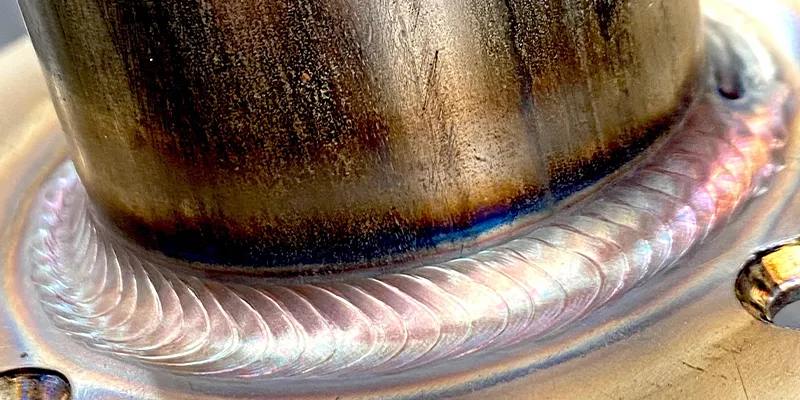
Table. Filler Metal Selection for Welding Hastelloy C-276
|
AWS Class |
UNS |
Cr (%) |
Mo (%) |
Fe (%) |
W (%) |
C (%) |
Recommendation |
|
ERNiCrMo-4 |
N10276 |
14.5–16.5 |
15–17 |
4–7 |
3–4.5 |
≤ 0.02 |
✓ MATCHING - Primary choice |
|
ERNiCrMo-10 |
N06022 |
20–22.5 |
12.5–14.5 |
2–6 |
2.5–3.5 |
≤ 0.015 |
Alternative (higher Cr, lower Mo) |
|
ERNiCrMo-14 |
N06686 |
19–23 |
15–17 |
≤ 5 |
3–4.5 |
≤ 0.01 |
Alternative (equivalent Mo, higher Cr) |
|
ERNiCrMo-3 |
N06625 |
20–23 |
8–10 |
≤ 5 |
- |
≤ 0.10 |
✗ NOT recommended (low Mo) |
|
ERNiCr-3 |
N06082 |
18–22 |
- |
≤ 3 |
- |
≤ 0.10 |
✗ NOT recommended (no Mo) |
|
ERNiMo-7 |
N10665 |
≤ 1.0 |
26–30 |
≤ 2 |
- |
≤ 0.02 |
✗ NOT recommended (no Cr) |
Source: AWS A5.14/A5.14M:2018 'Specification for Nickel and Nickel-Alloy Bare Welding Electrodes and Rods'; Haynes International 'HASTELLOY® C-276 Welding Filler Metals' Technical Data (2023); Special Metals 'Welding Products Catalog' (2023).
Why ERNiCrMo-4 Is the Correct Choice
The corrosion resistance of C-276 in reducing acids (HCl, H₂SO₄) depends on its high molybdenum content (15–17%). If a filler metal with lower Mo is used, the weld metal will have inferior corrosion resistance to the base metal - creating a 'weak link' in the welded joint. ERNiCrMo-3 (Alloy 625 filler) has only 8–10% Mo, which is insufficient for severe reducing acid service.
Table. Impact of Filler Metal Selection on Weld Metal Corrosion Resistance
|
Filler Metal |
Weld Metal Mo (%) |
HCl Corrosion Rate (mm/yr) |
H₂SO₄ Corrosion Rate (mm/yr) |
Seawater Pitting |
Verdict |
|
ERNiCrMo-4 |
15–17 |
< 0.13 |
< 0.25 |
Excellent |
✓ MATCHING |
|
ERNiCrMo-10 |
12–14 |
< 0.25 |
< 0.50 |
Excellent |
Acceptable for oxidizing acids |
|
ERNiCrMo-3 |
8–10 |
0.50–1.0 |
0.50–1.0 |
Good |
✗ Insufficient for reducing acids |
|
ERNiCr-3 |
0 |
> 5.0 |
> 5.0 |
Poor |
✗ UNSUITABLE |
|
Base Metal C-276 |
15–17 |
< 0.13 |
< 0.25 |
Excellent |
Reference |
Source: Haynes International 'Corrosion Data for Weld Metal of HASTELLOY® Alloys' (2023); Special Metals 'Corrosion Resistance of Nickel Alloy Welds' Technical Paper (2022); NACE Corrosion 2022 Conference Paper 'Effect of Filler Metal Selection on Nickel Alloy Weld Corrosion'.
When to Use Overmatching Filler Metals
In some cases, a higher-alloy filler metal may be specified to compensate for dilution from the base metal or to provide additional margin. ERNiCrMo-14 (Alloy 686 filler) has slightly higher Cr and equivalent Mo to ERNiCrMo-4, making it suitable for applications where maximum corrosion resistance is required.
Table. Overmatching Filler Metals for Critical Applications
|
Filler Metal |
UNS |
Cr (%) |
Mo (%) |
Application |
|
ERNiCrMo-14 (Alloy 686) |
N06686 |
19–23 |
15–17 |
Overmatching for C-276; seawater, extreme acids |
|
ERNiCrMo-10 (Alloy C-22) |
N06022 |
20–22.5 |
12.5–14.5 |
Overmatching for oxidizing + reducing mixtures |
Source: Haynes International 'HASTELLOY® ALLOY 686' Technical Data Sheet (2023); Special Metals 'INCONEL® ALLOY 686' Product Handbook (2023).
ERNiCrMo-4 is the mandatory filler metal for welding C-276 when matching corrosion resistance is required. ERNiCrMo-14 or ERNiCrMo-10 may be used for overmatching in critical applications. Never use ERNiCrMo-3 (Alloy 625 filler) for reducing acid service.
GTAW and GMAW for C276
Hastelloy C276 can be welded by all conventional arc welding processes, but GTAW (TIG) and GMAW (MIG) are the most common for high-integrity fabrication. GTAW provides the best control over heat input and weld pool chemistry, making it ideal for root passes and thin sections. GMAW offers higher productivity for fill and cap passes in thicker sections.

Process Selection Guide
Table. Welding Process Selection for Hastelloy C-276
|
Process |
Position |
Thickness Range |
Heat Input Control |
Productivity |
Application |
Recommendation |
|
GTAW (TIG) |
All positions |
0.5–6 mm |
Excellent |
Low |
Root pass, thin wall, orbital welding |
✓ Preferred |
|
GMAW (MIG) |
Flat, horizontal |
3–25 mm |
Good |
Medium |
Fill and cap passes, shop fabrication |
✓ Preferred |
|
PAW (Plasma) |
Flat, orbital |
1–10 mm |
Excellent |
Medium |
Orbital tube welding, precision welds |
✓ Good |
|
FCAW (Flux-Cored) |
Flat, horizontal |
5–30 mm |
Fair |
High |
Field fabrication, non-critical |
⚠ Use with caution |
|
SMAW (Stick) |
All positions |
3–20 mm |
Poor |
Low |
Field repairs, non-critical |
⚠ Use with caution |
|
SAW (Submerged Arc) |
Flat only |
10–50 mm |
Poor |
Very high |
Heavy cladding, non-critical |
✗ Not recommended |
Source: AWS D1.6/D1.6M-22 'Structural Welding Code-Stainless Steel'; Haynes International 'Welding Guidelines for HASTELLOY® C-276' (2023); ASME Boiler and Pressure Vessel Code Section IX (2023).
GTAW Parameters for C-276
Table. Recommended GTAW Parameters for Hastelloy C-276
|
Thickness (mm) |
Joint Type |
Current (A) |
Voltage (V) |
Travel Speed (mm/min) |
Wire Feed (mm/min) |
Gas Flow (L/min) |
Heat Input (kJ/mm) |
|
1.5 |
Square butt |
50–70 |
9–11 |
120–150 |
300–400 |
8–12 |
0.3–0.5 |
|
3.0 |
V-groove 60° |
80–110 |
10–12 |
100–130 |
400–500 |
10–15 |
0.5–0.8 |
|
6.0 |
V-groove 60° |
120–150 |
11–13 |
80–100 |
500–600 |
12–18 |
0.8–1.2 |
|
10.0 |
V-groove 60° |
150–180 |
12–14 |
70–90 |
600–700 |
15–20 |
1.0–1.5 |
|
12.0+ |
U-groove |
160–200 |
12–14 |
60–80 |
600–800 |
15–20 |
1.2–1.5 |
Source: Haynes International 'Welding Guidelines for HASTELLOY® C-276' (2023); Special Metals 'Welding of Nickel Alloys' Technical Handbook (2023); ASME Section IX QW-409 'Welding Variables-Electrical'.
Shielding Gas Selection
Table. Shielding Gas Recommendations for C-276 Welding
|
Process |
Primary Gas |
Flow Rate (L/min) |
Backup Gas |
Tungsten Electrode |
Notes |
|
GTAW |
Argon (99.999%) |
10–20 |
Argon or N₂ (if required) |
2% Ceriated (EWCe-2) |
Pure Ar essential; no He for root pass |
|
GTAW (Hot Wire) |
Argon + 5% H₂ |
12–18 |
Argon |
2% Ceriated (EWCe-2) |
H₂ increases heat; use with caution |
|
GMAW |
Argon + 2–5% He |
15–25 |
Argon |
N/A |
He improves wetting; keep ≤ 5% |
|
GMAW (Pulsed) |
Argon + 2% He |
12–20 |
Argon |
N/A |
Pulsed reduces spatter; preferred |
|
PAW |
Argon (99.999%) |
3–5 (plasma) + 15–20 (shield) |
Argon |
2% Ceriated (EWCe-2) |
Orbital welding standard |
Source: AWS A5.32/A5.32M:2017 'Specification for Welding Shielding Gases'; Haynes International 'Welding Guidelines for HASTELLOY® C-276' (2023); Lincoln Electric 'Shielding Gas Selection for Nickel Alloys' (2023).
GTAW with pure argon shielding is the preferred process for C-276 root passes and thin-wall applications. GMAW with Ar + 2–5% He is suitable for fill and cap passes. Avoid high helium mixtures (> 10%) which increase heat input and oxidation. Always use high-purity gas (99.999%) to prevent contamination.
Heat Input Below 1.5 kJ/mm Is Required to Minimize Segregation
Although C-276 has low carbon content and is resistant to carbide precipitation, excessive heat input can cause microsegregation of molybdenum and chromium in the weld metal and HAZ. This segregation creates localized areas with lower alloy content, reducing corrosion resistance. The recommended maximum heat input is 1.5 kJ/mm for GTAW and 2.0 kJ/mm for GMAW.
Heat Input Calculation and Limits
Heat input is calculated as:
Formula: Heat Input (kJ/mm) = Voltage (V) × Current (A) × 60 ÷ Travel Speed (mm/min)
Table. Maximum Heat Input Limits for C-276 Welding
|
Process |
Max Heat Input (kJ/mm) |
Max Interpass Temp (°C) |
Reason |
Effect of Exceeding |
Mitigation |
Standard |
|
GTAW |
1.5 |
175 |
Minimize Mo segregation |
Reduced corrosion resistance |
Reduce current, increase travel speed |
Haynes, Special Metals |
|
GMAW |
2.0 |
175 |
Same |
Same |
Use pulsed mode, stringer beads |
Haynes, Special Metals |
|
PAW |
1.2 |
175 |
Precision control |
Same |
Adjust plasma current |
Haynes |
|
FCAW |
2.5 |
175 |
Process limitation |
Same + slag issues |
Not recommended for critical |
AWS D1.6 |
|
SMAW |
3.0 |
175 |
Process limitation |
Same + inclusions |
Not recommended for critical |
AWS D1.6 |
Source: Haynes International 'Welding Guidelines for HASTELLOY® C-276' (2023); Special Metals 'Welding of Nickel Alloys' Technical Handbook (2023); AWS D1.6/D1.6M-22 'Structural Welding Code-Stainless Steel'.
Effect of Heat Input on Corrosion Resistance
Table. Effect of Heat Input on Weld Metal Corrosion Resistance (ASTM G48 Method C)
|
Heat Input (kJ/mm) |
Weld Metal Mo Segregation |
CPT (°C, ASTM G48) |
CCT (°C, ASTM G48) |
Corrosion Rating |
|
< 0.8 |
Minimal |
> 85 |
> 60 |
Excellent |
|
0.8–1.2 |
Low |
80–85 |
55–60 |
Excellent |
|
1.2–1.5 |
Moderate |
70–80 |
45–55 |
Good |
|
1.5–2.0 |
Significant |
60–70 |
35–45 |
Acceptable |
|
> 2.0 |
High |
< 60 |
< 35 |
Degraded |
Source: ASTM G48-11(2020) 'Standard Test Methods for Pitting and Crevice Corrosion Resistance of Stainless Steels and Related Alloys by Use of Ferric Chloride Solution'; Haynes International 'Effect of Welding Thermal Cycles on C-276 Corrosion Resistance' Technical Paper (2022); NACE Corrosion 2021 Conference Paper.
Keep heat input below 1.5 kJ/mm for GTAW and 2.0 kJ/mm for GMAW. Use stringer beads rather than weaving. Control interpass temperature below 175°C. Verify weld metal corrosion resistance by ASTM G48 testing during procedure qualification.
ASME IX Procedure Qualification Requires Chemical Analysis and Corrosion Testing
Qualifying a welding procedure for Hastelloy C-276 per ASME Section IX requires more than the standard mechanical tests (tensile, bend, impact). For nickel alloys used in corrosion service, the procedure qualification record (PQR) must include chemical analysis of the weld metal to verify that Cr, Mo, and Fe content meet the specification. Additional corrosion testing per ASTM G48 is strongly recommended.

ASME IX Essential Variables for C-276
Table. ASME IX Essential Variables for C-276 Welding Procedure Qualification
|
Variable (QW-250) |
Change Requiring Requalification |
Impact on C-276 |
Test Required |
ASME IX Reference |
|
Base Metal (QW-403) |
P-No. 44 to other P-No. |
Dilution changes weld metal chemistry |
Chemical analysis |
QW-403.1, QW-424 |
|
Filler Metal (QW-404) |
A-No. or F-No. change; classification change |
Weld metal chemistry |
Chemical analysis |
QW-404.5, QW-404.12 |
|
Welding Process (QW-401) |
Process change (GTAW to GMAW) |
Heat input, dilution |
Mechanical + chemical |
QW-253 |
|
Heat Input (QW-409) |
Increase > 10% |
Segregation, corrosion resistance |
Corrosion test (recommended) |
QW-409.1 |
|
Position (QW-405) |
Vertical-up to vertical-down |
Heat input change |
Mechanical test |
QW-405.1 |
|
Backing Gas (QW-408) |
Change or removal |
Root oxidation |
Visual, chemical |
QW-408.5 |
|
Post-Weld Heat Treatment (QW-407) |
Addition or change |
Solution anneal may be required |
Mechanical, corrosion |
QW-407.1 |
Source: ASME Boiler and Pressure Vessel Code Section IX (2023) QW-250 'Welding Variables'; QW-403 'Base Metal'; QW-404 'Filler Metal'; QW-409 'Electrical'; QW-424 'Base Metal Groupings'; QW-442 'A-Number Classifications'.
Required Tests for C-276 PQR
Table. Required Tests for C-276 Welding Procedure Qualification
|
Test |
ASME IX Requirement |
C-276 Specific Requirement |
Acceptance Criteria |
Test Method |
Frequency |
|
Tensile Test |
Required (QW-150) |
Same |
UTS ≥ 690 MPa |
ASME IX QW-150 |
2 specimens |
|
Bend Test |
Required (QW-160) |
Same |
No cracks > 3 mm |
ASME IX QW-160 |
2 face + 2 root |
|
Impact Test |
If required by design |
At design temperature |
Per ASME VIII |
ASME IX QW-170 |
3 specimens |
|
Chemical Analysis |
Recommended (not mandatory) |
✓ MANDATORY for C-276 |
Cr 14.5–16.5%, Mo 15–17%, Fe ≤ 7% |
ASTM E1019, E1086 |
1 per PQR |
|
Corrosion Test (ASTM G48) |
Not required by ASME IX |
✓ STRONGLY RECOMMENDED |
CPT ≥ 75°C, CCT ≥ 50°C |
ASTM G48 Method C |
1 per PQR |
|
Hardness Test |
If required by design |
For sour service (NACE MR0175) |
≤ 22 HRC (weld + HAZ) |
ASTM E10/E18 |
5 readings per zone |
|
Ferrite Number |
Not applicable |
N/A (austenitic) |
N/A |
N/A |
N/A |
Source: ASME Boiler and Pressure Vessel Code Section IX (2023) QW-150 'Tensile Tests'; QW-160 'Bend Tests'; QW-170 'Impact Tests'; ASTM E1019-18 'Determination of Carbon, Sulfur, Nitrogen, and Oxygen in Steel '; ASTM E1086-14 'Analysis of Austenitic Stainless Steel by Spark Atomic Emission Spectrometry'; ASTM G48-11(2020) 'Pitting and Crevice Corrosion Resistance'; NACE MR0175 / ISO 15156-3:2015.
Chemical Analysis Requirements
The weld metal chemical analysis is the most critical test for C-276 procedure qualification. The analysis must verify that the weld metal meets the following requirements:
Table. Weld Metal Chemical Analysis Acceptance Criteria for C-276
|
Element |
Specification Limit |
Typical Weld Metal |
Critical for |
Test Method |
|
Chromium (Cr) |
≥ 14.5% |
15–16% |
Oxidation resistance |
OES, XRF, ICP |
|
Molybdenum (Mo) |
≥ 15% |
15.5–16.5% |
Reducing acid resistance |
OES, XRF, ICP |
|
Tungsten (W) |
≥ 3.0% |
3.2–3.8% |
Acid resistance |
OES, XRF, ICP |
|
Iron (Fe) |
≤ 7% |
5–6% |
Dilution indicator |
OES, XRF, ICP |
|
Carbon (C) |
≤ 0.02% |
0.005–0.015% |
Carbide precipitation |
Combustion analysis |
|
Silicon (Si) |
≤ 0.20% |
0.05–0.15% |
Weldability |
OES, XRF |
|
Manganese (Mn) |
≤ 1.0% |
0.3–0.6% |
Deoxidation |
OES, XRF |
Source: ASTM B575-22 'Specification for Nickel and Nickel-Cobalt Alloy Plate, Sheet, and Strip'; ASTM E1019-18 'Determination of Carbon, Sulfur, Nitrogen, and Oxygen'; ASTM E1086-14 'Analysis of Austenitic Stainless Steel by Spark Atomic Emission Spectrometry'; ASTM E1621-21 'Elemental Analysis by Wavelength Dispersive X-Ray Fluorescence Spectrometry'.
For C-276 welding procedure qualification, chemical analysis of the weld metal is mandatory to verify Mo, Cr, and Fe content. ASTM G48 corrosion testing is strongly recommended for critical corrosion service. Include these tests in the PQR and material test report.
Post-Weld Solution Annealing
Unlike austenitic stainless steels, Hastelloy C-276 does not require post-weld heat treatment (PWHT) to restore corrosion resistance because its low carbon content eliminates sensitization. However, for severely corrosive environments or when maximum corrosion resistance is required, solution annealing at 1120–1170°C followed by rapid cooling may be specified.

PWHT Requirements for C-276
Table. Post-Weld Heat Treatment Recommendations for Hastelloy C-276
|
Service Severity |
PWHT Required? |
Treatment |
Benefit |
Drawback |
|
Moderate corrosion (pH > 5) |
No |
None |
Cost savings, no distortion |
Slightly lower corrosion resistance |
|
Severe corrosion (reducing acids) |
Optional |
Solution anneal 1120–1170°C, water quench |
Maximum corrosion resistance, homogenized microstructure |
Distortion risk, added cost |
|
Sour gas (H₂S) |
No |
None (NACE MR0175 permits as-welded) |
Code compliant |
None |
|
Extreme corrosion (HF, hot HCl) |
Recommended |
Solution anneal 1150°C, rapid cool |
Eliminates microsegregation |
Distortion risk, furnace required |
|
Clad/weld overlay |
No |
None or stress relieve at 650°C (if required) |
Reduced residual stress |
May affect overlay chemistry |
Source: Haynes International 'Heat Treatment of HASTELLOY® C-276' Technical Guide (2023); ASME Boiler and Pressure Vessel Code Section VIII Div. 1 (2023) UCS-56 'Requirements for Post-Weld Heat Treatment'; NACE MR0175 / ISO 15156-3:2015.
Solution Annealing Parameters
Table. Solution Annealing Parameters for Hastelloy C-276
|
Parameter |
Value |
Purpose |
Critical |
Standard |
|
Temperature |
1120–1170°C |
Homogenize microstructure |
Yes - must exceed 1120°C |
Haynes, ASTM B575 |
|
Hold Time |
10–30 minutes per inch |
Complete dissolution |
Yes - insufficient time = incomplete |
Haynes |
|
Atmosphere |
Air or inert gas |
Prevent oxidation |
Yes - oxidizing atmosphere causes scale |
Haynes |
|
Cooling Method |
Water quench or rapid air cool |
Prevent precipitation |
Yes - slow cooling causes carbide formation |
Haynes, ASTM |
|
Quench Delay |
< 3 minutes |
Avoid precipitation range |
Yes - 870–650°C is critical |
Haynes |
Source: Haynes International 'Heat Treatment of HASTELLOY® C-276' Technical Guide (2023); ASTM B575-22 'Specification for Nickel and Nickel-Cobalt Alloy Plate, Sheet, and Strip'; Special Metals 'Heat Treatment of Nickel Alloys' Technical Handbook (2023).
C-276 does not require PWHT for most applications. For extreme corrosion service, specify solution annealing at 1150°C with water quench. Never slow-cool through the 650–870°C temperature range, as this can cause precipitation of intermetallic phases.
PMI Verification and Corrosion Testing
Quality control for C-276 welds goes beyond standard NDE (UT, RT, PT). Because corrosion resistance depends on precise chemistry, Positive Material Identification (PMI) of the weld metal is mandatory. For critical corrosion service, ASTM G48 pitting and crevice corrosion testing should be included in the procedure qualification.
Inspection and Testing Requirements
Table. Quality Control Tests for Hastelloy C-276 Welds
|
Test |
Purpose |
Method |
Acceptance Criteria |
Frequency |
Standard |
Notes |
|
PMI (Chemical) |
Verify weld metal chemistry |
XRF or OES |
Mo ≥ 15%, Cr ≥ 14.5%, Fe ≤ 7% |
100% of production welds |
ASTM E1621 |
Mandatory for C-276 |
|
UT (Ultrasonic) |
Detect lack of fusion, porosity |
Angle beam |
Per ASME VIII UW-51 or UW-52 |
Per design specification |
ASME V Art. 4 |
Standard NDE |
|
RT (Radiographic) |
Detect internal defects |
X-ray or gamma |
Per ASME VIII UW-51 |
Per design specification |
ASME V Art. 2 |
Standard NDE |
|
PT (Penetrant) |
Detect surface cracks |
Visible or fluorescent dye |
No linear indications > 1.5 mm |
100% of weld surface |
ASME V Art. 6 |
Standard NDE |
|
Hardness |
Verify NACE MR0175 compliance |
Portable tester |
≤ 22 HRC (weld + HAZ) |
Per NACE MR0175 |
ASTM E10/E18 |
For sour service |
|
ASTM G48 |
Verify pitting resistance |
Ferric chloride test |
CPT ≥ 75°C, CCT ≥ 50°C |
Per PQR |
ASTM G48 Method C |
For critical corrosion service |
|
Metallography |
Verify microstructure |
Cross-section, etch |
No cracks, porosity, or excessive segregation |
Per PQR |
ASTM E3, E407 |
For procedure qualification |
Source: ASTM E1621-21 'Elemental Analysis by Wavelength Dispersive X-Ray Fluorescence Spectrometry'; ASME Boiler and Pressure Vessel Code Section V (2023) Articles 2, 4, 6; ASME Section VIII Div. 1 UW-51 'Radiographic Examination of Welds'; ASTM G48-11(2020) 'Pitting and Crevice Corrosion Resistance'; NACE MR0175 / ISO 15156-3:2015.
ASTM G48 Corrosion Testing for C-276
ASTM G48 is the standard test method for evaluating pitting and crevice corrosion resistance. For C-276 weld metal, Method C (Critical Pitting Temperature, CPT) or Method D (Critical Crevice Temperature, CCT) should be performed during procedure qualification.
Table. ASTM G48 Corrosion Test Acceptance Criteria for C-276 Weld Metal
|
Test Method |
Test Solution |
Temperature Range |
Acceptance for C-276 Weld |
Notes |
|
Method C (CPT) |
6% FeCl₃ + 1% HCl |
25–95°C |
CPT ≥ 75°C |
Higher = better; base metal CPT > 85°C |
|
Method D (CCT) |
6% FeCl₃ + 1% HCl |
25–85°C |
CCT ≥ 50°C |
Crevice more severe; base metal CCT > 60°C |
|
Method A (Weight Loss) |
6% FeCl₃, 72h at 22°C |
Fixed temperature |
Weight loss ≤ 10 mg/cm² |
Less discriminating for C-276 |
|
Method B (Crevice, Weight Loss) |
6% FeCl₃, 72h at 22°C |
Fixed temperature |
Weight loss ≤ 20 mg/cm² |
Less discriminating for C-276 |
Source: ASTM G48-11(2020) 'Standard Test Methods for Pitting and Crevice Corrosion Resistance of Stainless Steels and Related Alloys by Use of Ferric Chloride Solution'; Haynes International 'Corrosion Testing of HASTELLOY® Alloys' Technical Guide (2023).
PMI verification of weld metal chemistry (Mo, Cr, Fe) is mandatory for all C-276 welds. For critical corrosion service, specify ASTM G48 testing in the procedure qualification. Accept CPT ≥ 75°C and CCT ≥ 50°C as evidence of adequate weld metal corrosion resistance.
C-276 Welding Requires Matching Filler, Controlled Heat Input, and Verified Chemistry
Welding Hastelloy C-276 is not difficult, but it requires attention to three critical factors: (1) use matching ERNiCrMo-4 filler metal, (2) control heat input below 1.5 kJ/mm to minimize segregation, and (3) verify weld metal chemistry by PMI and corrosion resistance by ASTM G48 testing. When these requirements are met, C-276 welds will have corrosion resistance equivalent to the base metal.
Key Recommendations Summary
- Use ERNiCrMo-4 (UNS N10276) filler metal for matching C-276 base metal.
- Control heat input below 1.5 kJ/mm for GTAW, 2.0 kJ/mm for GMAW.
- Use pure argon shielding gas (99.999%) for GTAW; Ar + 2–5% He for GMAW.
- Maintain interpass temperature below 175°C.
- Clean base metal thoroughly with stainless steel wire brush; avoid contamination.
- Qualify welding procedure per ASME IX with chemical analysis of weld metal.
- Verify Mo ≥ 15%, Cr ≥ 14.5%, Fe ≤ 7% in weld metal by PMI or lab analysis.
- Include ASTM G48 corrosion testing for critical corrosion applications.
- Solution annealing is not required but may be specified for extreme corrosion service.
- Document all tests and results in the material test report (EN 10204 3.1 or 3.2)