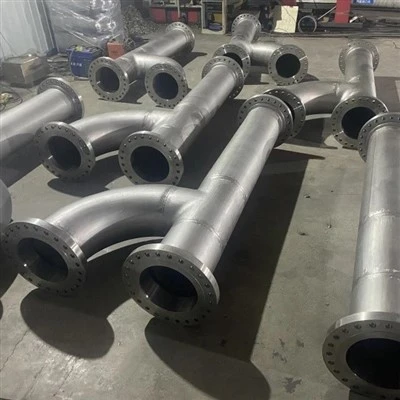
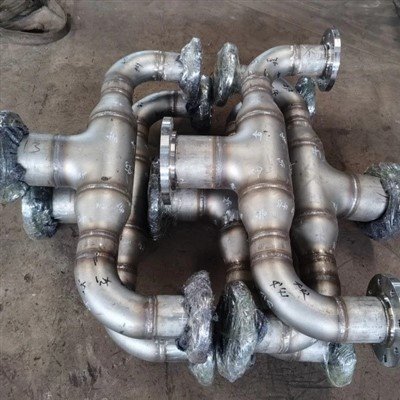
ASTM A276 is the specification covering stainless steel bars and shapes, which includes the raw material used for forging, machining, or flanges, fittings, and the large-diameter or custom-machined pipe sections often referred to in the industry as "pipe."

While ASTM A790 covers conventional seamless and welded pipe, the F51 under A276 confirms the material's stringent metallurgical quality, particularly when it's supplied as finished bar stock or forged piping components.
This comprehensive guide delves into the core attributes of ASTM A276 F51 Duplex Steel, its metallurgy, its mechanical and corrosive properties, and its applications.
Duplex Steel F51 Alloy Overview
"Duplex" consists of equal proportions of two distinct phases: ferrite and austenite.
F51 grade, commercially known as Duplex 2205 (UNS S31803 or S32205). The ferritic phase contributes to the material's high yield strength and superior resistance to stress corrosion cracking. And the austenitic phase provides excellent toughness, ductility, and good overall corrosion resistance.

F51 has a precise chemical composition-a tightly controlled blend of approximately 22% chromium, 5% nickel, and 3% molybdenum, along with a crucial addition of nitrogen. Nitrogen acts as a strong austenite former and strengthens the matrix through solid solution hardening, thereby enhancing resistance to pitting and crevice corrosion.
The control of this chemical composition and subsequent heat treatment is explicitly defined by the ASTM A276 standard, ensuring the final F51 product exhibits predictable and reliable performance across varying conditions.
ASTM A276 F51 Key Chemistry

Chromium (Cr 21.0–23.0%): The high chromium content is the primary driver for its superior general and localized corrosion resistance, facilitating the rapid formation of a stable, self-healing passive oxide layer on the metal's surface.
Molybdenum (Mo 2.5–3.5%): Molybdenum significantly boosts the alloy's resistance to pitting and crevice corrosion, particularly in chloride-containing environments like seawater. It is a vital component that pushes the Pitting Resistance Equivalent Number (PREN) above the critical threshold of 32.
Nickel (Ni 4.5–6.5%): Nickel is the key austenite former, ensuring the essential balance with the ferrite phase. It imparts toughness, ductility, and high resistance to stress corrosion cracking (SCC).
Nitrogen (N 0.08–0.20%): Nitrogen is a potent alloying element in duplex steel. It acts as an austenite stabilizer, enhances resistance to pitting and crevice corrosion, and significantly contributes to the high mechanical strength through solid solution strengthening.
Low carbon minimizes the precipitation of chromium carbides at grain boundaries during thermal events like welding, thereby safeguarding the material's excellent intergranular corrosion resistance.
This chemical composition is what differentiates F51 from both austenitic and ferritic stainless steels.
Mechanical and Corrosive Advantages

The balanced microstructure of F51 translates into a suite of performance benefits that far surpass conventional stainless steels:
Exceptional Mechanical Strength
The F51 grade boasts a yield strength that is typically twice that of standard austenitic grades like 304L or 316L. This high strength-to-weight ratio is a major design advantage.
It permits the use of thinner-walled pipe and smaller, lighter components in systems built to handle high pressures, reducing the overall weight and material cost.
Pitting and Crevice Corrosion Resistance
The presence of high levels of chromium and molybdenum, further boosted by nitrogen, gives F51 an exceptionally high Pitting Resistance Equivalent Number, typically over 32. This metric is a strong indicator of resistance to localized attack in chloride-containing environments, such as seawater or brackish water.
F51's performance is better than that of 316L stainless steel in these aggressive media, making it suitable for heat exchangers, condensers, and chemical processing equipment.

Resistance to Stress Corrosion Cracking
This is perhaps the single most important advantage of duplex steel. Austenitic stainless steels are highly susceptible to SCC when exposed to chlorides and high temperatures. By adding the ferritic phase, F51 secures the reliability of piping in warm, high-chloride, and stressed systems like those found in desalination and oil refining facilities.
ASTM A276 in Supply Chain and Quality Function
Distinguishing A276 F51 from A790: Clarify that A276 primarily governs the raw material (bar/billet) used for further machining, forging, or for the production of heavy-wall, custom pipe sections. A790 covers mill-produced, standard seamless/welded pipe.
Manufacturing and Testing Rigor: Detail the specific requirements for material certification. This includes mandatory chemical analysis, mechanical testing (tensile, yield, elongation), and critical non-destructive testing, such as ultrasonic or hydrostatic tests.
The Importance of Heat Treatment Certification: Emphasize that the F51 material must be solution annealed and quenched to guarantee the desired biphasic microstructure and verified by ferrite content measurements.
ASTM A276 F51 Duplex Pipe Main Industrial Applications

Oil and Gas/Petrochemical: Discuss the use of F51 pipe and components in flow lines, risers, and manifolds for handling sour and wet corrosive hydrocarbons.
Desalination and Water Treatment: Focus on F51's superior performance in handling high-chloride brine streams where 316L would rapidly fail.
While F51's initial cost is higher than 316L, its superior strength allows for thinner wall thicknesses and reduced material consumption.
Its extended service life and minimal maintenance requirements result in lower total cost of ownership over the project lifespan, justifying the premium price.
Conclusion
The ASTM A276 F51 Duplex Steel Pipe delivers a formidable combination of high mechanical strength, exceptional resistance to localized corrosion, and industry-leading immunity to chloride stress corrosion cracking.
A276 F51 is not merely a material selection; it is a strategy for risk mitigation, operational longevity, and long-term economic savings.