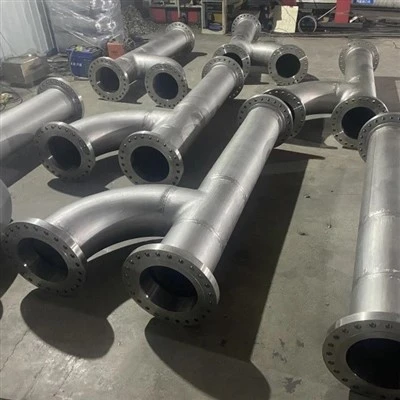
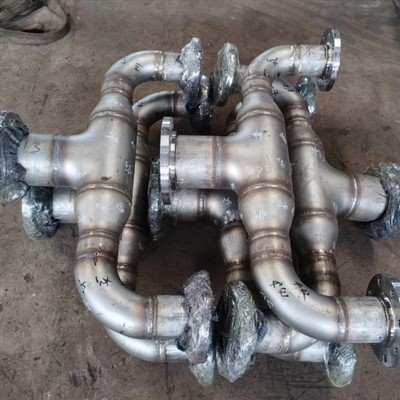
Super duplex pickling after fabrication should be specified by the surface condition to be achieved-not simply by stating "acid treated" or "pickled and passivated." Define which surfaces must be treated, what must be removed, how the result will be inspected, and which records are required before release. This turns an ambiguous finishing instruction into a verifiable manufacturing requirement. [1–3]

The practical target is a clean, descaled surface with weld heat tint removed, no unacceptable contamination or treatment damage, and any specified dimensional and finish requirements preserved. Surface appearance, cleanliness, roughness, and corrosion-test performance are separate acceptance dimensions; one does not automatically prove the others. [1–4]
Why does super duplex need surface treatment after fabrication?
Fabrication can damage the corrosion-resistant surface even when the alloy grade is correct.
Super duplex grades such as UNS S32750 and UNS S32760 are used where high strength and resistance to localized corrosion matter. Welding and hot processing can create oxide scale and heat tint; handling and grinding can add contamination or surface damage. Heat tint is more than a color change: oxidation can leave a chromium-depleted layer beneath the oxide. Removing the oxide and affected surface layer helps restore the surface's corrosion resistance. [3, 5]
This is relevant to pipes, fittings, flanges, and prefabricated pipe spools-the product and fabrication categories described by JN Alloy. A mill-pickled pipe can acquire new weld tint during spool assembly, so the original mill finish does not establish the final fabricated condition. Company context is based on JN Alloy's published product and processing information. [6]
How do cleaning, pickling, and passivation differ?
Cleaning removes contaminants, pickling removes oxide and a thin metal layer, and chemical passivation treats an already clean surface. They are complementary operations, not interchangeable labels.
ASTM A380/A380M addresses cleaning, descaling, pickling, and passivation practices. ASTM A967/A967M addresses chemical passivation treatments and alternative verification tests. A passivation requirement alone should not be treated as an instruction to remove weld scale or the chromium-depleted layer. Specify the contract edition and the applicable procedure and tests rather than relying on the standard number alone. [1, 2, 7]
|
Operation |
Primary purpose |
What it does not establish |
|
Cleaning / degreasing |
Remove oil, grease, dirt, and fabrication residues. |
Removal of adherent heat tint or scale. |
|
Pickling |
Remove oxide scale and a controlled amount of underlying metal. |
Acceptable weld metallurgy, dimensions, or every cleanliness criterion. |
|
Chemical passivation |
Remove free iron and support passive-film formation on a chemically clean surface. |
Removal of heavy scale or proof of service-specific corrosion performance. |
|
Grinding / polishing |
Remove defects or achieve a defined profile and finish. |
Adequate oxide removal, freedom from embedded contamination, or an acceptable pickled condition. |
Comparison basis: ASTM A380/A380M, ASTM A967/A967M, and industry surface-treatment guidance. Stainless steel can naturally reform its passive film in a suitable oxygen-containing environment; an additional chemical passivation step is a separate contractual decision, not an automatic requirement after every pickling operation. [1–3]
What surface condition should the purchase order require?
Specify a measurable final condition for each surface zone, including weld roots and internal surfaces-not only the accessible outside face.

The following framework is a recommended procurement structure, not a universal acceptance class or a quotation from ASTM. Each limit must be selected for the component, service, and governing project requirements. Industry guidance supports defining the weld profile and post-fabrication surface condition during design. [1, 4]
|
Acceptance dimension |
Recommended requirement |
Verification to define |
|
Treatment coverage |
Identify wetted and non-wetted surfaces, welds, heat-affected zones, roots, branches, and repair areas. |
Inspection map; direct viewing or borescope access; agreed sampling. |
|
Oxide removal |
No visible weld heat tint or adherent scale on designated surfaces. |
Lighting, viewing conditions, and an approved reference sample where helpful. |
|
Surface cleanliness |
No visible oil, grease, loose debris, rust staining, or pickling residue; free-iron acceptance where specified. |
Visual inspection plus selected cleanliness/free-iron tests and their criteria. |
|
Treatment damage |
No unacceptable pitting, etching, preferential attack, or dimensional loss caused by treatment. |
Defined visual criteria and dimensional checks on critical features. |
|
Roughness and function |
Meet drawing requirements for flow surfaces, sealing faces, threads, and other critical features. |
Parameter such as Ra, numerical limit, locations, and measurement method if required. |
|
Rinsing and drying |
Remove treatment residues and prevent retained liquid in pockets or dead legs. |
Project-defined rinse-water quality, endpoint checks, drainage, and drying procedure. |
|
Documentation |
Trace the component to its treatment and inspection records. |
Procedure revision, process record, inspection report, repairs, and release approval. |
Should the whole component be pickled, or only the weld area?
Use full-component treatment when broad or uncertain contamination makes local treatment difficult to justify; use local treatment only when its coverage and final acceptance can be demonstrated.
Immersion, localized application, and internal circulation offer different access and control advantages. Choose the route around geometry, contamination, drainage, and verification-not appearance alone. The comparison below is an engineering selection framework; it is not a claim that one method always produces better corrosion resistance. [1, 3]
|
Route |
Potential advantage |
Main control issue |
|
Full immersion |
Broad coverage of accessible surfaces on components that fit the equipment. |
Trapped air, retained liquid, bath control, and protection of critical features. |
|
Localized paste or gel |
Targets accessible welds and nearby affected surfaces. |
Complete coverage, overlap, dwell-time consistency, and thorough residue removal. |
|
Internal circulation |
Can treat internal flow paths in piping assemblies. |
Flow to branches and dead legs, venting, drainage, and internal inspection access. |
|
Mechanical preparation followed by pickling |
Can assist removal of tenacious oxide or surface defects. |
Dedicated clean tooling, controlled material removal, and avoidance of coarse scratches. |
Can a standard stainless steel pickling recipe be used for super duplex?
Do not transfer a recipe from 304, 316, or even duplex 2205 without confirming its suitability for the exact super duplex grade and fabrication condition.
Duplex oxide can be thin, tightly adherent, and harder to remove chemically than oxide on austenitic stainless steels of comparable corrosion resistance. Effective treatment depends on alloy, oxide condition, chemical formulation, temperature, exposure time, and the condition of the treatment solution. Industry examples for 2205 are not automatic production instructions for S32750 or S32760. [3]
Require a documented procedure supported by representative trials where appropriate. Record the variables that influence the result and inspect the treated surface before release. More acid exposure is not a substitute for process control: the procedure must remove oxide without unacceptable attack or loss of function. Pickling chemicals can be highly hazardous; chemical selection, handling, ventilation, protective equipment, and waste treatment belong under qualified site controls and the product safety documentation. [1, 3]
Does a silver or matte surface prove that pickling is acceptable?
No. Appearance is one inspection result, not proof of surface chemistry, cleanliness, or corrosion performance.
A visual examination can identify remaining tint, scale, stains, and obvious damage. A water-break test assesses wetting behavior associated with cleanliness; a free-iron test addresses iron contamination. Neither is a direct measurement of the chromium-depleted layer or a complete corrosion-resistance test. Select the applicable test and its acceptance criteria rather than requesting every test listed in a standard. [1, 2]
A matte pickled appearance also does not establish a numerical surface roughness. Where roughness matters, specify the parameter, limit, measurement locations, and method separately. Preserve drawing-defined sealing finishes rather than trying to make every surface look identical. [1, 3]
When should ASTM G48 corrosion testing be specified?
Specify ASTM G48 when the governing project requires corrosion-performance verification, and define the complete test conditions and acceptance criteria.

ASTM G48 includes different ferric-chloride test methods. A requirement that says only "G48 passed" is incomplete: identify the method, temperature, duration, specimen location, preparation, and applicable acceptance criteria. Not every G48 method answers the same question. [8]
The purpose of the specimen must also be clear. A ground laboratory coupon can support material ranking, but it does not necessarily represent the delivered pickled weld surface. If the objective is to assess the fabricated finish, define a representative specimen and control any additional grinding or laboratory pickling that could change the condition being evaluated. Surface preparation can materially affect the result. [8, 9]
Can pickling repair poor welding or incorrect heat treatment?
No. Pickling treats the surface; it cannot correct an unsuitable weld microstructure or replace qualified fabrication and heat-treatment controls.
Duplex stainless steel performance depends on its ferritic-austenitic structure and fabrication history as well as its surface. Weld procedure qualification, required metallurgical examinations, mechanical testing, and nondestructive examination remain separate controls. A clean-looking weld is not evidence that all of those requirements have been met. [4, 9]
What wording can buyers use in a fabrication specification?
Use an outcome-based clause supported by a completed surface schedule and inspection plan.
The model clause below is a drafting aid. Replace the project-specific entries before issue; it does not create universal roughness, rinse-water, or corrosion-test limits.
"After completion of fabrication and associated surface-affecting operations, clean and pickle the designated super duplex surfaces in accordance with an approved, grade-suitable procedure referencing the contract edition of ASTM A380/A380M. Treat the internal and external zones identified in the surface schedule, including specified weld roots and heat-affected areas.
Remove visible heat tint, adherent scale, and fabrication contamination. The finished component shall be free from visible pickling residue and unacceptable treatment-induced attack and shall retain drawing-specified dimensions and functional finishes. Verify the completed condition using the approved inspection plan. Apply chemical passivation to ASTM A967/A967M only where specified, using the selected treatment and acceptance tests. Perform ASTM G48 testing only under the separately stated method, specimen preparation, exposure conditions, and acceptance criteria. Record treatment, inspection, nonconformities, corrective action, and final release."
Complete the attached schedule with: alloy designation; component and surface zones; visual reference and access method; critical feature protection; roughness requirements where applicable; selected cleanliness tests; rinse-water and drying requirements; any corrosion testing; and required inspection hold points. The principles behind this clause are drawn from the referenced practices and guidance; the clause itself is a recommended procurement template. [1–4, 8]
How should the required condition be maintained until delivery?
Release and package the component so that subsequent handling does not undo the verified surface condition.
Protect cleaned surfaces from iron contamination, dirty tooling, and uncontrolled rework. Plan final inspection after the last relevant fabrication or surface-treatment operation, accounting for any inspection consumables that must be removed. If handling or repair changes the accepted surface, reassess the affected area and repeat treatment or verification as required. [1]
For JN Alloy's pipes, fittings, flanges, and custom pipe-spool work, the practical procurement approach is to agree on the surface schedule together with the material specification and drawing. Define the result first, select the treatment route second, and verify the actual delivered surfaces-not merely the name of the process used. [6]
Technical sources and scope
References support the technical discussion. Consult the full contract editions of standards for mandatory requirements; summaries and industry guidance do not replace them. No universal acid recipe, roughness limit, or G48 acceptance temperature is prescribed in this article.
[1] ASTM A380/A380M - cleaning, descaling, pickling, and passivation guidance. Public scope consulted; use the contract edition. https://store.astm.org/a0380_a0380m-13.html
[2] ASTM A967/A967M - chemical passivation treatments and alternative verification tests. Public scope consulted; use the contract edition. https://store.astm.org/a0967_a0967m-17.html
[3] Informationsstelle Edelstahl Rostfrei - Post-fabrication surface treatment of stainless steels. https://www.edelstahl-rostfrei.de/fileadmin/user_upload/ISER/downloads/PostFabricationSurfaceFinishing_EN.pdf
[4] Outokumpu - Acom 3/2006: duplex fabrication, weld surfaces, and post-weld cleaning. https://www.outokumpu.com/-/media/files/advance/outokumpu-corrosion-management-news-acom-3-edition-2006.pdf
[5] Outokumpu - hot-rolled stainless product information; S32750 and S32760 designations. https://www-sc10.outokumpu.com/en/products/flat-products/hot-rolled-coil-strip-and-plate
[6] JN Alloy - company website: product categories, customized processing, and pipe-spool services. Website reviewed for company context; no internal link included.
[7] ASTM - Steel Standards directory: A380/A380M and A967/A967M titles. https://store.astm.org/products-services/standards-and-publications/standards/steel-standards.html
[8] Outokumpu - Testing stainless steel for resistance to pitting corrosion. https://www.outokumpu.com/en/expertise/2023/testing-stainless-steel-for-resistance-to-pitting-corrosion
[9] Outokumpu - Welding metallurgy of duplex stainless steel. https://www-sc10.outokumpu.com/en/expertise/2021/welding-metallurgy-of-duplex-stainless-steel