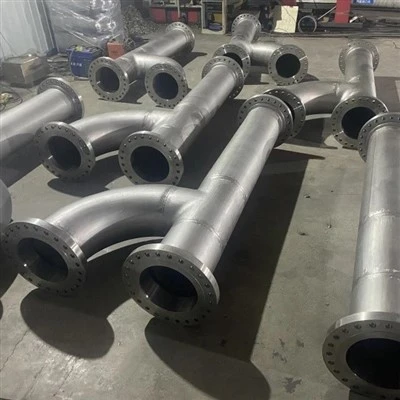
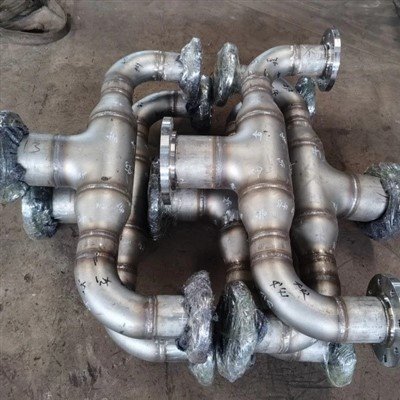
Within the intricate networks of industrial, commercial, and residential piping systems, efficiently creating branch connections is fundamental. Pipe tees serve this essential purpose, and among the most common variations are the Straight Tee and the Equal Tee. While both fittings form a T-junction, their distinct designs dictate significantly different applications and performance characteristics. For engineers, designers, and procurement specialists, understanding the precise differences between a Straight Tee and an Equal Tee is crucial for selecting the optimal component, ensuring system efficiency, safety, hydraulic performance, and cost-effectiveness.

Fundamental Purpose and Core Definitions
Both the Straight Tee and the Equal Tee are T-shaped pipe fittings featuring three openings: two along the main pipeline axis and one positioned at a 90-degree angle (the branch outlet). Their primary function is to split flow from the main run into the branch or combine flow from the branch into the main run. The critical distinction lies in the relationship between the diameters of these openings.
A Straight Tee, often interchangeably termed a Reducing Tee or Unequal Tee, is defined by its branch outlet having a different nominal pipe size than the outlets on the main run. The term "Straight" typically implies that the two run outlets are the same size, while the branch is reduced (or, less commonly, increased). Its defining purpose is to simultaneously create a branch connection and transition the pipe diameter specifically at that branch point. Visually, it appears asymmetrical due to the differing branch size. Sizing is denoted by three dimensions, indicating a 6-inch main run with a 4-inch branch. A less common variant, the Double Reducing Tee, features all three outlets of different sizes.
In contrast, an Equal Tee features all three outlets – both run ends and the branch – of the identical nominal pipe size. Its sole purpose is to create a 90-degree branch connection without altering the pipe diameter. Flow splitting or combining occurs while maintaining a constant cross-section throughout the fitting. It presents a symmetrical appearance. Sizing is denoted by a single dimension.
Key Differences: Design, Function, and Hydraulic Impact
The variance in outlet sizing between the Straight Tee and Equal Tee drives profound differences in their application, flow behavior, and overall impact on the piping system.
The Straight Tee's core function combines branching with diameter transition. This dual role inherently creates a more complex flow path. The abrupt change in cross-sectional area at the branch connection introduces significant turbulence, flow separation, and a localized pressure drop higher than that experienced in an Equal Tee or a straight pipe section. The flow dynamics are asymmetrical, particularly noticeable at the junction where the smaller or larger branch meets the main run. While efficient for its intended purpose of size transition, this design necessitates careful consideration in systems sensitive to pressure loss or where smooth, laminar flow is critical downstream.
Conversely, the Equal Tee's design, maintaining uniform diameter throughout, facilitates a simpler and generally more hydraulically efficient flow path. Turbulence and pressure drop at the branch point, while still present due to the directional change, are typically lower and more predictable compared to a Straight Tee. The flow distribution tends to be more uniform and symmetrical when splitting flow between equal-sized outlets.
Application Scenarios: Matching the Tee to the Task
The choice between a Straight Tee and an Equal Tee is primarily dictated by the pipe size requirements at the branch point relative to the main run.
The Straight Tee finds its essential role wherever a branch line necessitates a different diameter than the main pipeline. Its most common applications involve connecting smaller auxiliary lines. This includes tapping smaller drain, vent, purge, or sample points off larger process pipes; branching smaller service lines from main headers; and connecting piping to equipment nozzles of a different size. It is also frequently employed in pump bypass or recirculation lines, which are typically smaller than the main discharge piping. Connecting tanks or vessels with inlet/outlet nozzles differing from the header size is another key application. Fundamentally, the Straight Tee provides significant space and cost efficiency by integrating the branching and size reduction functions into a single fitting, eliminating the need for a separate reducer and reducing the number of welds or joints.
The Equal Tee is the appropriate choice when the branch line must maintain the same diameter as the main run. Its primary applications center on distributing or combining flow in systems requiring constant pipe size. This includes splitting flow from a main header into multiple pipelines of identical size, such as in cooling water distribution networks or fuel gas lines feeding multiple burners. It is equally vital for combining flow from several sources of the same size into a common header. Building symmetrical manifolds where multiple inlets or outlets require uniform branching is another core application. Essentially, the Equal Tee excels in any scenario demanding a branch connection without an accompanying change in pipe diameter.
Critical Selection Factors for Optimal Performance
Choosing the correct tee type extends beyond simply matching pipe sizes. Several critical factors must be evaluated to ensure optimal system performance, safety, and longevity.
The fundamental question is whether the branch size differs from the main run size. If it does, a Straight Tee is mandatory. If the sizes are identical, an Equal Tee is used. Flow dynamics and pressure drop implications are crucial. In systems highly sensitive to energy loss or where minimizing turbulence is paramount, the inherently lower pressure drop of an Equal Tee (when applicable) is advantageous. However, if a size change is necessary at the branch, the hydraulic penalty of the Straight Tee must be accepted or mitigated through system design.
Both tee types are manufactured in various materials – including carbon steel, stainless steel, alloy steels, copper alloys, and thermoplastics like PVC or CPVC – and connection types such as butt weld, socket weld, threaded, or flanged. The material must be compatible with the fluid service, pressure, temperature, and corrosion requirements, adhering to relevant codes like ASME B31.3 for process piping. The pressure-temperature rating, determined by the material grade and wall thickness (Schedule 40, 80, XS, XXS), must safely exceed the system's design conditions. Space constraints can influence the decision; a Straight Tee often saves space compared to installing a separate Equal Tee plus reducer. While Straight Tees might carry a slight cost premium due to more complex geometry, they can reduce overall installation costs by minimizing components and labor. Finally, although eccentricity is primarily a concern with reducers, if an eccentric branch Straight Tee is specified for horizontal lines, its orientation (Flat on Top or Flat on Bottom) is critical to prevent trapping air or sediment at the branch connection.
Conclusion
The distinction between a Straight Tee and an Equal Tee is fundamental in piping design. The Straight Tee (Reducing Tee) is the indispensable solution for creating branch connections where the pipe diameter changes, efficiently combining branching and size transition in a single fitting. It is the go-to component for instrument connections, drains, vents, service taps, pump bypasses, and connections to equipment with differing nozzle sizes. The Equal Tee excels in its specialized role of branching flow while maintaining constant pipe diameter, offering superior hydraulic efficiency in distribution and collection systems where size uniformity is required.
Selecting the correct tee type is not merely a procedural step; it directly impacts system hydraulics, pressure integrity, potential for vibration or erosion, material costs, and installation complexity. Misapplication can lead to inefficient operation, increased maintenance, or even failure. Decisions must be grounded in the specific pipe sizes involved, the properties of the fluid being transported, flow rate and velocity requirements, system pressure and temperature, and overall design objectives. Rigorous adherence to applicable piping codes and dimensional standards is non-negotiable. For critical or complex applications, consultation with experienced piping engineers ensures the Straight Tee or Equal Tee chosen delivers safe, reliable, and efficient performance throughout the system's operational life. Understanding these key differences empowers professionals to build optimized and robust piping networks.