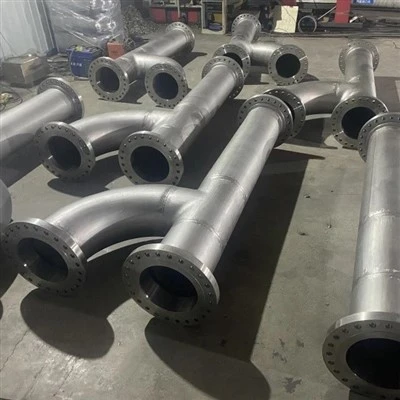
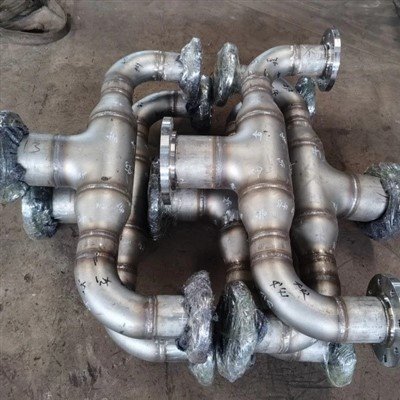
Within the intricate networks of piping systems that power modern industry and infrastructure, few components are as fundamental yet functionally critical as the stainless steel 90 degree elbow. This unassuming pipe fitting performs the vital task of seamlessly changing the direction of flow by precisely 90 degrees. Its selection, quality, and application are paramount to the efficiency, safety, and longevity of countless systems handling fluids and gases. This article provides a comprehensive introduction to this indispensable component.

Stainless Steel 90 Degree Elbow Function
At its simplest, a stainless steel 90 degree elbow is a pre-formed pipe fitting designed to connect two lengths of pipe (or other components like valves or flanges) at a right angle. This sharp directional change distinguishes it from other elbows (like 45-degree versions) and sweep bends. Its primary function is to facilitate the necessary changes in pipeline routing dictated by spatial constraints, equipment layout, structural obstacles, or process requirements, all while maintaining a sealed and continuous conduit for the medium being transported.
Stainless Steel 90 Degree Elbow Advantages
The material choice is not incidental; it's central to the fitting's performance and suitability for demanding environments. Stainless steel offers a compelling combination of properties:
Superior Corrosion Resistance: This is the most significant advantage. Stainless steel's chromium content (minimum 10.5%) forms a passive, self-repairing oxide layer on the surface, protecting the underlying metal from rust and corrosion caused by water, chemicals, acids, alkalis, and atmospheric exposure. This is crucial for systems handling corrosive fluids, operating in marine environments, or requiring high purity (e.g., food, beverage, pharmaceuticals).
High Strength and Durability: Stainless steel provides excellent mechanical strength and toughness, even at elevated temperatures. It withstands high internal pressures, external impacts, and vibration, ensuring structural integrity and a long service life.
Temperature Tolerance: Grades like 304 and 316 stainless steel perform well across a wide temperature range, from cryogenic applications to moderately high temperatures, making them versatile for various processes.
Hygienic Properties: The smooth, non-porous surface of stainless steel resists bacterial growth and is easy to clean and sterilize, making it the material of choice for sanitary applications in food processing, dairy, brewing, biotechnology, and pharmaceutical industries.
Common Stainless Steel 90 Degree Elbow
- AISI 304 / 304L (UNS S30400 / S30403): The most widely used "general-purpose" austenitic stainless steel. Excellent corrosion resistance in many environments, good formability, and weldability (especially the low-carbon 304L variant to prevent sensitization).
- AISI 316 / 316L (UNS S31600 / S31603): Offers enhanced corrosion resistance compared to 304, primarily due to the addition of molybdenum (2-3%). This significantly improves resistance to pitting and crevice corrosion, particularly by chlorides and acids. 316L is the low-carbon version preferred for welding. Essential for marine applications, chemical processing, and highly corrosive media.
- Other Grades: Duplex stainless steels (e.g., 2205) or higher alloys may be used for exceptionally demanding corrosive or high-pressure/temperature applications.
Stainless Steel 90 Degree Elbow Manufacturing
- Center-to-Face (C) Dimension: This is the distance from the centerline of one end of the elbow to the face of the opposite end. Standardized dimensions (Short Radius - SR, Long Radius - LR) ensure interchangeability and predictable flow characteristics.
- Short Radius (SR) Elbow: Has a center-to-face dimension equal to the nominal pipe size (NPS). More compact, used where space is severely limited. Creates a sharper turn, resulting in higher pressure drop and turbulence.
- Long Radius (LR) Elbow: Has a center-to-face dimension equal to 1.5 times the NPS. The smoother bend minimizes turbulence, reduces pressure drop, lessens erosion potential, and facilitates the flow of slurries or viscous fluids. LR is the preferred choice for most applications unless space dictates otherwise.
Connection Types:
- Butt Weld (BW): Ends are beveled to allow for welding directly to the pipe. Provides the strongest, most permanent, and leak-proof connection, preferred for high-pressure, high-temperature, or critical service.
- Socket Weld (SW): Pipe is inserted into a recessed socket in the elbow and then fillet welded around the joint. Suitable for smaller pipe sizes (typically NPS 2" and below) and moderate pressures/temperatures.
- Threaded (THD): Ends feature internal (FIPT) or external (MIPT) tapered pipe threads. Used for lower pressure applications and where disassembly might be required. Requires sealant (tape or compound) for leak-tightness.
Manufacturing Processes:
- Hot Forming: Heating a straight pipe segment and bending it over a die using mandrels to maintain roundness and wall thickness. Common for larger sizes.
- Cold Forming: Bending pipe at room temperature using specialized machinery, often for smaller diameters.
- Extrusion: Forging or extruding the elbow shape from a billet of stainless steel.
- Fabrication: Cutting and welding sections from plate or pipe (less common for standard elbows due to cost and potential weak points).
- Standards and Specifications: Quality elbows conform to recognized industry standards ensuring dimensional accuracy, material properties, pressure ratings, and testing requirements (e.g., ASME B16.9, ASTM A403, MSS SP-43).
Conclusion
The stainless steel 90 degree elbow is is a precision-engineered component whose material properties, design characteristics, and manufacturing quality directly impact the performance, safety, reliability, and lifespan of the entire piping system. Understanding the nuances of its construction – the critical choice between grades like 304 and 316L, the flow implications of LR versus SR, and the permanence of butt weld versus threaded connections – is essential for engineers, designers, and procurement specialists. From ensuring the purity of life-saving pharmaceuticals to withstanding the harsh conditions of offshore oil platforms, the stainless steel 90 degree elbow remains a cornerstone of efficient and robust fluid handling infrastructure across the globe. Selecting the optimal elbow for a specific application requires careful evaluation of all these factors to guarantee optimal system performance and longevity.