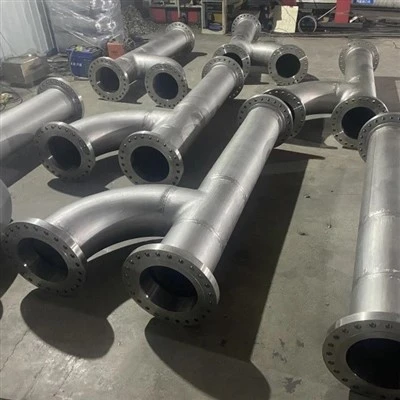
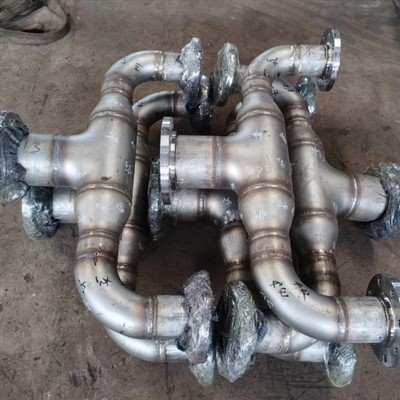
Forging and casting are the two dominant methods for shaping stainless steel into industrial components. Forging compresses solid metal under extreme pressure, producing parts with superior mechanical strength, refined grain structure, and high fatigue resistance - ideal for high-stress, safety-critical applications. Casting pours molten metal into molds, enabling complex geometries, hollow internal cavities, and virtually unlimited part sizes - ideal for intricate designs and large-scale production.
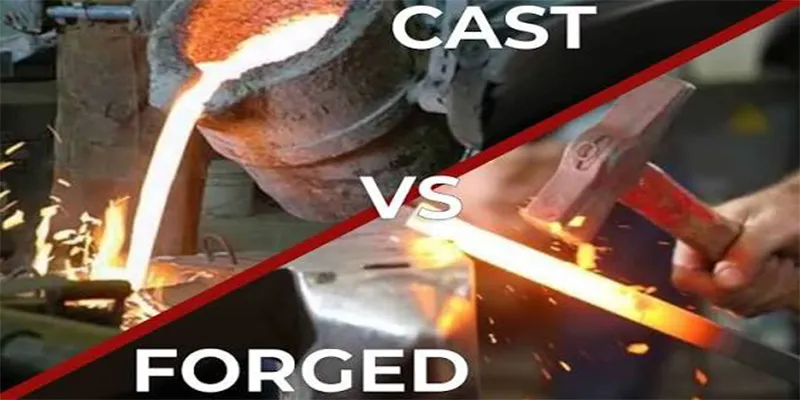
The choice between them depends on four factors: required mechanical strength, part geometry complexity, production volume, and budget constraints. As a general rule: choose forging for strength-critical parts; choose casting for design flexibility and cost efficiency at scale.
Key Comparison at a Glance
|
Dimension |
Forging |
Casting |
|
Mechanical Strength |
Higher (20-30% stronger) |
Lower |
|
Grain Structure |
Continuous, aligned with part shape |
Random, isotropic |
|
Internal Defects |
Fewer (porosity eliminated) |
More (shrinkage, porosity possible) |
|
Geometry Complexity |
Limited (simple to moderate) |
Virtually unlimited |
|
Part Size Range |
Small to medium (up to ~1 ton typically) |
Small to very large (10+ tons) |
|
Tooling Cost |
Moderate to high (dies) |
Moderate (molds) |
|
Unit Cost (Low Volume) |
Higher |
Lower |
|
Unit Cost (High Volume) |
Competitive |
Lower |
|
Surface Finish |
Good (may need machining) |
Good to excellent (as-cast) |
|
Typical Tolerance |
+/- 0.5 to 1.0 mm |
+/- 1.0 to 3.0 mm |
|
Fatigue Life |
Excellent |
Moderate |
What Is Stainless Steel Forging?
Forging is a metalworking process that uses compressive force - applied by a hammer, press, or die - to deform solid stainless steel into a desired shape at elevated temperatures, resulting in a part with superior mechanical properties and a continuous grain structure.

In forging, a heated billet or ingot of stainless steel is placed between dies and squeezed under enormous pressure (often exceeding 1,000 tons). The metal flows and fills the die cavity, taking on the intended shape. Because the metal is never melted, its internal crystalline structure remains intact and is actually improved - the grain flow follows the contour of the part, much like the fibers in wood align along the direction of stress.
There are three main types of forging relevant to stainless steel:
- Open-die forging: Metal is compressed between flat or simple-shaped dies without full confinement. Best for large, simple parts like shafts, rings, and blocks. Offers flexibility but requires significant machining.
- Closed-die (impression-die) forging: Metal is squeezed into a shaped die cavity that fully encloses the workpiece. Produces near-net-shape parts with excellent dimensional accuracy and surface finish. Most common for industrial stainless steel components.
- Ring rolling: A specialized process that rolls a pierced disc into a seamless ring. Ideal for flanges, bearing races, and pressure vessel components.
Forging temperatures for stainless steel typically range from 1,100 to 1,250 C (2,012 to 2,282 F), depending on the grade. Austenitic grades like 304 and 316 forge well at these temperatures, while precipitation-hardening grades like 17-4PH require carefully controlled heating and cooling cycles.
What Is Stainless Steel Casting?
Casting is a manufacturing process in which stainless steel is melted into liquid form and poured into a mold cavity, where it solidifies into the desired shape - allowing for virtually unlimited geometric complexity and part sizes ranging from grams to tens of tons.

Casting begins by melting stainless steel in an induction or electric arc furnace at temperatures above 1,500 C (2,732 F). The molten metal is then poured (or injected under pressure) into a mold made of sand, ceramic, or metal. Once the metal cools and solidifies, the mold is removed, and the part is cleaned, heat-treated, and machined as needed.
The primary casting methods used for stainless steel include:
- Investment casting (lost-wax): A wax pattern is coated with ceramic, the wax is melted out, and molten steel is poured into the cavity. Produces parts with excellent surface finish, tight tolerances (up to +/- 0.1 mm), and complex geometries. Widely used for valves, impellers, and turbine blades.
- Sand casting: Molten steel is poured into a sand mold. Best for large parts (up to several tons) with simpler geometries. Lower cost tooling but rougher surface finish and looser tolerances. Common for pump housings, valve bodies, and marine components.
- Die casting: Molten metal is injected into a steel mold under high pressure. While more common for non-ferrous metals, specialized versions exist for stainless steel. Offers high production rates and good dimensional accuracy but is limited to smaller parts.
- Centrifugal casting: Molten metal is poured into a rotating mold, using centrifugal force to distribute the metal. Ideal for cylindrical parts like pipes, tubes, and rings, producing dense, defect-free structures.
What Are the Key Differences Between Forging and Casting?
The fundamental difference lies in the state of the metal during shaping: forging deforms solid metal under pressure, while casting pours liquid metal into a mold. This single distinction drives all downstream differences in strength, grain structure, defect risk, geometry capability, and cost.
Understanding these differences is critical for engineers and procurement teams. The table below summarizes the ten most important comparative dimensions:
|
Comparison Dimension |
Forging |
Casting |
|
Metal State During Shaping |
Solid (heated but not melted) |
Liquid (molten) |
|
Grain Structure |
Refined, directional, follows part contour |
Random, equiaxed, may contain dendrites |
|
Mechanical Strength (Yield) |
20-30% higher than casting |
Baseline reference |
|
Fatigue Resistance |
Excellent (no internal voids) |
Moderate (possible micro-porosity) |
|
Impact Toughness |
Superior |
Good but lower than forging |
|
Geometry Complexity |
Limited - simple to moderate shapes |
Unlimited - internal cavities, undercuts, thin walls |
|
Hollow Internal Features |
Not possible without secondary machining |
Easily cast in-place |
|
Maximum Part Size |
Typically up to ~1 ton (larger with specialized equipment) |
10+ tons (sand casting can handle very large parts) |
|
Porosity / Defect Risk |
Very low (solid metal compressed) |
Moderate to high (shrinkage, gas porosity, inclusions) |
|
Design Flexibility for Alloys |
Limited by forgeability of the grade |
Any castable alloy composition can be used |
In short: forging wins on strength and structural integrity; casting wins on design freedom and scalability to large or complex parts.
Which Process Produces Stronger Parts - Forging or Casting?
Forging consistently produces stronger stainless steel parts than casting, typically delivering 20-30% higher yield strength, superior fatigue life, and better impact toughness. This advantage comes from the refined, directional grain structure created by compressive deformation.

When stainless steel is forged, the applied pressure does more than just change the shape - it fundamentally restructures the metal at the crystalline level:
- Grain refinement: Forging breaks up coarse cast ingot structures and recrystallizes the grain into a finer, more uniform pattern. Finer grains mean more grain boundaries, which resist dislocation movement and increase strength (per the Hall-Petch relationship).
- Grain flow alignment: The grain follows the contour of the forged part, aligning with the direction of maximum stress. Think of it like wood grain - a part is strongest when stress runs along the grain, not across it. Casting produces random grain orientation, which cannot leverage this effect.
- Elimination of internal defects: Because forging compresses solid metal, it closes up gas porosity, shrinkage cavities, and other voids that can form during solidification in casting. A forged part is essentially void-free, giving it higher fatigue resistance and impact toughness.
For safety-critical applications - pressure vessels, offshore subsea components, aerospace fasteners - this strength advantage is not optional. It is a design requirement. Standards such as ASTM A182 (forged fittings) and ASTM A351 (castings) reflect this, with forged grades typically specifying higher minimum mechanical properties.
When Should You Choose Forging Over Casting?
Choose forging when the part must withstand high mechanical stress, cyclic loading, or pressure - and when dimensional consistency, fatigue life, and structural reliability are non-negotiable. Forging is the default choice for safety-critical and load-bearing components.
Specifically, forging is the better choice in these scenarios:
- High-stress load-bearing parts: Shafts, gears, flanges, and connecting rods that transmit torque or bear structural loads. Forged parts maintain integrity under sustained stress that would risk cracking in cast equivalents.
- Cyclic / fatigue loading: Components subject to repeated stress cycles - turbine disks, crankshafts, valve stems - benefit from forging's defect-free structure. Fatigue cracks initiate at internal voids; forging eliminates them.
- Pressure-containing components: Forged fittings, flanges, and valve bodies for high-pressure piping systems (ASME B16.5, B16.11). Forging ensures wall integrity and leak-free performance under internal pressure.
- High-impact applications: Hammer heads, chisels, and mining equipment where sudden impact loads would shatter a casting. Forged stainless steel absorbs impact energy through its tough, refined structure.
- Parts requiring tight tolerances: Closed-die forging can hold tolerances of +/- 0.5 mm or tighter, reducing or eliminating machining operations for dimensional accuracy.
- Corrosive + mechanical environments: When a part must resist both corrosion and mechanical stress - such as subsea fasteners in offshore oil platforms - forging provides the dual benefit of stainless steel's corrosion resistance with maximum mechanical integrity.
When Should You Choose Casting Over Forging?
Choose casting when the part geometry is too complex for forging, when the part is too large for die-based processes, when internal cavities or hollow features are required, or when production volume justifies the mold investment for lower per-unit cost.
Casting becomes the clear choice in these situations:
- Complex geometries with internal cavities: Pump housings, valve bodies, and impellers often feature internal passages, curved channels, and thin-wall sections that cannot be forged. Casting creates these features directly in a single step.
- Very large parts: Sand casting can produce parts weighing 10 tons or more - large pump casings, hydro-turbine runners, and marine propellers. Forging equipment simply cannot handle parts of this scale economically.
- Low to medium production volumes: When quantities are too low to justify forging die costs (which can run $10,000-$100,000+), casting with cheaper sand or investment molds becomes far more economical.
- Parts where strength is not the primary concern: Decorative hardware, architectural elements, and non-structural housings do not need the mechanical superiority of forging. Casting provides adequate strength at lower cost.
- Alloy compositions that are difficult to forge: Some stainless steel grades - particularly high-alloy or duplex grades with narrow forging temperature windows - may be easier to cast than forge. Casting does not depend on the metal's hot workability.
- Rapid prototyping and design iteration: Investment casting patterns and sand molds can be modified quickly, allowing faster design iterations compared to the long lead times of forging die production.
Which Process Is More Cost-Effective for Production?
Cost-effectiveness depends on production volume. For low to medium volumes (1-1,000 units), casting is typically cheaper due to lower tooling costs. For high volumes (1,000+ units), forging becomes more economical as the die cost is amortized across more parts, and reduced machining needs lower per-unit cost.

The total cost of a stainless steel part includes tooling, material, labor, machining, and quality control. Here is how forging and casting compare across these cost categories:
|
Cost Factor |
Forging |
Casting |
|
Tooling / Die Cost |
$10,000 - $100,000+ (closed-die) |
$2,000 - $30,000 (sand/investment) |
|
Material Utilization |
60-80% (flash trimmed) |
70-90% (gates/risers recycled) |
|
Machining Required |
Low (near-net-shape) |
Moderate (gates, risers, surfaces) |
|
Per-Unit Cost (< 100 units) |
High (tooling dominates) |
Low |
|
Per-Unit Cost (1,000+ units) |
Competitive |
Low to moderate |
|
Per-Unit Cost (10,000+ units) |
Low (amortized dies) |
Lowest |
|
Scrap / Rework Rate |
Low (< 2%) |
Moderate (3-8%) |
|
Heat Treatment |
Often required |
Often required |
|
Inspection / NDT Cost |
Lower (fewer defects) |
Higher (porosity, inclusions to detect) |
A practical rule of thumb: if the total order quantity multiplied by the per-unit machining savings exceeds the forging die cost, forging is the more economical choice. For example, if forging saves $5 per unit in machining and the die costs $25,000, the break-even point is 5,000 units - above that, forging wins on total cost.
What Are the Size and Complexity Limits of Each Process?
Casting handles a wider range of part sizes (from a few grams to over 10 tons) and virtually unlimited geometric complexity. Forging is limited to simpler shapes and typically caps at around 1 ton for closed-die processes, though open-die forging can handle larger bars and billets.
The geometric capabilities of each process define where they can and cannot be used:
|
Capability |
Forging |
Casting |
|
Minimum Part Weight |
~10 grams (precision forging) |
~1 gram (investment casting) |
|
Maximum Part Weight |
~1 ton (closed-die); larger for open-die |
10+ tons (sand casting) |
|
Wall Thickness (min) |
~3 mm (closed-die) |
~1.5 mm (investment casting) |
|
Internal Cavities |
Not possible (requires machining) |
Yes (core inserts in mold) |
|
Undercuts |
Very limited |
Yes (with complex cores) |
|
Threaded Features |
Requires secondary machining |
Can be cast (investment) |
|
Surface Detail |
Moderate |
Excellent (investment casting) |
|
Draft Angles Required |
Yes (3-7 degrees) |
Yes (1-3 degrees for sand; minimal for investment) |
For engineers, the decision often comes down to one question: does the part have internal cavities, undercuts, or very thin walls? If yes, casting is likely the only viable option. If the part is a solid, relatively simple shape that must be strong, forging is the natural choice.
Which Stainless Steel Grades Suit Forging vs Casting?
Most austenitic (304, 316, 321) and martensitic (410, 420, 431) stainless steel grades forge well. Casting favors grades with good fluidity and low shrinkage - CF8 (cast 304), CF8M (cast 316), and CA15 (cast 410) are the most common cast equivalents. Duplex and super duplex grades can be both forged and cast, but require tighter process control.

Stainless steel grades have cast equivalents designated by the ACI (Alloy Casting Institute) system. Understanding the match between wrought (forged) and cast grades helps engineers specify the right material for each process:
|
Wrought Grade (Forging) |
Cast Equivalent |
Key Characteristics |
|
304 / 304L |
CF8 / CF3 |
General-purpose austenitic; excellent forgeability and castability |
|
316 / 316L |
CF8M / CF3M |
Added Mo for pitting resistance; widely used in both processes |
|
321 |
Not commonly cast |
Ti-stabilized; preferred as forged for high-temp applications |
|
410 |
CA15 |
Martensitic; forgeable but needs careful temperature control |
|
420 |
CA40 |
Higher carbon martensitic; used for cutlery and valves |
|
17-4PH |
CB7Cu-1 |
Precipitation-hardening; forgeable and castable with heat treatment |
|
2205 (Duplex) |
CD3MN |
Dual-phase; requires strict thermal control in both processes |
|
2507 (Super Duplex) |
CE3MN |
High-alloy duplex; challenging to forge and cast |
|
Nickel Alloys (Inconel 625, 825) |
CW6MC, N-12MV |
High-temperature alloys; castable but forging preferred for strength |
Key takeaway: when a project requires a specific wrought grade for its mechanical properties, forging is the natural match. When the design demands complex geometry and the cast equivalent provides adequate properties, casting is the pragmatic choice.
How Do Forging and Casting Compare in Surface Finish and Tolerances?
Forging generally achieves tighter dimensional tolerances (+/- 0.5 mm) and better surface finish (Ra 3.2-6.3 micrometers) than sand casting (+/- 1.0-3.0 mm, Ra 12.5-25 micrometers). However, investment casting rivals forging in both dimensions, achieving +/- 0.1 mm tolerances and Ra 1.6-3.2 micrometers surface finish.
Surface finish and dimensional accuracy directly impact downstream machining costs and final part quality:
|
Metric |
Closed-Die Forging |
Investment Casting |
Sand Casting |
|
Dimensional Tolerance |
+/- 0.5 to 1.0 mm |
+/- 0.1 to 0.5 mm |
+/- 1.0 to 3.0 mm |
|
Surface Finish (Ra) |
3.2 - 6.3 micrometers |
1.6 - 3.2 micrometers |
12.5 - 25 micrometers |
|
Draft Angle |
3 - 7 degrees |
Minimal (0-1 degree) |
1 - 3 degrees |
|
Machining Allowance |
1 - 3 mm |
0.5 - 1.5 mm |
3 - 6 mm |
|
As-Cast / As-Forged Usability |
Often needs machining |
Often usable as-is |
Always needs machining |
For applications where surface finish is critical - such as food-grade equipment, pharmaceutical valves, or sanitary piping - investment casting or forged-and-machined parts are the standard choices. Sand casting is generally reserved for large, non-critical-surface components.
What Are the Common Industrial Applications for Each Process?
Forged stainless steel parts dominate in high-pressure, high-stress, and safety-critical applications (oil and gas, aerospace, power generation). Cast stainless steel parts dominate in complex-geometry, large-size, and fluid-handling applications (pumps, valves, marine, chemical processing).

The following table maps common industrial applications to the preferred process:
|
Industry / Application |
Preferred Process |
Why |
|
Oil & Gas - Flanges, fittings, wellhead equipment |
Forging |
High pressure, H2S resistance, NACE MR0175 compliance |
|
Aerospace - Landing gear, engine disks, fasteners |
Forging |
Fatigue life, impact toughness, weight-to-strength ratio |
|
Power Generation - Turbine blades, generator rotors |
Forging |
High-speed rotation, thermal stress, fatigue resistance |
|
Chemical Processing - Pump housings, valve bodies |
Casting (Investment) |
Complex internal passages, corrosion resistance |
|
Marine - Propellers, large pump casings |
Casting (Sand) |
Large size, complex curves, hydrodynamic profiles |
|
Food & Beverage - Sanitary fittings, pump impellers |
Both |
Forging for fittings; casting for impellers |
|
Pharmaceutical - Valve internals, pump housings |
Casting (Investment) |
Smooth surface, complex geometry, CIP/SIP compatible |
|
Automotive - Exhaust manifolds, turbocharger housings |
Casting (Investment) |
Heat resistance, complex geometry, thin walls |
|
Construction - Structural bolts, anchors |
Forging |
Load-bearing, high strength, durability |
|
Nuclear - Pressure vessel internals, reactor components |
Forging |
Zero-defect requirement, radiation resistance, seismic loading |
What Quality and Defect Risks Should You Know About?
Forged parts have lower defect risk because compressive force eliminates internal voids. Cast parts carry higher risk of shrinkage cavities, gas porosity, and inclusions - requiring more rigorous non-destructive testing (NDT). Both processes require heat treatment to optimize final properties.
Understanding the typical defects of each process helps engineers specify appropriate inspection requirements:
Common Forging Defects
Laps and folds: Metal folds over itself during die filling - prevented by proper die design and preform geometry.
Underfill: Die cavity not completely filled - caused by insufficient material or temperature.
Grain flow discontinuity: Improper die design can create undesirable grain flow at stress concentration points.
Cracks: Typically at low forging temperatures or excessive deformation rates.
Common Casting Defects
Shrinkage cavities: Voids formed as metal contracts during solidification - mitigated by proper riser design.
Gas porosity: Dissolved gases trapped during solidification - controlled by deoxidation and mold permeability.
Inclusions: Non-metallic particles (slag, sand, oxides) entrapped in the metal - filtered through gating systems.
Cold shuts: Two streams of metal meet but do not fuse completely - prevented by adequate pouring temperature.
Hot tearing: Cracks formed during solidification due to restricted shrinkage - addressed by mold design flexibility.
How Do Forging and Casting Compare in Environmental Impact?
Both processes are energy-intensive, but forging generally has a lower environmental footprint per part because it produces less material waste, requires less energy for melting, and generates fewer consumable byproducts (sand, binders, ceramic shells). Casting's main environmental costs come from melting energy and mold material disposal.
|
Environmental Factor |
Forging |
Casting |
|
Energy per kg of product |
Moderate (heating only) |
High (full melting) |
|
Material Waste |
Low (flash is recyclable) |
Moderate (gates/risers recyclable, sand may be landfilled) |
|
Air Emissions |
Low (scale and lubricant fumes) |
Higher (melting emissions, mold gases) |
|
Water Usage |
Low (cooling) |
Moderate (quenching, sand reclamation) |
|
Consumable Materials |
Die lubricants |
Sand, binders, ceramic shells, filters |
|
Recyclability of Scrap |
High (flash, trimmings) |
High (gates, risers, failed castings) |
Frequently Asked Questions
No. Forging produces stronger parts, but casting offers superior design flexibility, larger part sizes, and lower costs for complex geometries. The best choice depends on the specific application requirements - strength, geometry, volume, and budget.
Can you forge all stainless steel grades?
Most austenitic (304, 316) and martensitic (410, 420) grades forge well. However, some high-alloy grades - such as certain super duplex or precipitation-hardening steels - have narrow forging temperature windows and require specialized expertise. In these cases, casting may be a practical alternative.
What is the cost break-even point between forging and casting?
The break-even point typically falls between 500 and 2,000 units, depending on part complexity and size. Below this volume, casting's lower tooling cost wins. Above it, forging's lower per-unit machining cost and higher material utilization make it more economical.
Can cast stainless steel achieve the same strength as forged?
Not exactly. Even with optimal heat treatment, cast stainless steel typically has 10-30% lower yield strength and significantly lower fatigue resistance than forged equivalents. This is due to the random grain structure and potential for micro-porosity inherent in the casting process.
Which process is better for corrosion resistance?
Both processes can produce parts with equivalent corrosion resistance, as this property depends primarily on the alloy composition (Cr, Mo, Ni content) rather than the manufacturing method. However, surface defects in castings (porosity, inclusions) can create crevice corrosion sites, giving forged parts a slight edge in critical corrosive environments.
Can forged and cast parts be welded together?
Yes, with proper procedures. Both forged and cast stainless steel parts of compatible grades can be welded using standard techniques (TIG, MIG, SMAW). However, cast parts may require more careful pre-weld inspection for porosity, and post-weld heat treatment is often necessary to restore corrosion resistance in the heat-affected zone.