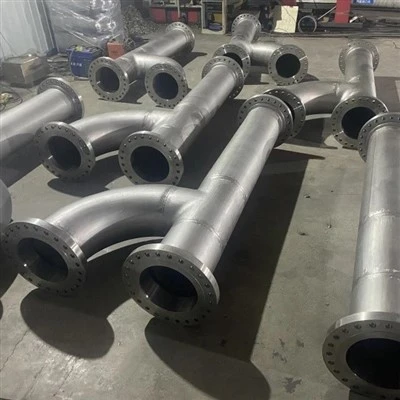
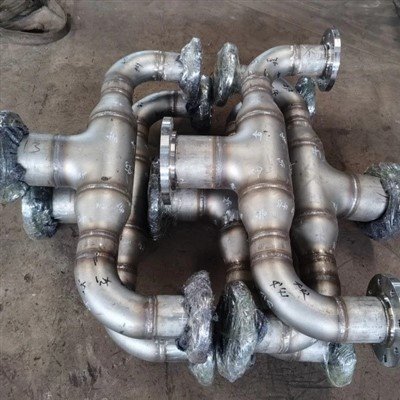
Slip-on flanges are among the most widely used piping components due to their simplicity, cost-effectiveness, and ease of installation. These flanges slide directly onto the pipe and are secured with fillet welds, making them ideal for low-pressure applications across industries like water treatment, HVAC, and chemical processing.
As a professional manufacturer, we aim to provide a detailed yet accessible guide to help engineers, contractors, and industry professionals understand the full scope of slip-on flanges, from their basic design to practical implementation.


What is a Slip On Flange?
Slip on flange is a circular disk with a slightly larger bore than the pipe's outer diameter, allowing it to slide effortlessly over the pipe end. Unlike weld neck flanges, which feature a tapered hub, slip-on flanges are flat and rely on dual fillet welds to create a secure connection. Their straightforward design reduces manufacturing costs and simplifies installation, making them a popular choice for systems operating at lower pressures and temperatures.
Available in materials like carbon steel, stainless steel, and alloy steel, slip-on flanges comply with standards such as ASME B16.5 and ASTM A105, ensuring reliability and compatibility across piping networks.
How Slip On Flanges Work
Slip on flanges function by creating a leak-proof seal through welding and gasket compression. Once slid onto the pipe, the flange is aligned with adjacent components, and fillet welds are applied to the inner and outer edges. The raised face on the flange surface accommodates a gasket, which compresses against the mating flange when bolts are tightened, preventing fluid or gas leakage.
While slip-on flanges lack the structural strength of weld neck flanges for high-stress applications, their design excels in low-pressure environments where ease of installation and cost savings are priorities. The double-weld system provides sufficient integrity for non-hazardous media, though it is not recommended for systems with significant thermal expansion or cyclic loading.
Slip On Flange Types
Slip on flanges come in several variants to address specific operational needs.
Raised Face (RF) Slip On Flanges are the most common type, featuring a small raised ring that concentrates pressure on the gasket for enhanced sealing. They are typically used in low-to-medium pressure applications.
Ring-Type Joint (RTJ) Slip-On Flanges include a grooved surface for metal ring gaskets, offering superior sealing capabilities for higher-pressure systems.
Reducing Slip-On Flanges are designed to connect pipes of different diameters, often employed in space-constrained layouts. Each type adheres to international standards, ensuring interoperability and safety. Manufacturers also offer custom options, such as anti-corrosion coatings or non-standard sizes, to meet unique project requirements.
How to Fit a Slip-On Flange
Installing a slip-on flange requires precision to ensure a secure and leak-free connection. First, slide the flange onto the pipe end, ensuring it sits evenly. Align the bolt holes with those of the mating flange or component. Next, apply a temporary tack weld to hold the flange in place.
Perform a full fillet weld on the inner side of the flange, where it meets the pipe, followed by an external fillet weld. Maintain a setback distance equal to the pipe wall thickness plus 1/8 inch to protect the flange face from weld spatter. After welding, inspect the seams for defects using non-destructive testing methods like dye penetrant inspection. Finally, insert the gasket, align the bolts, and tighten them in a crisscross pattern to ensure even pressure distribution. This process emphasizes efficiency but is best suited for systems with stable, low-pressure conditions.
Lap Flange vs. Slip-On Flange
While both lap joint flanges and slip-on flanges are used in low-pressure systems, they serve distinct purposes.
A slip on flange is a single component welded directly to the pipe, providing a permanent connection. In contrast, a lap joint flange consists of two pieces: a stub end welded to the pipe and a backing flange that rotates freely, facilitating alignment in complex setups. Slip-on flanges are more cost-effective and simpler to install but lack the flexibility for frequent disassembly.
Lap joint flanges excel in applications requiring regular maintenance or adjustment, such as chemical processing lines, though they come at a higher cost due to their multi-part design. The choice between them depends on factors like budget, system flexibility, and operational demands.
Slip On Flange Applications
Slip on flanges are versatile components found in numerous industries. In water treatment plants, they connect low-pressure pipelines, drain lines, and filtration systems, thanks to their affordability and ease of installation. HVAC systems utilize slip-on flanges to join ductwork and piping, where moderate temperatures and pressures align with their design limits. The oil and gas industry employs them in non-critical, low-pressure segments such as vent lines or auxiliary piping. Chemical processing plants use slip-on flanges for non-hazardous fluid transfer, where their corrosion-resistant materials (e.g., stainless steel 316) prevent degradation. Lastly, the food and beverage sector values slip-on flanges for their smooth surfaces, which allow easy cleaning and meet sanitary standards. Their adaptability makes them a cornerstone of efficient piping systems worldwide.
Conclusion
Slip on flanges offer an optimal blend of simplicity, affordability, and reliability for low-pressure piping applications. While they may not suit high-stress environments, their straightforward design and ease of installation make them indispensable across industries like water management, HVAC, and chemicals. As a manufacturer, we emphasize adherence to standards like ASME B16.5 and proper installation techniques to ensure longevity and safety. For projects requiring cost-effective and efficient solutions, slip-on flanges remain a trusted choice. Explore our product range or consult our technical team for customized support.