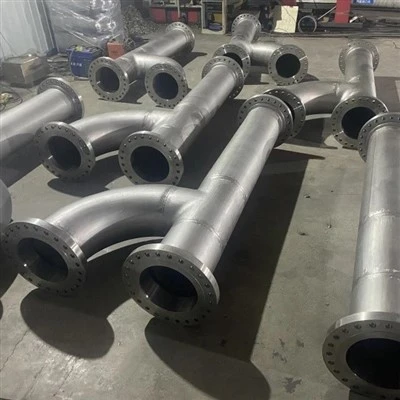
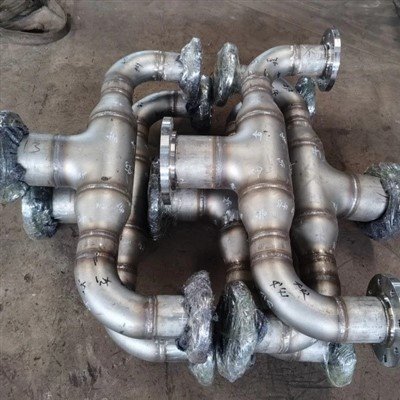
Oblique Tee is a critical fitting to minimize turbulence and pressure drop when branching a pipeline. Unlike a standard straight tee where the branch outlet forms a sharp 90 degree angle to the run, an oblique tee features a branch connection angled at either 45 degrees or 30 degrees relative to the main pipeline axis. This deliberate angular design is its defining characteristic, fundamentally altering the fluid dynamics at the junction.
Oblique tee is to facilitate a smoother diversion of fluid flow from the main pipeline into the branch line. The angled connection significantly reduces the abrupt change in flow direction inherent in a straight tee. This results in lower flow resistance, minimized pressure loss, reduced turbulence, and less erosion potential.
Oblique tees find primary use in demanding applications across industries such as oil and gas transmission, petrochemical processing, power generation, pulp and paper, and large-scale water distribution networks where optimizing hydraulic performance is essential.


Oblique Tee Advantages
Reduced Pressure Drop and Turbulence: The most significant advantage of an oblique tee is its ability to dramatically decrease pressure loss and flow turbulence at the branch connection. The gentler 45° or 30° angle allows fluid to enter the branch with a less abrupt change in direction and velocity vector. This smoother transition translates directly to lower energy consumption for pumping or compression, as less work is required to overcome the fitting's resistance. Reduced turbulence also minimizes localized velocity spikes that can cause vibration and noise within the piping system.
Minimized Erosion and Cavitation Potential: In applications involving high-velocity fluids, slurries, or gases, the sharp corner in a straight tee acts as a focal point for impingement, leading to accelerated erosion of the pipe wall. The oblique tee's angled design deflects the flow more gradually, distributing the impingement force over a wider area and significantly reducing the risk of localized wall thinning and failure. Similarly, the reduction in turbulence helps mitigate the conditions that promote cavitation (the formation and collapse of vapor bubbles), which can also cause severe pitting damage.
Enhanced Flow Distribution and System Efficiency: For systems requiring balanced flow splitting or where maintaining downstream flow characteristics is critical, the oblique tee provides superior performance. The smoother flow path results in more predictable flow patterns entering the branch and continuing down the run. This leads to improved overall system efficiency, more consistent process conditions, and potentially longer service life for downstream equipment like pumps, valves, and heat exchangers by reducing the impact of disruptive flow phenomena.
How is Oblique Tee Manufactured?
The manufacturing of robust steel oblique tees, suitable for industrial pressures and environments, follows stringent processes:
Material Selection and Preparation: High-quality carbon steel, stainless steel, or alloy steel is selected based on the intended service. Raw material typically comes in the form of seamless or welded pipe sections or forged billets. The material is cut to precise lengths and undergoes thorough inspection and surface cleaning to remove scale, oil, or impurities.
Forming the Body and Branch: The primary methods are Hot Forming or Cold Forming combined with Extrusion or Hydraulic Bulging:
Hot Forming: A solid steel cylinder is heated to forging temperature. Pressure is applied using dies to extrude the branch outlet at the required 45° or 30° angle simultaneously with shaping the main body. This method is common for larger sizes and thicker walls.
Extrusion/Bulging: A prepared pipe section has a hole cut at the desired branch location and angle. The section is heated locally or kept at ambient. A hydraulic ram with a shaped die forces material outwards through the hole to form the branch neck. Subsequent pressing or machining shapes the extruded material into the final branch stub.
Welding: While many oblique tees are formed from a single piece (seamless), larger sizes or specific standards sometimes involve fabrication. In this case, a separate branch piece, pre-cut to the oblique angle, is carefully aligned and joined to the run pipe via full-penetration butt welding. Strict weld procedure qualifications and welder certification are mandatory.
Machining and Finishing: The formed or welded tee undergoes machining processes. Ends are beveled to precise angles according to ASME B16.25. The branch and run ends are machined to exact outside diameters and wall thicknesses specified in standards like ASME B16.9. Surface imperfections are removed, and the final dimensions are meticulously verified.
Quality Control and Testing: Rigorous inspection is paramount. This includes dimensional checks against ASME B16.9 tolerances, visual inspection, Non-Destructive Examination such as dye penetrant testing of welds and critical areas, radiographic testing or ultrasonic testing for weld integrity and wall thickness, and hydrostatic testing to 1.5 times the rated pressure. Material test reports are generated to certify compliance.
Types of Oblique Tees
Oblique tees are categorized based on manufacturing method, material, and the specific branch angle:
Forged Oblique Tees: Manufactured from solid forged steel billets, these are typically used for smaller pipe sizes. They offer high strength and pressure integrity. The branch angle is usually 45°. Connection types are primarily Socket Weld (SW) or Threaded (THD), conforming to standards like ASME B16.11. They are ideal for high-pressure, compact installations in instrument lines, sampling points, or small-bore process connections.
Butt Weld Oblique Tees: This is the most common type for industrial process piping in larger sizes. Manufactured via hot forming, extrusion, or fabrication, they have plain, beveled ends designed for welding directly into the pipeline per ASME B16.25. They conform to dimensional standards like ASME B16.9 or MSS-SP-75. They provide the highest integrity connection for critical service.
45 Degree vs. 30 Degree Oblique Tees
45° Oblique Tee is the standard and most widely available angle. It offers a significant improvement in flow characteristics over a straight tee while being easier to manufacture and accommodate in piping layouts. Suitable for most general applications requiring reduced turbulence and pressure drop.
30° Oblique Tee provides an even smoother flow transition and lower pressure drop than the 45° version, approaching the hydraulic efficiency of a lateral (true "Y" branch). However, it is less common, often requires custom fabrication, demands more space due to the shallower angle, and can be more challenging to integrate into tight piping arrangements. Typically specified for very high-velocity flows or where minimizing pressure loss is absolutely critical.
How is Oblique Tee Installed?
Proper installation is crucial for performance and integrity:
- System Shutdown, Isolation, and Preparation: Safely shut down the piping system following lockout/tagout (LOTO) procedures. Isolate the section where the oblique tee will be installed using valves or blinds, and safely drain/purge the line. Thoroughly clean the pipe ends where the tee will be welded, removing all paint, scale, oil, grease, and moisture from the inside and outside surfaces within the weld zone. Verify the pipe end preparation meets the welding specification.
- Tee Selection and Orientation Verification: Confirm the selected oblique tee matches the pipe material grade, size, schedule/wall thickness, angle, and pressure rating for the application. Critically important: Identify the flow direction. The oblique tee must be oriented so that the branch outlet points downstream relative to the main flow in the pipeline run. Installing it backwards negates the flow benefits and can cause severe turbulence and erosion. Mark the intended flow direction clearly on the tee body if not already indicated.
- Tacking and Alignment: Position the oblique tee carefully between the prepared pipe ends in the run. Use alignment clamps to ensure the run pipes and tee are co-axial and the branch outlet is oriented correctly. Maintain the specified root gap. Tack weld the tee securely in place at multiple points to hold alignment. Check alignment again meticulously before proceeding.
- Welding: Perform the full circumferential butt welds connecting the run pipes to each end of the oblique tee, following the qualified Welding Procedure Specification. Use appropriate welding processes. Ensure full penetration and sound weld quality. Weld in passes, allowing for proper interpass temperature control. Strictly adhere to pre-heat and post-weld heat treatment requirements as dictated by the material grade, thickness, and applicable codes.
- Inspection, Testing, and Commissioning: Upon completion of welding, allow the joint to cool. Conduct thorough visual inspection of the welds. Perform specified Non-Destructive Examination such as Radiographic Testing or Ultrasonic Testing to verify weld integrity. For critical lines, hydrostatic or pneumatic pressure testing of the entire modified section may be required before removing isolation and carefully recommissioning the system, monitoring for leaks.
Conclusion
The oblique tee is an indispensable engineered solution within industrial piping systems, specifically designed to optimize flow dynamics at branch connections. Its defining 45° or 30° angled branch significantly reduces pressure drop, turbulence, erosion risk, and energy consumption compared to standard straight tees. Available primarily as robust butt weld fittings for larger lines or forged types for smaller connections, the choice between 45° and 30° depends on the criticality of flow efficiency versus spatial and cost constraints. Successful implementation hinges on meticulous material selection, adherence to stringent manufacturing standards like ASME B16.9, and crucially, correct installation with precise flow direction orientation. By understanding the advantages, types, manufacturing rigor, and proper installation procedures outlined here, engineers and piping designers can effectively leverage oblique tees to enhance the performance, efficiency, and longevity of their fluid handling systems.