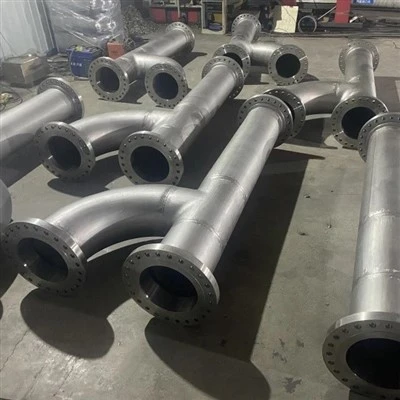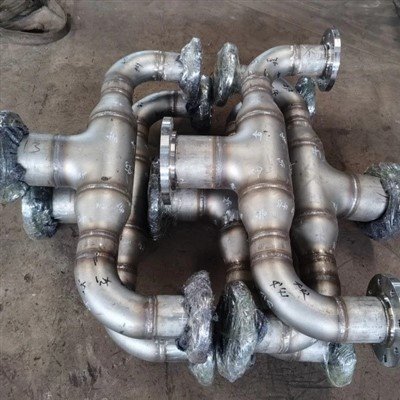
Offshore topside piping design comes down to a genuine trade-off between two premium alloy families that both deliver excellent seawater and chloride resistance but arrive at that resistance through very different metallurgy: S32760 super duplex (commonly known by the trade name Zeron 100) and the 6% molybdenum super-austenitic grades such as 254SMO and AL6XN.

Both are routinely specified on offshore platforms, and the choice between them is rarely about corrosion resistance alone - it is about weight, weldability, low-temperature performance, and sour service compatibility. This guide compares the two alloy families directly across the factors that actually drive offshore topside piping material decisions.
What Are S32760 Super Duplex and 6Mo Super Austenitic Alloys?
S32760 achieves its performance through a dual-phase austenite-ferrite microstructure reinforced with tungsten and copper additions, while 6Mo super-austenitic grades achieve comparably high chloride resistance through a fully austenitic structure with substantially higher nickel and molybdenum content - a fundamental structural difference that drives nearly every practical distinction covered in this guide.
S32760 is a super duplex stainless steel, meaning it combines roughly equal proportions of austenite and ferrite phases, reinforced with tungsten (a feature distinguishing it from standard duplex 2205 and contributing meaningfully to its pitting resistance) alongside chromium, molybdenum, and nitrogen. The 6Mo super-austenitic grades, by contrast, are fully austenitic - no ferrite phase at all - relying instead on very high nickel content (roughly 18–25%) combined with molybdenum and nitrogen to achieve their corrosion resistance. Both families reach a similarly elite tier of chloride resistance, but the underlying microstructural difference - dual-phase versus single-phase - is the root cause of their differing strength, weldability, and low-temperature behavior, each discussed in turn below.
A side-by-side comparison of the key properties:
|
Property |
S32760 (Super Duplex) |
6Mo Super Austenitic (254SMO/AL6XN) |
Why It Matters |
|
Microstructure |
Dual-phase, roughly 50/50 austenite-ferrite |
Fully austenitic, single phase |
Duplex phase balance must be actively managed during welding; austenitic has no equivalent concern |
|
Approx. PREN |
≈ 40–41 (includes tungsten contribution) |
≈ 43–46 |
Both are considered seawater-capable; austenitic grades trend slightly higher in most published comparisons |
|
Minimum yield strength (annealed) |
≈ 550–580 MPa (80–84 ksi) |
≈ 300–310 MPa (43–45 ksi) |
Duplex offers roughly 1.8–2x the strength, enabling thinner wall thickness for the same pressure rating |
|
Relative nickel content |
≈ 6–8% |
≈ 18–25% |
Duplex's much lower nickel content generally gives it a lower raw material cost per kilogram despite comparable PREN |
|
Low-temperature toughness |
Good, but the ferrite phase can limit toughness at very low temperatures relative to austenitic grades |
Excellent - austenitic FCC structure does not exhibit a ductile-to-brittle transition |
Relevant for Arctic or very low ambient temperature topside service |
Table 1. Representative property comparison between S32760 super duplex and 6Mo super-austenitic grades. Values are illustrative and rounded from commonly published reference data; confirm exact composition and mechanical property limits against the current edition of the applicable ASTM/ASME specification before use in design documentation.
How Do S32760 and 6Mo Alloys Compare in Chloride Corrosion Resistance?
Both S32760 and the 6Mo super-austenitic grades achieve a Pitting Resistance Equivalent Number comfortably above 40, placing them in the same top-tier corrosion resistance category and making both genuinely suitable for full seawater immersion, with the 6Mo austenitic grades trending marginally higher in most published PREN comparisons.

S32760's PREN calculation includes a tungsten contribution not present in the standard formula used for molybdenum-only alloys:
PREN = %Cr + 3.3 × (%Mo + 0.5 × %W) + 16 × %N
Applying this formula with representative S32760 composition typically yields a PREN in the range of roughly 40–41, while the 6Mo super-austenitic grades typically calculate to roughly 43–46 using the standard formula. This gap is real but modest relative to the far larger gap both families hold over standard 316L (PREN ≈ 24–26), and in practical terms, both S32760 and the 6Mo grades are considered appropriate for full seawater immersion and aggressive chloride service - meaning corrosion resistance alone rarely settles the choice between them for a given offshore topside application. The more consequential differences, covered next, lie in mechanical and fabrication properties rather than raw pitting resistance.
Why Does S32760's Higher Strength Matter for Offshore Topside Weight Savings?
S32760's minimum yield strength is roughly 1.8 to 2 times that of the 6Mo super-austenitic grades, which allows piping and structural components to be designed with meaningfully thinner wall thickness for the same pressure rating - a significant, direct weight reduction that carries outsized value on an offshore topside where every tonne of structural load affects platform design and cost.
Offshore topside structures are weight-sensitive in a way that few onshore process plants are: platform structural steel, support systems, and lifting capacity are all sized around the total topside weight, so reducing the weight of piping, vessels, and other equipment has a cost and engineering benefit that extends well beyond the piping itself.
Because pressure-retaining wall thickness for a given design pressure and diameter scales inversely with a material's allowable stress - which is directly tied to yield strength - S32760's substantially higher strength translates into genuinely thinner, lighter piping compared with an equivalent 6Mo austenitic design at the same pressure rating. This is frequently the single largest practical reason super duplex is selected over 6Mo super-austenitic grades for offshore topside piping specifically, even in cases where the two alloys' corrosion resistance would both be more than adequate.
How Do the Two Alloy Families Compare in Weldability and Fabrication?
6Mo super-austenitic grades are generally more straightforward to weld reliably at scale because they have no phase balance to manage, while S32760 requires tighter control of heat input, interpass temperature, and filler metal selection to maintain the correct austenite-ferrite ratio across the weld and heat-affected zone.
As covered in detail in other technical guides on duplex welding, maintaining an appropriate balance between austenite and ferrite in both the weld metal and the heat-affected zone is a central concern in duplex and super duplex fabrication, requiring nitrogen-boosted filler metal, controlled heat input, and often welding procedure qualification that specifically verifies phase balance rather than mechanical properties alone.
The 6Mo super-austenitic grades do not carry this specific concern, since there is no ferrite phase whose balance must be preserved - their welding challenges instead center on avoiding excessive heat input to limit intermetallic phase formation and controlling molybdenum microsegregation, generally considered a less demanding overall fabrication challenge than duplex phase-balance management, particularly on projects with a high volume of field welds where consistent quality across many different welders and conditions is a genuine practical concern.
Which Alloy Performs Better in Low-Temperature or Arctic Offshore Service?
6Mo super-austenitic grades generally offer more reliable low-temperature toughness than S32760 super duplex, because their fully austenitic face-centered cubic structure does not exhibit the ductile-to-brittle transition behavior that the ferrite phase in duplex stainless steel can show at sufficiently low temperatures.

Body-centered cubic structures, including the ferrite phase present in duplex and super duplex stainless steels, can undergo a ductile-to-brittle transition as temperature decreases, where impact toughness drops significantly below a characteristic transition temperature - a well-documented consideration in duplex material selection for low-temperature service. Face-centered cubic austenitic structures, including the 6Mo super-austenitic grades, do not exhibit this same transition behavior and generally maintain good toughness down to very low temperatures.
This is a genuine, practical consideration for offshore platforms operating in cold climates or Arctic conditions, where minimum design metal temperature becomes a governing selection criterion - in such projects, low-temperature impact testing (Charpy V-notch testing at the governing design temperature) is a standard qualification requirement for duplex materials specifically to confirm adequate toughness is retained, a verification step less critical, though still often performed, for the inherently more temperature-stable 6Mo austenitic grades.
How Does Sour Service (H2S) Exposure Affect the Choice Between Duplex and 6Mo Austenitic?
Sour service containing hydrogen sulfide often favors 6Mo super-austenitic grades over S32760, because industry sour-service standards such as NACE MR0175/ISO 15156 impose strength and hardness limits that can restrict how much of super duplex's strength advantage can actually be used, sometimes eliminating the weight-saving benefit that otherwise favors duplex.
Hydrogen sulfide environments carry a risk of sulfide stress cracking, a form of hydrogen-assisted cracking that becomes more likely as material strength and hardness increase; recognized sour-service standards accordingly place maximum hardness and, in some cases, maximum strength limits on materials used in qualified sour service, particularly for duplex and super duplex grades where achieving the alloy's full strength typically also means a hardness level that can approach or exceed these limits.
This creates a genuine, sometimes counterintuitive design tension: S32760's headline advantage over 6Mo austenitic grades is its higher strength, but in a sour-service application governed by strict hardness limits, that strength may need to be deliberately limited through heat treatment condition and controlled processing to remain compliant - which can significantly narrow or even eliminate the wall-thickness and weight advantage duplex would otherwise offer. For sour offshore service specifically, project teams should evaluate compliance with the applicable sour-service standard as an early, potentially decisive factor rather than assuming duplex's general strength advantage will translate directly into the same weight savings seen in sweet (non-sour) service.
How Do S32760 and 6Mo Alloys Compare in Raw Material Cost?
S32760 typically carries a lower raw material cost per kilogram than the 6Mo super-austenitic grades, because its nickel content is substantially lower - roughly 6–8% versus roughly 18–25% - and nickel is one of the most expensive common stainless alloying elements, though this per-kilogram cost advantage should be evaluated alongside duplex's wall-thickness savings for a true installed-cost comparison.

Because nickel represents such a large share of contained alloy value in high-performance stainless steels, S32760's much lower nickel content compared with the 6Mo super-austenitic grades generally gives it a meaningful per-kilogram cost advantage, independent of and in addition to the wall-thickness reduction discussed earlier.
This means duplex's cost advantage over 6Mo austenitic grades in an installed piping system is frequently compounded - lower cost per kilogram of material, applied to a lower total kilogram requirement due to thinner walls - which is a significant reason super duplex has become the default choice for offshore topside piping in many projects where sour service considerations do not apply. This cost relationship should be treated as a general directional guide rather than a precise, stable ratio, since both nickel and molybdenum markets are genuinely volatile and can shift the relative cost positioning of the two alloy families over time.
Which Alloy Should You Choose for Offshore Topside Piping?
S32760 super duplex is generally the preferred choice for offshore topside piping where weight reduction and cost efficiency in sweet (non-sour) chloride service are the governing drivers, while 6Mo super-austenitic grades are generally preferred where sour service hardness limits, very low temperature toughness requirements, or simplified high-volume field welding are the governing concerns.
A direct comparison of common design drivers and which alloy family they tend to favor:
|
Design Driver |
Favors S32760 Super Duplex |
Favors 6Mo Super Austenitic |
|
Topside weight and structural load minimization |
Yes - higher strength permits thinner wall piping and lighter supports |
Less favorable - lower strength requires thicker walls for equivalent pressure rating |
|
Sour service (H2S) with strict hardness limits per NACE MR0175/ISO 15156 |
Requires careful strength/hardness control; qualification and heat treatment condition become critical |
Often preferred - lower inherent strength and hardness simplify sour-service qualification |
|
Complex welded geometry with many field welds |
Requires tighter welding procedure control to manage phase balance |
Generally simpler to weld reliably at high volume, with no phase-balance concern |
|
Very low temperature or Arctic topside exposure |
Requires toughness qualification testing at the governing design temperature |
Generally favored due to inherently better low-temperature toughness |
|
Raw material and initial procurement cost |
Typically lower per kilogram due to lower nickel content |
Typically higher per kilogram due to substantially higher nickel content |
Table 2. Representative comparison of offshore topside design drivers and which alloy family they tend to favor.
In practice, many offshore projects use both alloy families selectively within the same facility - S32760 for the bulk of sweet-service topside piping where its strength and cost advantages apply cleanly, and 6Mo super-austenitic grades for specific sour-service lines, low-temperature-critical components, or locations where field weld volume and simplicity are the dominant practical concern. This selective, driver-based specification approach, rather than a single facility-wide default, is generally the more defensible engineering practice given how genuinely close these two alloy families are in overall corrosion performance.
Frequently Asked Questions
Is S32760 the same alloy as duplex 2205?
No - S32760 is a super duplex grade with meaningfully higher chromium, molybdenum, and nitrogen content than standard duplex 2205 (S32205), along with a tungsten addition that standard 2205 does not have, giving S32760 a substantially higher PREN and higher strength than standard duplex.
Can S32760 and 6Mo super-austenitic piping be welded to each other in the same system?
Yes, dissimilar welding between the two alloy families is feasible with an appropriately selected filler metal, and this is not unusual in projects that specify each alloy selectively by location, though the welding procedure must account for both the duplex phase-balance requirement on one side of the joint and the austenitic-specific considerations on the other.
Does 6Mo super-austenitic piping require thicker walls than S32760 for the same service?
Generally yes, for the same design pressure and diameter, because pressure-retaining wall thickness scales with allowable stress, and 6Mo austenitic grades have a substantially lower yield strength than S32760; this is the direct mechanical basis for duplex's topside weight advantage discussed in this guide.
Which alloy is more common in existing offshore topside installations?
Both are widely used, but super duplex grades including S32760 have become an increasingly common default for topside piping in many recent offshore projects specifically due to the weight and cost advantages discussed here, while 6Mo super-austenitic grades remain common in sour service, low-temperature-critical applications, and legacy systems specified before duplex grades saw wider adoption.
Is S32760 suitable for splash zone or subsea service, not just topside piping?
Super duplex grades including S32760 are also used in splash zone and subsea applications, though those environments carry their own specific considerations - such as cathodic protection interaction and hydrogen embrittlement risk from overprotection - that are distinct from the topside-focused comparison in this guide and should be evaluated separately.