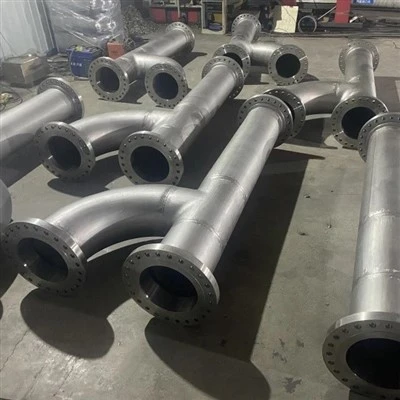
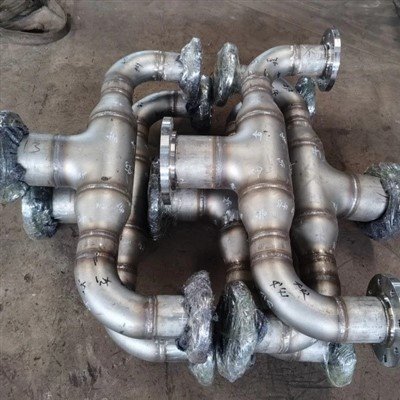
Duplex stainless steel can be formed, but it is less forgiving than 316L: use larger minimum bend radii (about 2x thickness for 2205, 2.5-3x for 2507), expect more springback because of its higher yield strength, and control cold work carefully because it raises strength but can reduce toughness and corrosion margin if overdone. Heavy cold forming should be followed by a solution anneal.

In one sentence: duplex forms like a stronger, springier, less ductile cousin of austenitic stainless - plan for bigger radii, more overbend to beat springback, and a post-form anneal after severe cold work.
Key Takeaways
- Minimum cold bend radius: about 2x thickness (t) for 2205, 2.5-3x t for super duplex 2507 - roughly double the 1x t typical of 316L.
- Springback is greater than austenitic grades: duplex rebounds more because of its higher yield (450 MPa vs ~170-310 MPa for 316L). Overbend the target angle to compensate.
- Cold working raises yield/tensile strength and hardness, but also lowers ductility and impact toughness - limit cold work and anneal after severe forming.
- Ferrite work-hardens faster than austenite; excessive cold work plus later heating in the 600-900 deg C band risks sigma phase. Keep ferrite in 35-65%.
- Hot forming must be done above the solution-anneal range (about 1000-1100 deg C for 2205) followed by rapid quench - never cool slowly through the sigma danger zone.
- After heavy cold or hot forming, a solution anneal + quench restores corrosion resistance and the balanced duplex microstructure.
What Makes Duplex Stainless Steel Different to Form?
Duplex is a roughly 50/50 mix of ferrite and austenite, which gives it high strength and good corrosion resistance but also lower ductility and higher springback than fully austenitic 316L - so forming needs larger radii and more force.
The ferritic half makes duplex stronger and stiffer; the austenitic half gives ductility and toughness. Together they form a material that resists deformation more than 316L, springs back more after bending, and work-hardens readily. Process planners must account for these three traits: bigger bend radii, overbend for springback, and careful control of cold-work level.
What Are the Minimum Bend Radius Limits?
Use conservative minimum bend radii: about 1.5-2x thickness (t) for 2205 in a 90 deg bend (2-3x t for tight 180 deg bends), and about 2.5-3x t for super duplex 2507. These are roughly twice the ~1x t common for 316L.
Bend radius is measured to the inner surface. Tighter radii risk cracking on the outer fiber (tension side) and excessive work hardening. The values below are practical industry guidance for cold bending; exact limits depend on wall thickness, method (press brake, roll, rotary draw), and temper.
|
Material |
Min bend radius (cold, 90 deg) |
Min bend radius (tight 180 deg) |
Note |
|
316L (austenitic) |
~1 x t |
~1.5 x t |
Most ductile |
|
2205 (S31803/S32205) |
~1.5-2 x t |
~2-3 x t |
Standard duplex |
|
2507 (S32750) |
~2.5-3 x t |
~3-4 x t |
Super duplex, less ductile |
|
Zeron 100 (S32760) |
~2.5-3 x t |
~3-4 x t |
W-bearing super duplex |
Why Does Duplex Spring Back More Than 316L?
Springback is the elastic recovery of a bend after the load is removed. Because duplex has a much higher yield strength (about 450 MPa vs 170-310 MPa for 316L), a larger fraction of the deformation is elastic and recovers - so duplex bends spring back more and require deliberate overbend.
Springback is driven by the ratio of yield strength to modulus. Duplex yield is higher while its elastic modulus is similar to other steels, so a bigger slice of the bend is "elastic" and rebounds. Practically, the press-brake or die angle must be set lower (overbent) than the target so the rebound lands on the desired angle.
|
Material |
Typical springback (90 deg bend) |
Compensation |
|
316L |
small (~1-3 deg) |
Minor overbend |
|
2205 |
moderate (~3-8 deg) |
Clear overbend + trial part |
|
2507 |
higher (~5-10 deg) |
Larger overbend, verify |
Best practice: make a trial bend on offcut material, measure the rebound, and lock the corrected die angle before production.
How Does Cold Working Affect Duplex Stainless Steel?
Cold working (bending, rolling, stretching) strengthens duplex by work hardening - yield and tensile rise and hardness increases - but it also reduces ductility, impact toughness, and can lower the corrosion margin if carried too far or followed by improper heating.
Mechanical effects
Yield strength of 2205 can rise from 450 MPa to 550-650 MPa after heavy cold work.
Hardness increases; ductility (elongation) and Charpy impact toughness drop.
Ferrite work-hardens faster than austenite, so the phase balance shifts toward harder, less tough behavior.
Corrosion effects
Moderate cold work generally does not harm pitting resistance and can even slightly help surface compressive stress.
Heavy cold work plus later exposure to 300-900 deg C (e.g., welding, drying, or stress relief) raises sigma-phase risk because deformed ferrite is more prone to precipitation.
If cold work exceeds about 10-15% (a common rule of thumb for critical service), specify a post-form solution anneal to restore properties.
Rule of thumb: light forming (small radius bends, low strain) is fine as-formed; severe cold forming should be followed by solution anneal + quench.
Cold Forming vs Hot Forming
Choose cold forming for thin sections and moderate bends (faster, cheaper, no scale); choose hot forming for thick plates, tight radii, or complex shapes, performed above the solution-anneal temperature and immediately quenched.

|
Aspect |
Cold forming |
Hot forming |
|
Temperature |
Room temp |
~1000-1100 deg C (2205); ~1050-1150 deg C (2507) |
|
Best for |
Thin wall, light bends |
Thick plate, tight/complex shapes |
|
Surface |
Clean, no scale |
Scale, needs descaling + pickling |
|
Springback |
Present, compensate |
Minimal |
|
Post-treatment |
Anneal if heavy cold work |
Quench from hot; may need repassivate |
|
Cost |
Lower |
Higher (furnace, energy) |
Heat Treatment After Forming
After heavy cold or hot forming, perform a solution anneal at about 1020-1100 deg C (2205) or 1050-1150 deg C (2507) followed by rapid quench - this dissolves any precipitated phases, restores the 35-65% ferrite/austenite balance, and recovers corrosion resistance. Never stress-relieve in the 600-900 deg C band.
- Light cold work (low strain): often acceptable as-formed, but verify toughness for the service.
- Heavy cold work / hot form: mandatory solution anneal + quench.
- After annealing: pickling/passivation restores the chromium-rich passive film.
- Confirm ferrite content (35-65%) and, for critical parts, Charpy impact after treatment.
Duplex vs 316L vs Carbon Steel: Forming Comparison
For formability: carbon steel is easiest, 316L next, duplex hardest (largest radius, most springback). For strength-to-weight after forming, duplex wins. Pick the grade by the service, then plan the forming method around its limits.
|
Property |
Carbon steel |
316L (austenitic) |
2205 (duplex) |
|
Min bend radius |
~0.5-1 x t |
~1 x t |
~1.5-2 x t |
|
Springback |
Low |
Small |
Moderate-high |
|
Cold-work strengthening |
High |
Moderate |
High (ferrite-led) |
|
Post-form anneal need |
Rare |
Rare |
Yes if heavy work |
|
Strength after forming |
Good |
Moderate |
High |
Frequently Asked Questions
Q: What is the minimum bend radius for Duplex 2205?
A: About 1.5-2 times the thickness for a 90 deg cold bend, and 2-3 times thickness for tight 180 deg bends. Super duplex 2507 needs about 2.5-3 times thickness. These are roughly double the ~1x thickness typical of 316L.
Q: Why does duplex stainless spring back more than 316L?
A: Duplex has a much higher yield strength (about 450 MPa vs 170-310 MPa for 316L), so a larger share of the bend is elastic and recovers after unloading. Plan an intentional overbend and verify with a trial part.
Q: Does cold working hurt duplex corrosion resistance?
A: Moderate cold work usually does not harm pitting resistance. The risk is heavy cold work followed by heating in the 600-900 deg C range, which can precipitate sigma phase. After severe cold forming, solution anneal + quench to restore corrosion resistance.
Q: Do I need to anneal duplex after forming?
A: Only after heavy cold work or after hot forming. Light bends are often acceptable as-formed, but critical or thick-section parts should be solution-annealed (1020-1100 deg C for 2205) and quenched.
Q: Can duplex be hot formed like carbon steel?
A: Yes, but the temperature window is tighter: form above about 1000-1100 deg C and quench immediately. Avoid slow cooling through the 600-900 deg C sigma danger zone, and descaled + pickle afterward.
Q: Is duplex harder to form than 316L?
A: Yes. It needs larger bend radii, more bending force, and more springback compensation than 316L, but it delivers about twice the strength, allowing thinner walls in the final part.
Conclusion
Duplex stainless steel forms successfully when you respect three facts: it needs larger bend radii than 316L (about 2x t for 2205, 2.5-3x t for 2507), it springs back more because of its higher yield, and cold working strengthens it but can hurt toughness and corrosion margin if overdone. Heavy cold or hot forming should end with a solution anneal and quench.
Rule of thumb: plan for bigger radii, overbend to beat springback, limit and anneal heavy cold work, and never stress-relieve in the 600-900 deg C band. With those controls, duplex delivers roughly twice the strength of 316L in a formed part that still resists chloride corrosion.