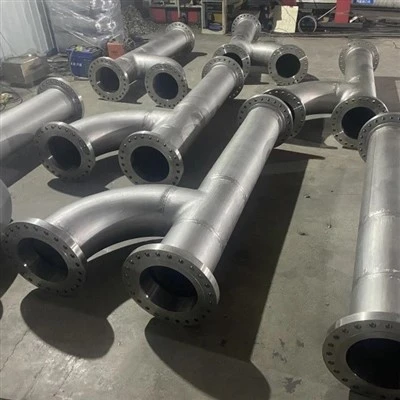
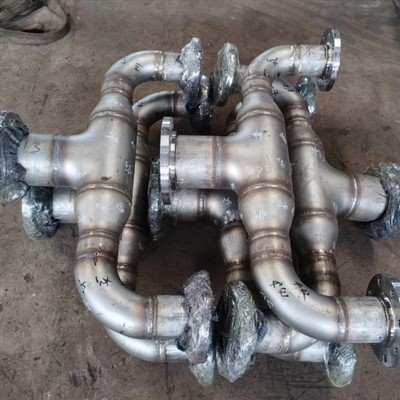
If you design, build, or operate pipelines that are cleaned or inspected with pigs, one of the first routing decisions you face is whether to use standard pipe elbows or long-radius pipe bends - and which bending radius to specify. This article compares pipe bends and pipe elbows across manufacturing method, standards, geometry, wall thickness, flow, and - most importantly - pigging compatibility, and explains when to choose 3D, 5D, and 10D bending radii.
Three terms are used throughout. A pig is a cylindrical tool pushed through a pipeline by the product flow, either to clean it (a cleaning pig) or to inspect it with sensors (an intelligent pig, or in-line inspection, ILI tool). D is the nominal pipe diameter (the nominal outside diameter, in millimetres or inches). The centerline radius R of a bend or elbow is the radius of the curve measured along the pipe centerline; "3D" means R equals three times the pipe diameter. Two geometry terms also recur: the extrados is the outside of the curve (where the wall tends to thin during bending) and the intrados is the inside of the curve (where the wall tends to thicken); ovality is how far the circular cross-section has deformed toward an ellipse.
Table 1 - Pipe elbow vs pipe bend at a glance
|
Feature |
Pipe elbow |
Pipe bend |
|
Centerline radius |
1.0D (short radius) or 1.5D (long radius) |
3D, 5D, 6D, 8D, 10D or custom; typically ≥3D |
|
Manufacturing |
Forged, pressed or drawn factory fitting |
Hot induction bending of a straight pipe (one continuous piece) |
|
Primary standards |
ASME B16.9; ASME B16.28 (short radius) |
ASME B16.49; ISO 15590-1 |
|
Angles |
Standard 45°, 90°, 180° returns |
Any angle from about 15° to 180°, custom |
|
Wall thickness at the curve |
Uniform, controlled by the fitting standard |
Extrados thins and intrados thickens; controlled per standard and design |
|
Joints in the curve |
Fitting with two butt welds at its ends |
Continuous curved pipe - no joint inside the curve |
|
Pressure drop |
Higher (tight radius, more turbulence) |
Lower (smooth, gradual direction change) |
|
Pigging compatibility |
Poor for rigid-body and intelligent pigs |
Designed for pigging when radius ≥3D |
|
Typical use |
Compact plant piping, tight spaces |
Pipelines, pigged lines, long-distance transport |
What Is the Difference Between a Pipe Bend and a Pipe Elbow?
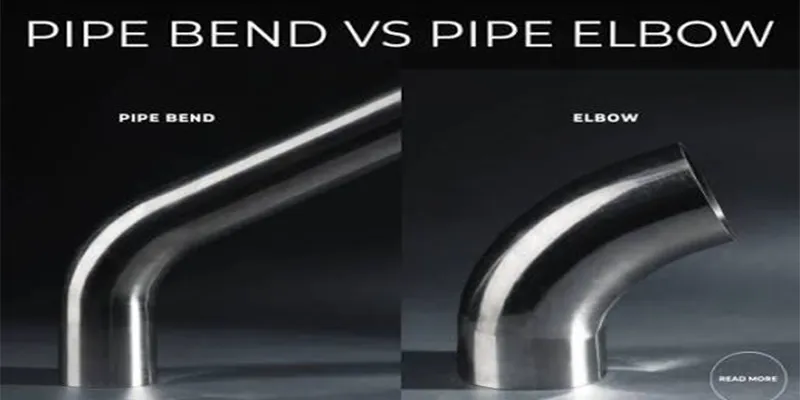
A pipe elbow is a standardized, factory-made fitting with a fixed short centerline radius - 1.5D for long-radius (LR) elbows and 1.0D for short-radius (SR) elbows - dimensioned to ASME B16.9 and ASME B16.28. A pipe bend is a length of pipe curved to a specified larger radius, typically 3D, 5D, or 10D, formed as one continuous piece, usually by hot induction bending, and made to ASME B16.49 or ISO 15590-1. For any pipeline that will be pigged, the pipe bend is the correct component; a standard elbow is not.
Radius is the defining difference. An elbow always has a tight radius of one or one-and-a-half pipe diameters, fixed by the fitting standard and impossible to change. A bend can be produced at almost any radius from about 2D upward - 3D, 5D, 6D, 8D, 10D and beyond - and the required radius is written into the purchase specification, so it is chosen by the designer, not fixed by the catalogue.
Manufacturing differs as well. Elbows are pressed, forged, or drawn as individual fittings, each with two butt-weld ends. Bends are made by curving a straight length of pipe (seamless or welded) with an induction-heating machine, so the curved section is continuous with the pipe itself and contains no joint inside the bend.
The consequence for pigging is direct: because bends have larger, smoother radii, pigs and inspection tools negotiate them reliably, while tight elbows restrict or block the same tools. The sections that follow develop this in detail.
Why Does the Bending Radius Matter for Pigging Pipelines?
The bending radius decides whether a pig can pass at all - and how safely it cleans or inspects. Industry guidance sets the practical minimum at 3D for most pigging operations. Tighter bends (1.5D or 1.0D elbows) force rigid-body pigs and inspection tools to bend sharply, increasing drag and cup wear, raising the risk of a stuck or damaged pig, and degrading inspection data. A line designed for pigging should therefore use bends of 3D or larger at every direction change.
How a pig negotiates a bend. A pig is a rigid or semi-rigid body sealed against the pipe wall by cups or discs. In a bend the body must follow the curvature: the tighter the bend, the more the body flexes, the more the seals compress on one side and lift on the other, and the harder the flow must push it through. Below a certain radius the body locks, or the seals leak past the product and the pig stalls.
The cost of a stuck pig is high: the line must be depressurized and opened, which means lost production and a hazardous recovery operation. Inspection quality suffers even before that - ILI sensors need a stable standoff from the wall, and in a tight bend the tool pitches and yaws, leaving gaps and distortions in the magnetic-flux-leakage (MFL) or ultrasonic data.
Industry guidance is consistent. COBALCH recommends minimum radii of 1.5D for lines 4 inches and smaller, 3D for 6–12 inch lines, and 5D for lines larger than 12 inches; FEEC specifies a 3D minimum for flexible utility pigs and 5D minimum for the longer, stiffer intelligent pigs; EPCM recommends 3D and above for easy intelligent pigging; and most ILI providers design tools for 3D or greater, with some specialized tools capable of 1.5D.
Table 2 - Typical minimum bending radius by pig type (industry guidance; always confirm with the tool vendor)
|
Pig type |
Typical use |
Practical minimum radius |
Notes |
|
Foam / swab pigs |
Light cleaning, drying, dewatering |
Can pass 1.5D long-radius elbows |
Low rigidity; not used for inspection |
|
Solid-cast / mandrel cleaning pigs |
General cleaning, wax and scale removal |
1.5D–3D |
Rigid body; tight bends increase wear and stall risk |
|
Geometry / caliper pigs |
Bore and dent measurement |
3D |
Caliper and MFL tools typically require ≥3D |
|
MFL (magnetic flux leakage) smart pigs |
Metal-loss inspection |
3D–5D |
Data quality improves at larger radii |
|
UT / EMAT and long-body ILI tools |
Wall thickness and crack inspection |
5D–10D, depending on tool length |
Long rigid bodies need the largest radii |
What Do 3D, 5D, and 10D Bends Mean - and Which One Do You Need?
The number before the D is the ratio of the bend centerline radius to the pipe nominal diameter: a 3D bend has a radius of three pipe diameters, a 5D bend five, and a 10D bend ten. In practice, 3D is the compact minimum for piggable lines carrying cleaning and gauging pigs; 5D is the recommended default for intelligent (ILI) pigging; and 10D is reserved for very long or rigid inspection tools, the lowest pressure drop, and the tightest geometry - at the cost of a much larger footprint and longer tangent lengths.
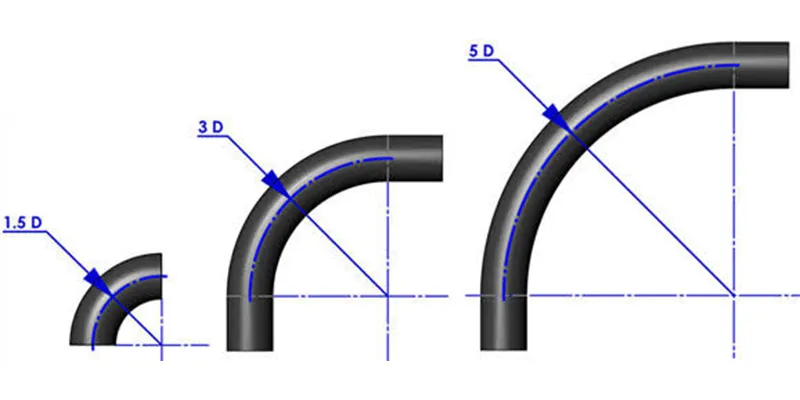
The radius formula is simple: R = k × D, where k is 3, 5, or 10. Table 3 shows what this means in millimetres for three common line sizes. A 10D bend on a 12-inch line, for example, has a centerline radius of about 3.2 metres - which shows why routing and right-of-way drive the choice.
What each radius buys you. 3D bends fit the tightest spaces and accept most cleaning pigs, but wall thinning, ovality, and pressure drop are the highest of the three, and only some smart pigs perform well at 3D. 5D bends are the industry default for pigged transport lines: virtually all ILI tools run at 5D with good data quality, while the footprint stays manageable. 10D bends behave almost like straight pipe - minimal thinning and ovality, minimal pressure loss and erosion - and accept even the longest rigid tool bodies, but they cost more in material and space.
Rule of thumb: choose the largest radius the route and budget allow. Never go below 3D on a pigged line unless the pig or ILI vendor confirms the tool can negotiate it.
Table 3 - Example centerline radii in millimetres (R = k × nominal outside diameter)
|
Bend radius |
NPS 6 (168.3 mm) |
NPS 10 (273.05 mm) |
NPS 12 (323.85 mm) |
|
3D (R = 3 × D) |
505 |
819 |
972 |
|
5D (R = 5 × D) |
841 |
1,365 |
1,619 |
|
10D (R = 10 × D) |
1,683 |
2,731 |
3,239 |
Table 4 - 3D, 5D and 10D bends compared (qualitative rankings; exact values depend on wall schedule, material and manufacturing standard)
|
Parameter |
3D bend |
5D bend |
10D bend |
|
Radius ratio |
R = 3D |
R = 5D |
R = 10D |
|
Typical service |
Cleaning and gauging pig runs; tight routes |
Standard intelligent pigging; transport lines |
Long ILI tools; minimum-loss, high-velocity lines |
|
Pig compatibility |
Most cleaning pigs; some smart pigs |
Most ILI tools |
Nearly all tools, including the longest rigid bodies |
|
Wall thinning at extrados |
Highest of the three |
Moderate |
Lowest - closest to straight pipe |
|
Ovality |
Highest |
Moderate |
Lowest |
|
Pressure drop and erosion |
Higher than larger radii |
Low |
Lowest |
|
Footprint and right-of-way |
Smallest |
Moderate |
Largest |
|
Relative material cost |
Lowest |
Moderate |
Highest |
Can You Use Standard Elbows (1D or 1.5D) on a Piggable Pipeline?
No - not for serious pigging. Short-radius (1D) elbows are effectively non-piggable for rigid-body cleaning pigs and intelligent tools, and even long-radius (1.5D) elbows restrict most cleaning pigs and many ILI tools. If a line will be pigged, design it from the start with bends of 3D or more; retrofitting a routing later is expensive and often impossible without re-routing.
Why elbows block pigs. In a tight 1D or 1.5D elbow the inner wall of the fitting cuts sharply into the bore, so pig cups and discs wear quickly, flip, or leak past the product, and rigid tool bodies jam. The elbow's abrupt geometry is also where pigs most often stall in older lines.
There are exceptions, but they are not the default. Some specialized flexible or articulated ILI tools can pass 1.5D bends - and a few even 1D - but they are more expensive, cover fewer inspection capabilities, and must be confirmed case by case with the vendor.
If you already have elbows in an existing line, verify the pig's bend capability with the vendor and use shorter, articulated pigs. If intelligent pigging is planned for the future, the routing should have been built piggable from day one.
Table 5 - Minimum bend radius guidance by line size (COBALCH pig-design advice)
|
Nominal line size |
Recommended minimum bend radius |
|
4 inches and smaller (≤ 114.3 mm) |
1.5D |
|
6 to 12 inches (168.3–323.85 mm) |
3D |
|
Larger than 12 inches (> 323.85 mm) |
5D |
How Do 3D, 5D, and 10D Bends Compare in Wall Thickness, Ovality, and Flow?
Larger-radius bends are geometrically kinder to the pipe: they thin the outer wall (extrados) less, stay rounder (less ovality), and disturb the flow far less than elbows - so 5D and 10D bends deliver lower pressure drop, less erosion, and fewer stress concentrations. This matters most in thick-wall, high-pressure, and corrosive stainless steel or nickel alloy lines, where wall loss and ovality directly reduce design margins.
Wall thickness. When any pipe is bent, the outside of the curve stretches (extrados thinning) while the inside compresses (intrados thickening). Hot induction bending with controlled heating and push speed minimizes this variation, and the manufacturing standard (for example ASME B16.49) together with the design code cap the thinning: the thinned extrados must still meet the design minimum wall thickness. The larger the radius, the smaller the stretch per unit length - which is why 5D and 10D bends keep the wall more uniform.
Ovality. Bending tends to flatten the cross-section into an ellipse; standards and design codes cap the out-of-roundness. Larger radii deform the cross-section less, keeping pig seals in full contact and avoiding stress concentrations at the extrados.
Flow and erosion. Tight elbows force an abrupt direction change that creates turbulence, localized high velocity, pressure loss, and erosion at the outer wall - especially in lines carrying sand or solids. A 10D bend behaves almost like straight pipe, and a 3D bend is a good compromise; a 1.5D elbow is the worst choice for flow. In corrosion service, thinning plus turbulence means faster local attack, so specifying 5D or 10D in stainless or nickel alloy preserves the corrosion allowance.
What Materials and Standards Apply to Bends and Elbows for Pigging Pipelines?
Match the standard to the form: elbows to ASME B16.9 with material per ASTM A403 (austenitic stainless), A815 (duplex), or B366 (nickel alloys); bends to ASME B16.49 or ISO 15590-1. Design the line to ASME B31.4 (liquids) or ASME B31.8 (gas) - and to ASME B31.3 for plant piping - and qualify any intelligent inspection system under API Std 1163. For corrosive, sour, or high-temperature service, duplex stainless steels and nickel alloys such as Alloy 400, Alloy 625, Alloy 825, and Alloy C-276 deliver the corrosion resistance that carbon steel cannot.
Why nickel alloys and duplex stainless. These materials resist chlorides, sour (H2S) service, high temperatures, and erosion: Alloy 625 (Inconel) suits seawater and high-temperature service, Alloy C-276 (Hastelloy) the most aggressive chemical environments, Alloy 400 (Monel) marine service, and duplex grades 2205 and 2507 combine high strength with sour-service resistance.
A manufacturing note. Nickel alloys work-harden aggressively, so 3D–10D bends in these materials demand induction bending with tight temperature control and, where required, post-bend heat treatment - otherwise the bend risks cracking or losing its corrosion resistance. Confirm the supplier's capability for PWHT (post-weld heat treatment), PMI (positive material identification), and hardness testing.
Table 6 - Key standards for bends, elbows and pigging
|
Standard |
Scope |
Relevance to this article |
|
ASME B16.9 |
Factory-made wrought buttwelding fittings |
Dimensions for long-radius (1.5D) and short-radius (1.0D) elbows |
|
ASME B16.28 |
Wrought steel buttwelding short radius elbows and returns |
Dimensions for short-radius (1.0D) elbows |
|
ASME B16.49 |
Factory-made, wrought steel, buttwelding induction bends |
Dimensions, tolerances and manufacture of 3D–10D+ bends |
|
ISO 15590-1:2024 |
Induction bends for pipeline transportation systems |
International equivalent standard for induction bends |
|
ASTM A403 / A815 / B366 |
Material specs for stainless, duplex and nickel-alloy fittings |
Material grades for elbows |
|
ASME B31.4 / B31.8 / B31.3 |
Pipeline and piping design codes |
Design, fit-up of bends/elbows, and pig-trap requirements |
|
API Std 1163 |
Qualification of in-line inspection systems |
Qualifying intelligent pigging tools (referenced by 49 CFR 192/195) |
How Do You Specify a Piggable Bend?
A complete piggable-bend specification states the radius (≥3D, ideally 5D), the bend angle, tangent lengths, material grade and wall schedule, the manufacturing standard, and the tolerances - and it confirms pig compatibility with the actual pig or ILI vendor before the routing is frozen.
Tangents and spacing. Specify straight lead-in and lead-out lengths (tangents) at both ends of the bend so welding, pig launcher alignment, and end ovality stay clean. Keep at least 3D–5D of straight pipe between successive bends - the industry's "3D–5D rule" - so the pig does not have to bend twice in quick succession.
Example specification: "90° induction bend, R = 5D, NPS 10, Schedule 80, ASTM A312 TP316L, manufactured and tested to ASME B16.49, tangent 1 m at each end, ovality and extrados wall within standard tolerance, PMI and hardness tested, material certificates and MTC supplied." Adjust the material, schedule and tolerances to the line's design code.
Quality control: specify PMI, hardness, NDT (UT/RT) where required, and hydrostatic testing per the design code; demand full material certification for traceability.
Table 7 - Piggable bend specification checklist
|
Item |
What to specify |
Why it matters |
|
Bending radius |
≥3D; 5D default for intelligent pigging |
Pig passage and inspection data quality |
|
Bend angle |
Exact degree (e.g., 30°, 45°, 60°, 90°) |
Fits the route; custom angles allowed |
|
Tangent lengths |
Straight lead-in/out at each end (mm) |
Welding, alignment, end ovality control |
|
Material and grade |
e.g., 316L, duplex 2205/2507, Alloy 625 |
Corrosion and strength in service |
|
Wall schedule |
e.g., Schedule 40/80/XXS |
Pressure integrity; thinning allowance |
|
Manufacturing standard |
ASME B16.49 or ISO 15590-1 |
Dimensions and quality baseline |
|
Tolerances |
Ovality, wall thinning, end preparation |
Bore consistency for pigs |
|
NDT and certification |
PMI, UT/RT, hardness, material certs |
Traceability and quality assurance |
|
Pig compatibility |
Confirm with pig/ILI vendor |
Avoid stuck or damaged tools |
|
Bend spacing |
≥3D–5D straight pipe between bends |
Tool dynamics and cleaning effectiveness |
Which Bending Radius Should You Choose?
Default to 5D unless the route genuinely cannot afford it. Use 3D where space is tight and only cleaning or gauging pigs will run; use 5D for standard intelligent pigging; use 10D for the longest rigid tools, high-velocity flow, or minimum-pressure-drop lines. Never go below 3D on a pigged line without the tool vendor's written confirmation.
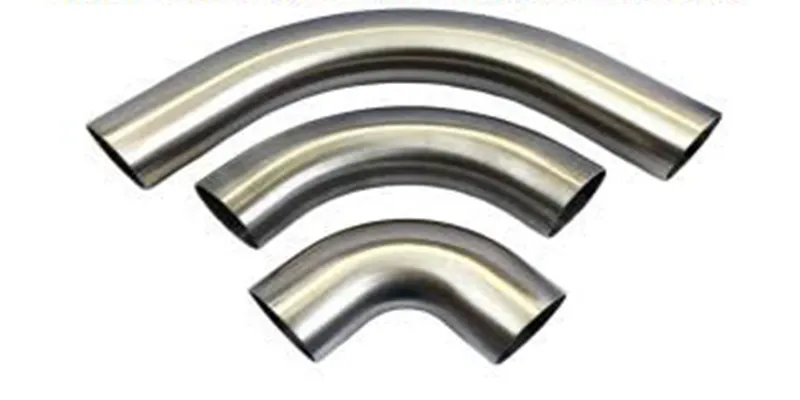
The cost logic is simple. A larger radius costs more in pipe, material and right-of-way, but a single stuck-pig recovery typically costs far more - and a 5D line returns inspection data you can actually rely on for integrity decisions. Choose the radius for the worst tool you will ever run, not the cheapest one.
Table 8 - Choosing a bending radius
|
Scenario |
Recommended radius |
|
Cleaning and gauging pigs only, tight right-of-way |
3D |
|
Standard intelligent pigging (MFL, caliper) |
5D |
|
Long rigid ILI tools (UT/EMAT); high-velocity or slurry service |
10D |
|
Space is generous and budget allows |
Largest the route allows (5D or 10D) |
|
Any pigged line |
Never below 3D without vendor confirmation |
Frequently Asked Questions
"3D" means the bend centerline radius equals three times the pipe nominal diameter (R = 3 × D). On NPS 6 pipe (168.3 mm outside diameter), for example, a 3D bend has a centerline radius of about 505 mm.
Is a 3D bend piggable?
Yes for most cleaning pigs and many intelligent tools - 3D is the accepted minimum for pigging. Tool dynamics and data quality improve at 5D, which is why 5D is the recommended default for intelligent pigging.
Can a pig pass a 1.5D long-radius elbow?
Foam swabs and some short, flexible pigs can; rigid-body cleaning pigs and most ILI tools cannot, or pass with damage and data gaps. For a line that will be pigged, use bends of 3D or more.
Which is better for smart pigging: 3D or 5D bends?
5D. Most ILI tools are designed to a 3D minimum, but 5D gives a more stable sensor standoff, better data quality, and less wear - and it is the industry default for pigged transport lines.
Do pipe bends cause more pressure drop than elbows?
The opposite. Smooth, large-radius bends (5D, 10D) cause less pressure drop and turbulence than tight elbows; a 10D bend behaves almost like straight pipe.
What is the industry minimum bend radius for pigging?
Common guidance is a 3D minimum for most pigged lines (1.5D only on lines 4 inches and smaller, and only for soft pigs) and a 5D minimum for intelligent pigging. Always confirm with the pig or ILI vendor.