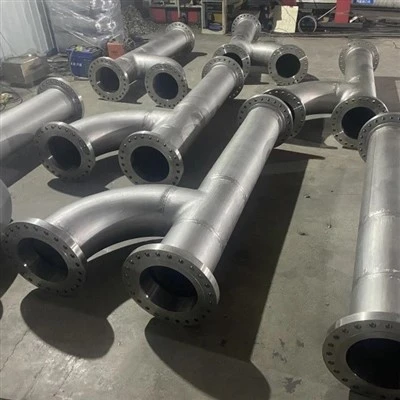
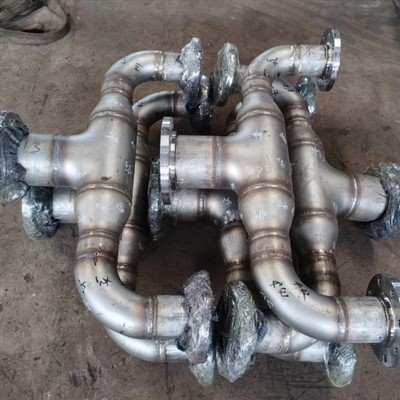
Nickel alloys represent a cornerstone of modern engineering, offering an unparalleled combination of high-temperature strength, exceptional corrosion resistance across diverse environments, and unique physical properties, making them indispensable materials for critical applications spanning aerospace propulsion, demanding chemical processing, advanced energy generation, deep-sea oil & gas extraction, sophisticated medical devices, and pollution control systems where material failure is not an option.
Introduction to Nickel Alloys
Nickel alloys constitute a vital class of metallic materials where nickel serves as the primary constituent, typically comprising more than 50% of the composition, though commercially significant alloys can range down to approximately 30% nickel content while still leveraging its fundamental beneficial characteristics.
These alloys are meticulously engineered to deliver performance far exceeding that of conventional steels or non-ferrous alloys, particularly under extreme conditions of temperature, pressure, and corrosive attack. The inherent versatility of nickel as a base metal allows for the creation of a vast spectrum of alloys tailored to meet highly specific and demanding requirements across numerous industrial sectors.
Their development and continuous refinement have been driven by the relentless pursuit of enhanced efficiency, reliability, and safety in technologies operating at the very edge of material capabilities, from the hostile depths of subsea oil wells to the scorching environments within jet engines and gas turbines. The strategic importance of nickel alloys lies in their ability to enable technological advancements that would otherwise be impossible with less capable materials, underpinning critical infrastructure and next-generation innovations globally.
Composition of Nickel Alloys

The exceptional properties of nickel alloys are achieved through sophisticated alloying strategies, incorporating a wide array of elements in carefully controlled proportions to interact synergistically with the nickel matrix.
Chromium is arguably the most critical companion element, added in substantial quantities to impart outstanding resistance to oxidation at high temperatures and to aqueous corrosion, particularly in oxidizing acids and environments prone to pitting and crevice corrosion, by forming a tenacious, self-repairing chromium oxide surface layer.
Molybdenum is another cornerstone addition, significantly enhancing resistance to reducing acids, chlorides, and localized corrosion mechanisms like pitting and crevice attack; high-performance alloys frequently contain 6-16% molybdenum for severe service conditions.
Iron is commonly present to control cost and modify physical properties, though its proportion varies widely depending on the alloy family.
Copper is added to improve resistance to reducing acids, particularly sulfuric and hydrofluoric acid, and enhances general corrosion resistance in marine environments, forming the basis for alloys like Monel.
Elements such as aluminum and titanium are crucial for precipitation hardening, enabling significant strength increases through the formation of coherent intermetallic phases like gamma prime (γ') during heat treatment, essential for high-temperature structural components.
Niobium and tantalum contribute to strengthening, stabilize against sensitization, and enhance weldability.
Tungsten provides solid solution strengthening, particularly beneficial for elevated temperature strength and creep resistance.
Controlled additions of carbon, manganese, silicon, and sulfur influence processing characteristics and specific properties, while trace elements like lanthanum, cerium, or yttrium can dramatically improve oxidation resistance by promoting oxide scale adhesion.
The precise balance and interaction of these elements define the unique character and performance envelope of each specific nickel alloy grade.
Common Alloy Compositions and Their Properties

The vast landscape of nickel alloys encompasses several prominent families, each characterized by distinct compositional ranges leading to specialized properties.
The Nickel-Copper alloys, exemplified by Monel 400, offer outstanding resistance to seawater and steam, hydrofluoric acid, and alkalis, coupled with high strength and toughness, making them ideal for marine applications, chemical processing vessels, and hydrocarbon processing equipment.
The Nickel-Chromium alloys, or Nichromes, such as Inconel 600, provide excellent resistance to oxidation and carburization at high temperatures and good mechanical properties, widely used in furnace components, heat-treating fixtures, and chemical processing.
The Nickel-Chromium-Iron alloys, including Incoloy 800, offer a cost-effective balance of good oxidation resistance, moderate high-temperature strength, and useful corrosion resistance, finding application in heat exchangers, superheater tubes, and process piping.
The Nickel-Chromium-Molybdenum alloys represent the pinnacle of corrosion resistance; alloys like Hastelloy C276 exhibit exceptional resistance to a vast array of severe corrosive environments, including oxidizing and reducing acids, chlorides, and mixed acids, crucial for pollution control scrubbers, chemical reactors, and pharmaceutical processing.
The Precipitation-Hardenable Nickel alloys, such as Inconel 718 and Inconel X-750, achieve exceptionally high strength through precipitation of γ' (Ni3(Al,Ti)) or γ'' (Ni3Nb) phases, maintaining this strength at elevated temperatures, which is absolutely critical for jet engine and gas turbine components (discs, blades, casings), high-strength fasteners, and nuclear reactor parts.
Nickel-based Superalloys, often complex variations of the precipitation-hardening Ni-Cr alloys with significant additions of Co, W, Ta, Re, and high levels of Al/Ti, represent the ultimate in high-temperature creep and oxidation resistance, essential for the hottest sections of aerospace turbines and land-based power generation turbines.
Properties of Nickel Alloys

The defining characteristics of nickel alloys that render them indispensable stem directly from their composition and metallurgical structure. Foremost among these is their exceptional corrosion resistance, which surpasses virtually all other metallic materials; they resist attack by a staggering range of environments including strong acids, alkalis, salt solutions, chlorine, and organic compounds, with specific grades excelling in resistance to pitting, crevice corrosion, stress corrosion cracking (SCC), and erosion-corrosion in aggressive media like seawater, sour gas (H2S), and acidic chloride solutions.
Their outstanding high-temperature strength and stability is another cornerstone property; nickel alloys maintain remarkable mechanical integrity, creep resistance, and resistance to deformation at temperatures exceeding 1000°C, far beyond the capabilities of stainless steels, while simultaneously resisting oxidation, carburization, sulfidation, and nitriding in hot, corrosive atmospheres encountered in furnaces, combustion processes, and chemical reactors.
Toughness and ductility over a wide temperature range, from cryogenic conditions up to their elevated temperature service limits, ensure reliability under impact and cyclic loading, a critical factor in safety-critical applications like aerospace and pressure vessels. Excellent fabrication characteristics, including weldability, formability, and machinability, allow for the manufacture of complex components.
Additional valuable properties include good magnetic and magnetostrictive properties in specific compositions, low coefficients of thermal expansion, and high electrical resistivity. This unique combination of properties, often impossible to achieve with other material families, is what drives their selection in the most demanding applications.
Manufacturing Processes of Nickel Alloys

The production of high-integrity nickel alloy components demands rigorous control throughout sophisticated manufacturing routes, starting with primary melting. The predominant methods are Vacuum Induction Melting (VIM), which provides excellent control over alloy chemistry and low gas content in a vacuum environment, often followed by secondary refining processes like Vacuum Arc Remelting (VAR) or Electro-Slag Remelting (ESR) to further enhance purity, reduce segregation, and improve solidification structure and homogeneity.
This results in premium-grade ingots essential for critical rotating aerospace parts. Air-melting processes like Electric Arc Furnace (EAF) followed by Argon Oxygen Decarburization (AOD) are also employed, particularly for less critical applications or larger volumes, offering good chemical control at lower cost.
The solidified ingots undergo extensive thermomechanical processing: hot working at carefully controlled temperatures breaks down the cast structure, refines the grain size, and achieves the initial shape. Subsequent cold working further refines the grain structure, significantly increases strength through work hardening, and achieves precise dimensional tolerances and surface finishes required for bar, wire, sheet, strip, and tube products.
Precipitation-hardenable alloys undergo specific solution annealing and aging heat treatment cycles to dissolve soluble phases and then precipitate fine, uniformly distributed strengthening particles to achieve the desired high strength levels. Advanced forming techniques like superplastic forming and hot isostatic pressing are increasingly used for complex aerospace components.
Machining requires specialized tooling, coolants, and parameters due to the alloys' high strength, work hardening tendency, and low thermal conductivity.
Stringent quality control, including non-destructive testing (NDT) like ultrasonic, radiographic, and penetrant inspection, alongside rigorous chemical and mechanical property verification, is paramount throughout the manufacturing chain to ensure the reliability demanded by end-use applications.
Applications of Nickel Alloys

The unparalleled properties of nickel alloys translate directly into their critical role across a vast spectrum of high-performance industries.
In Aerospace and Gas Turbines, they are the backbone materials, constituting up to 50% of a modern jet engine's weight; precipitation-hardened superalloys like Inconel 718 and Waspaloy form compressor and turbine discs, blades, shafts, combustors, and afterburners, enduring extreme stresses, temperatures exceeding 1000°C, and corrosive combustion gases, enabling higher efficiency and thrust-to-weight ratios.
The Chemical and Petrochemical Processing Industries rely heavily on Ni-Cr-Mo alloys (e.g., Hastelloy C276, C22, B2/B3) for reactors, columns, heat exchangers, piping, valves, and pumps handling highly corrosive acids, chlorides, catalysts, and reactive intermediates under high pressure and temperature, where reliability and longevity are essential for safety and economic operation, minimizing downtime and maintenance costs.
Oil and Gas Exploration and Production, particularly in deep-sea, sour, and high-pressure/high-temperature wells, utilizes specialized nickel alloys for downhole tubing, casing, safety valves, blowout preventers, manifold systems, and subsea components due to their resistance to sulfide stress cracking, chloride stress corrosion cracking, and general corrosion in brines.
Power Generation, both conventional thermal and nuclear, employs nickel alloys in critical high-temperature sections of boilers, superheaters, reheaters, steam turbine blades, and heat exchangers (Inconel 600, 625, 718), as well as for fuel element cladding, control rods, and reactor core components in nuclear plants (Inconel 600, 690, X-750, Alloy 800), leveraging their high-temperature strength and corrosion resistance in steam and coolant environments.
Marine Engineering benefits from nickel-copper alloys (Monel 400, K-500) for seawater condenser and heat exchanger tubes, pump shafts, valve trim, propeller shafts, and fasteners due to their superb resistance to seawater corrosion, biofouling, and erosion.
Pollution Control and Waste Treatment systems utilize Ni-Cr-Mo alloys in flue gas desulfurization (FGD) scrubbers, stack liners, ducting, and wastewater treatment equipment to withstand aggressive acidic and chloride-laden environments.
Medical and Pharmaceutical applications exploit the biocompatibility, corrosion resistance, and non-magnetic properties of specific alloys (e.g., MP35N, Nitinol) for surgical implants, dental devices, pacemaker leads, and pharmaceutical processing equipment requiring sterility and material inertness.
Automotive applications are growing, particularly in turbocharger rotors and exhaust valves (e.g., Inconel 713C, 625) for high-performance and downsized engines, enduring high exhaust gas temperatures.
This extensive range of applications underscores the indispensable nature of nickel alloys in enabling modern technology, safety, and environmental protection.