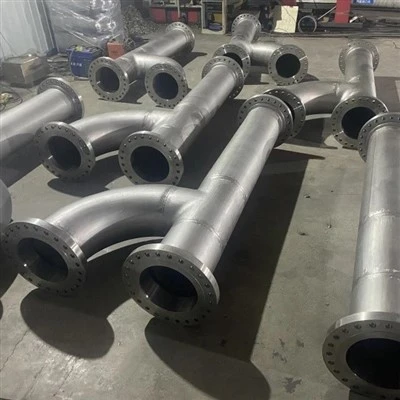
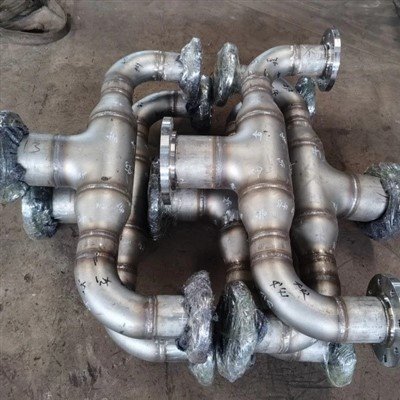
Monel 400, a high-performance nickel-copper alloy renowned for its exceptional corrosion resistance in a vast array of severe environments, stands as a cornerstone material for critical applications across marine, chemical processing, oil & gas, and aerospace industries. Distinct from stainless steels, this solid-solution strengthened alloy offers unparalleled reliability where common austenitic grades falter. At JN, we manufacture Monel 400 (UNS N04400) in a comprehensive range of product forms essential for industrial systems, including seamless pipe, welded pipe, plate, bar, forgings, and fittings. This article provides a rigorous examination of Monel 400's defining chemical composition, its resultant physical and mechanical properties, processing characteristics, market pricing considerations, and the compelling reasons to source this premium alloy from JN.

Monel 400 Chemical Composition
Monel 400's exceptional behavior stems directly from its tightly controlled chemical composition. Primarily a binary alloy of Nickel (Ni) and Copper (Cu), minor additions and strict impurity limits further refine its capabilities. The nominal composition conforms to standards like ASTM B127 (Plate/Sheet/Strip), B164 (Rod/Bar), B165 (Seamless Pipe/Tube), and B564 (Forgings):
- Nickel (Ni): 63.0% min. The backbone of the alloy. Nickel provides inherent resistance to corrosion, particularly in reducing environments, alkalis, and seawater. It stabilizes the face-centered cubic (FCC) austenitic structure, ensuring good ductility and toughness across a wide temperature range, including cryogenic conditions. Its inherent resistance to chloride stress corrosion cracking (SCC) is a key differentiator from many stainless steels.
- Copper (Cu): 28.0% - 34.0%. Copper enhances resistance to sulfuric acid (H₂SO₄), hydrofluoric acid (HF), and other non-oxidizing acids, particularly in the absence of air or oxidizing agents. It contributes to the alloy's inherent strength and works synergistically with nickel to form a highly protective passive film in many environments. Copper also lowers the cost compared to higher-nickel alloys.
- Iron (Fe): 2.5% max. Iron is present primarily as an impurity but is tolerated within limits. While higher iron can slightly increase strength, excessive levels can marginally reduce corrosion resistance in some specific media like hydrofluoric acid. Control ensures consistent performance.
- Manganese (Mn): 2.0% max. Acts as a deoxidizer during melting and helps control sulfur content by forming stable manganese sulfides (MnS). Enhances hot workability. Higher levels can slightly increase strength.
- Carbon (C): 0.3% max. (Typically held much lower, ~0.15% max for optimal corrosion resistance). Carbon is minimized to prevent sensitization (chromium carbide precipitation isn't an issue, but grain boundary carbides can form) and maintain ductility, especially after welding or high-temperature exposure. Low carbon is crucial for corrosion resistance in aggressive environments.
- Silicon (Si): 0.5% max. Primarily a deoxidizer. Higher silicon can improve resistance to highly concentrated sulfuric acid but may reduce ductility.
- Sulfur (S): 0.024% max. A detrimental impurity. Sulfur forms low-melting-point sulfides (e.g., Ni₃S₂) which can cause hot cracking during welding or hot working. Strict control is essential for fabricability.
- Aluminum (Al): Traces. Usually present only in very low levels as a deoxidizer residue.
Standard Chemical Composition of Monel 400 (UNS N04400)
|
Element |
Nickel (Ni) |
Copper (Cu) |
Iron (Fe) |
Manganese (Mn) |
Carbon (C) |
Silicon (Si) |
Sulfur (S) |
Others (Al, etc.) |
|
Min |
63.0 |
28.0 |
- |
- |
- |
- |
- |
- |
|
Max |
Balance |
34.0 |
2.5 |
2.0 |
0.30* |
0.50 |
0.024 |
<0.50 (Total) |
Monel Alloy 400 Properties
Monel 400 derives its value from a unique combination of properties:
1. Physical Properties:
- Density: 8.80 g/cm³ (0.318 lb/in³)
- Melting Range: 1300 - 1350 °C (2370 - 2460 °F)
- Electrical Resistivity: 51.0 µΩ·cm at 20°C
- Thermal Conductivity: 21.8 W/m·K (151 BTU·in/hr·ft²·°F) at 20°C - Lower than copper but significantly higher than austenitic stainless steels.
- Mean Coefficient of Thermal Expansion: 13.9 µm/m·°C (7.7 µin/in·°F) from 20-260°C (68-500°F) - Similar to carbon steel, simplifying design with dissimilar metals compared to higher-expansion austenitic SS.
- Modulus of Elasticity (Tension): 179 GPa (26 x 10⁶ psi) - Similar to steel and nickel alloys.
2. Mechanical Properties:
- Tensile Strength: 480 - 620 MPa (70 - 90 ksi)
- Yield Strength (0.2% Offset): 170 - 345 MPa (25 - 50 ksi) - Note the relatively low yield strength in annealed condition.
- Elongation (in 50mm / 2in): 35 - 45% - Excellent ductility.
- Hardness: Rockwell B 65 - 85 (Brinell HB ~120 - 190)
- Hardening: Monel 400 cannot be hardened by heat treatment. Its strength is significantly increased solely through cold working.
- Cold Worked Properties: Cold drawing, rolling, or forging dramatically increases strength. Yield strengths exceeding 1000 MPa (145 ksi) are achievable with corresponding reductions in ductility. Properties vary significantly depending on the amount and method of cold work. JN provides certified mill test reports detailing exact properties for each heat and product form.
- Elevated Temperature Strength: Maintains useful strength up to around 540°C (1000°F), though oxidation resistance becomes a limiting factor above 480°C (900°F) in many atmospheres. Creep strength is moderate.
3. Thermal Processing Properties:
- Annealing: Performed to soften cold-worked material and relieve stresses. Typical annealing temperature range is 870°C - 980°C (1600°F - 1800°F), followed by rapid cooling (water quench) to prevent potential sensitization (though less severe than in stainless steels).
- Stress Relieving: For moderately cold-worked parts where full annealing is undesirable (to retain some strength), stress relieving is done at 480°C - 650°C (900°F - 1200°F). Higher temperatures within this range provide greater stress relief but cause more softening.
- Hot Working: Excellent hot workability between 650°C - 1175°C (1200°F - 2150°F). Avoid prolonged exposure below 870°C (1600°F) in the hot working range to prevent potential embrittlement. Requires significant power due to high strength at temperature.
- Cold Working: Readily cold worked via standard techniques (rolling, drawing, bending, spinning). Exhibits a higher rate of work hardening than austenitic stainless steels. Intermediate anneals are often required during severe forming operations. Excellent spring properties achievable.
Understanding Monel 400 Price
The price of Monel 400 is intrinsically linked to the London Metal Exchange (LME) price of Nickel, as Ni constitutes over 60% of the alloy's weight. Copper prices also play a secondary role. Consequently, Monel 400 commands a significant premium over standard stainless steels like 304 or 316.
Price Drivers:
- Raw Material Costs (Ni & Cu): The dominant factor, subject to market volatility.
- Product Form: Plate, bar, and seamless pipe generally command higher prices per kg than sheet or welded tube due to more complex processing. Forgings and fittings involve significant value-added manufacturing.
- Dimensions: Thicker sections and larger diameters often have higher base costs. Thin gauge sheet or small diameter thin-wall tubing can also incur premiums due to processing challenges.
- Quantity: Significant discounts are typically available for large volume orders.
- Testing/Certification: Additional testing (e.g., NACE MR0175/ISO 15156, NDT) adds cost.
- Mill Source & Quality: Premium melts with tighter compositional control (e.g., low C, S) may cost more.
- Pricing Transparency: While specific spot prices fluctuate daily, expect Monel 400 to range from 15−15−30 USD per kilogram (or higher for specialized forms/quantities) depending heavily on the factors above. JN provides real-time, competitive quotations based on your exact specification, quantity, and delivery requirements. We leverage our scale and direct mill relationships to secure the best possible raw material costs for our customers.
Conclusion
Monel 400 (UNS N04400) remains an indispensable nickel-copper alloy, offering a unique combination of exceptional corrosion resistance – particularly in seawater, acids, and alkalis – immunity to chloride SCC, good mechanical properties, and reliable fabricability. Its performance is fundamentally rooted in its precise Ni-Cu-Fe-Mn chemistry.
Sourcing Monel 400 demands a supplier with profound metallurgical knowledge, stringent quality control, and the capability to deliver the required product forms reliably. JN stands as that partner. With our extensive in-house manufacturing capabilities across pipe, plate, bar, forgings, and fittings, rigorous QC protocols, global export experience, and commitment to responsive service (low MOQs, fast quotes, reliable delivery), JN provides the confidence and value essential for your critical applications.
Partner with JN for your Monel 400 requirements. Contact our technical sales team today for a competitive quotation and experience.