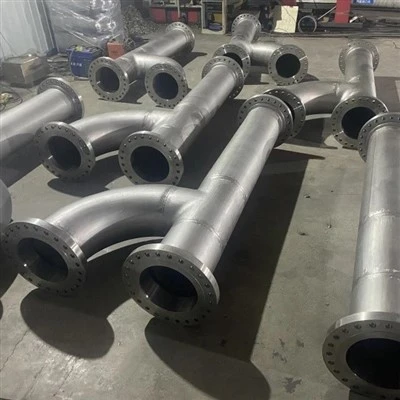
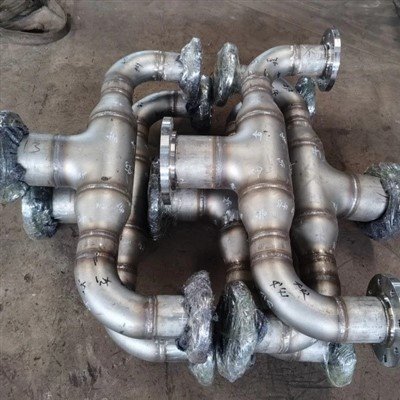
When extreme corrosion resistance is non-negotiable, the choice often narrows down to specialized alloys like 904L. Frequently compared to the ubiquitous 316L, 904L represents a significant leap in performance, particularly in aggressive chemical and marine environments. Understanding the critical differences in composition, properties, cost, and application suitability between 904L vs 316L is essential for engineers, designers, and procurement specialists tasked with selecting materials for demanding service. This comprehensive analysis cuts through the confusion.

What is 904L?
904L (UNS N08904, EN 1.4539) is a high-alloy, low-carbon "super austenitic" stainless steel. Developed by Outokumpu (formerly AvestaPolarit) and often associated with brands like Outokumpu 904L or Sandvik Sanicro® 904L, its defining characteristic is its exceptionally high content of chromium, nickel, molybdenum, and copper. This alloy is specifically engineered to withstand severe corrosive conditions where standard 316L would rapidly deteriorate.
What is 316L?
316L (UNS S31603, EN 1.4404) is the low-carbon version of the widely used 316 austenitic stainless steel. Its addition of 2-3% molybdenum provides significantly better corrosion resistance than 304/L, especially against chlorides, making it a go-to choice for many chemical, marine, and pharmaceutical applications. However, it has limitations in highly aggressive media.
904L vs 316L Difference
The fundamental disparity lies in their chemical composition, which directly dictates their corrosion resistance, mechanical properties, cost, and fabrication characteristics.
1.Chemical Composition
|
Element |
904L (UNS N08904) Typical (%) |
316L (UNS S31603) Typical (%) |
Impact of Difference (904L Advantage) |
|
Iron (Fe) |
Balance |
Balance |
Base Metal |
|
Chromium (Cr) |
19.0 - 23.0 |
16.0 - 18.0 |
Higher Cr: Enhances passive oxide layer formation, improving general & pitting resistance. |
|
Nickel (Ni) |
23.0 - 28.0 |
10.0 - 14.0 |
Much Higher Ni: Stabilizes austenite, drastically improves resistance to chloride SCC and reducing acids. |
|
Molybdenum (Mo) |
4.0 - 5.0 |
2.0 - 3.0 |
Higher Mo: Significantly boosts resistance to pitting & crevice corrosion in chlorides and sulfides. |
|
Copper (Cu) |
1.0 - 2.0 |
- (Trace) |
Key Differentiator: Enhances resistance to sulfuric acid (H₂SO₄) and other reducing acids. Vital for chemical processing. |
|
Manganese (Mn) |
≤ 2.0 |
≤ 2.0 |
Similar |
|
Silicon (Si) |
≤ 1.0 |
≤ 0.75 |
Similar |
|
Carbon (C) |
≤ 0.02 |
≤ 0.03 |
Both ultra-low carbon to prevent sensitization. 904L is often slightly lower. |
|
Nitrogen (N) |
≤ 0.10 |
≤ 0.10 |
Similar, sometimes slightly higher in 904L for strength. |
|
Sulfur (S) |
≤ 0.035 |
≤ 0.030 |
Similar |
|
Phosphorus (P) |
≤ 0.045 |
≤ 0.045 |
Similar |
|
PREN (Cr + 3.3Mo + 16N) |
~35 - 39 |
~24 - 26 |
Massively Higher PREN: Quantifies superior resistance to pitting/crevice corrosion. |
904L's significantly higher levels of Ni, Cr, Mo, and the strategic addition of Cu make it a vastly more corrosion-resistant alloy, especially in complex, mixed acid environments and high-chloride conditions.
2. Corrosion Resistance
- Sulfuric Acid (H₂SO₄): This is 904L's standout advantage. Its copper content provides excellent resistance across a wide range of concentrations and temperatures, particularly in the highly corrosive dilute and medium concentration ranges where 316L suffers severe attack. 904L is a go-to material for sulfuric acid handling.
- Phosphoric Acid (H₃PO₄): 904L offers superior resistance, especially in the presence of fluorides and chlorides (common impurities), where 316L is vulnerable.
- Chloride Environments:
□ Pitting & Crevice Corrosion: 904L's high Mo content and PREN give it exceptional resistance in seawater, brine solutions, and chloride-containing process streams. It withstands higher chloride levels and temperatures than 316L.
□ Stress Corrosion Cracking (SCC): 904L's very high nickel content makes it dramatically more resistant to chloride SCC than 316L, which is susceptible above ~60°C (140°F). 904L is often specified for critical components in warm seawater or high-chloride process applications.
- Organic Acids (Acetic, Formic): Both perform well, but 904L offers enhanced resistance, particularly at higher temperatures and concentrations.
- Nitric Acid (HNO₃): 316L has good resistance to nitric acid. 904L also performs well but offers no significant advantage here; its higher alloy content isn't necessary for this oxidizing acid.
- Mixed Acids & Complex Media: 904L excels in environments containing mixtures of acids (e.g., sulfuric + nitric, sulfuric + hydrochloric traces) or acids with chlorides/sulfides – common in chemical processing. 316L often fails rapidly in such conditions.
3. Mechanical Properties
|
Property |
904L (Annealed) |
316L (Annealed) |
Notes |
|
Tensile Strength (Rm) |
490 - 690 MPa |
485 - 620 MPa |
904L is generally slightly stronger. |
|
Yield Strength (Rp0.2) |
220 MPa (min) |
170 MPa (min) |
Higher Yield Strength: Allows for thinner sections/pressure walls in 904L, potentially saving weight. |
|
Elongation (A50mm) |
≥ 35% |
≥ 40% |
316L typically has slightly better ductility/formability. |
|
Hardness (HBW) |
~170 - 215 |
~150 - 190 |
904L is harder, impacting machining (see below). |
|
Impact Toughness |
Excellent |
Excellent |
Both exhibit good toughness at ambient temperatures. |
- Work Hardening: Both alloys work harden significantly during cold forming. 904L's higher strength means it requires more force.
- Machinability: 904L is considerably more difficult to machine than 316L due to its higher strength, work hardening rate, and toughness.
- Welding: Both are readily weldable using common processes (TIG, MIG, Stick, SAW).
□ 904L: Requires matching or over-alloyed filler metals (e.g., ER385, Alloy 625 for severe corrosion). Strict control of heat input and interpass temperature is crucial to avoid micro-fissuring (hot cracking) due to its high alloy content. Post-weld annealing is generally not required but pickling is essential. More sensitive to contamination.
□ 316L: Uses matching filler metals (ER316L). Less sensitive to welding parameters than 904L, though good practice is still essential. Pickling recommended.
4. Cost
904L typically costs 3 to 6 times more than 316L due to its high content of expensive alloying elements (Ni, Mo, Cu). Machining 904L is significantly slower and consumes more tooling, adding cost. Welding requires more expertise and potentially more expensive filler metals.
904L gained significant public attention due to Rolex's adoption for their watch cases and bracelets starting in the late 1980s. Rolex highlights 904L's superior polish retention and corrosion resistance, particularly against sweat and saltwater. While technically accurate, the primary driver for industries like chemical processing is its unparalleled performance in aggressive acids, not aesthetics. This luxury association shouldn't overshadow its critical industrial applications.
Conclusion
The 904L vs 316L debate hinges on the severity of the environment and budget constraints. 316L remains an excellent, cost-effective choice for a vast array of applications involving moderate corrosion. However, when confronted with aggressive sulfuric acid, complex acid mixtures, high-chloride brines, seawater at elevated temperatures, or severe chloride SCC risks, 904L is the unequivocally superior material. Its high nickel, chromium, molybdenum, and copper content deliver a level of corrosion resistance that 316L simply cannot match, justifying its significant cost premium in critical applications where failure is not an option. Always base material selection on rigorous analysis of the service environment, total lifecycle costs, and consultation with corrosion experts and material suppliers. For the most punishing conditions, 904L stands as the super austenitic stainless steel of choice.