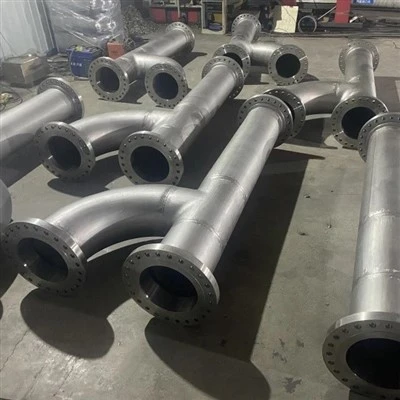
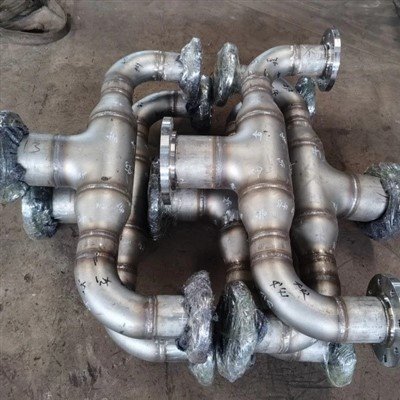
254SMO, also known as UNS S31254 or Alloy 254, is a super-austenitic stainless steel engineered for exceptional resistance to pitting, crevice corrosion, and stress corrosion cracking in aggressive environments. This makes it indispensable in industries like offshore oil and gas, chemical processing, desalination, and pulp and paper, where exposure to chlorides, acids, and high temperatures is routine.

However, even this robust material requires diligent upkeep to prevent degradation and ensure operational reliability. Neglecting maintenance can lead to costly downtime, leaks, or failures, whereas a proactive approach can extend service life beyond 20 years, reducing total costs significantly.
The following guide outlines the essential maintenance techniques of 254SMO flanges.
Tip 1: Regular Cleaning
Perform routine cleaning using non-abrasive methods to remove contaminants and preserve the passive oxide layer that protects against corrosion.
Regular cleaning eliminates deposits like salts, scales, or organic residues that could initiate localized corrosion in chloride-rich settings.
Begin with a visual assessment to identify buildup, then use mild detergents or alkaline solutions diluted in warm water. Employ soft brushes, microfiber cloths, or sponges to gently scrub surfaces, avoiding steel wool or abrasive pads that might scratch the finish and create sites for crevice corrosion. For stubborn contaminants, consider ultrasonic cleaning, which uses high-frequency sound waves to dislodge particles without mechanical damage. Rinse thoroughly with deionized water to prevent mineral deposits, and dry immediately with compressed air or lint-free cloths to evade water spots.
In highly corrosive environments, schedule cleaning monthly or after exposure to aggressive media.
Our factory recommends incorporating passivation post-cleaning-immersing in nitric acid (20-50% at room temperature for 30 minutes)-to restore the chromium-rich oxide film, enhancing resistance to pitting. This technique not only maintains aesthetic appeal but also ensures flanges perform at peak corrosion resistance, as evidenced by our clients in desalination plants who report zero failures after adopting this regimen.
Tip 2: Perform Thorough Inspections
Systematic visual and nondestructive inspections to detect early signs of damage, corrosion, or wear before they escalate into major issues.
Inspections form the backbone of preventive maintenance for 254SMO flanges, allowing early intervention in environments prone to pitting or cracking.
Start with visual checks using magnification tools or borescopes to examine flange faces, bolt holes, and gasket seating areas for discoloration, pitting, or erosion. Measure thickness with ultrasonic gauges to monitor material loss, aiming for readings above 95% of original specifications. Employ nondestructive testing (NDT) methods like dye penetrant for surface cracks or magnetic particle inspection for subsurface defects, especially in welded zones where heat-affected areas might be vulnerable.
In critical applications, integrate radiographic or eddy current testing to assess internal integrity without disassembly. Document findings with photos and logs, comparing against baseline data from installation. Frequency should align with operational severity-quarterly for offshore platforms and semi-annually for chemical plants.
If anomalies are detected, consult material certificates to verify alloy composition, as impurities can accelerate degradation. Our experience shows that clients implementing NDT protocols extend flange life by 30-50%.
Tip 3: Maintain Bolts, Nuts, and Gaskets
Regularly inspect and lubricate bolting components while ensuring gasket compatibility to prevent leaks and maintain joint integrity.
Bolting and gasket maintenance is vital for 254SMO flanges, as improper tension or material mismatch can lead to galvanic corrosion or sealing failures.
Begin by torquing bolts to manufacturer specifications using calibrated tools, checking for uniform tightness to avoid uneven stress distribution. Apply anti-seize lubricants like molybdenum disulfide on threads to facilitate future disassembly and resist galling, but select formulations free of chlorides or sulfur to match 254SMO's corrosion profile. Inspect nuts for thread damage and replace if deformed.
For gaskets, choose PTFE or graphite composites resistant to the media, ensuring they don't introduce contaminants. Replace gaskets during each disassembly, as compression set can compromise seals. In high-vibration settings, use lock washers or Belleville springs for sustained preload.
Our factory advises annual bolt audits in aggressive environments, which has helped clients in pulp mills reduce leak incidents by over 40%. This technique ensures pressure containment and minimizes corrosion at interfaces, preserving the flange's superior performance.
Tip 4: Proper Storage Practices
Store 254SMO flanges in controlled environments to shield them from moisture, contaminants, and mechanical damage prior to installation.
Effective storage prevents pre-installation degradation, maintaining the pristine condition of 254SMO flanges' surfaces and metallurgy.
Keep flanges indoors in dry, ventilated areas with humidity below 60% and temperatures between 10 and 30°C to avoid condensation-induced corrosion. Use protective caps on ends and wrap in VCI paper or polyethylene to block dust and moisture. Stack vertically on wooden pallets, separating layers with non-metallic spacers to prevent scratches or dents.
Avoid contact with carbon steel, copper, or other dissimilar metals that could cause galvanic reactions or contamination.
Label storage units with alloy details and inspection dates, rotating stock on a FIFO basis. For long-term storage, apply a light oil coating, but ensure it's removable without residues.
Our clients benefit from these protocols, reporting no surface pitting upon deployment.
Tip 5: Apply Passivation and Pickling Treatments
Use chemical treatments like passivation and pickling to restore or enhance the corrosion-resistant oxide layer on 254SMO surfaces.
Passivation and pickling are specialized techniques to remove impurities and reinforce the passive film, crucial for 254SMO's longevity in harsh media.
Pickling involves immersing flanges in a hydrofluoric-nitric acid mixture to dissolve weld scales or embedded iron particles, followed by thorough rinsing. Passivation follows, using nitric acid to promote chromium oxide formation.
Always wear PPE and handle in ventilated facilities, neutralizing waste per regulations. Perform after fabrication or heavy cleaning, testing efficacy with ferroxyl or copper sulfate tests.
In our production, we integrate these steps, resulting in flanges with PREN values exceeding 42, offering unmatched resistance.
Tip 6: Monitor Environmental Conditions
Continuously track operating parameters like temperature, pH, and chloride levels to preempt conditions that could compromise 254SMO integrity.
Environmental monitoring allows proactive adjustments, ensuring 254SMO flanges operate within safe limits to avoid accelerated corrosion. Install sensors for real-time data on temperature (up to 300°C max for continuous use), pH (optimal 2-12 range), and chloride concentrations (below 10,000 ppm for pitting resistance). Log data and set alarms for deviations, such as exceeding 150°C in chloride environments where stress cracking risks rise. Adjust inhibitors or flush systems if needed.
In marine applications, monitor for biofouling, which can create anaerobic zones fostering corrosion.
Tip 7: Execute Proper Repair Procedures
Address defects through welding or mechanical repairs using compatible materials and controlled processes to restore structural and corrosion properties.
Repairing 254SMO flanges demands precision to avoid sensitizing the material or introducing weaknesses.
For minor pits, grind smoothly and passivate; for cracks, use GTAW with ERNiCrMo-3 filler, maintaining heat input below 1.5 kJ/mm and interpass temperatures under 100°C. Post-weld, solution anneal at 1150-1200°C with rapid quench to restore microstructure.
Verify repairs with NDT and hydrostatic testing. Avoid over-repairing to prevent distortion.
In conclusion, maintaining 254SMO flanges through these techniques-cleaning, inspection, bolting care, storage, treatments, monitoring, and repairs-ensures unparalleled durability and efficiency.