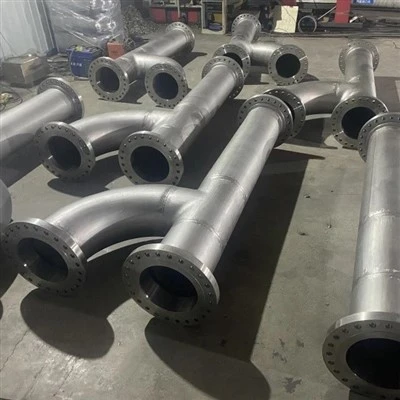
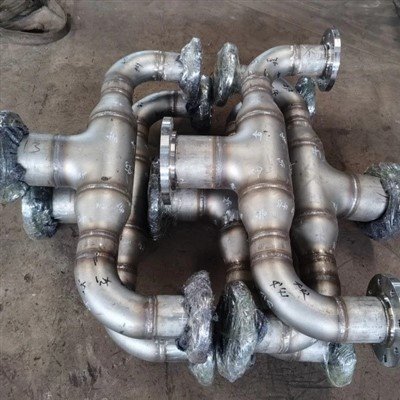
Long Radius Elbow is the preferred choice for applications demanding minimal flow resistance, reduced erosion, and lower pressure drop. Understanding its specifications, applications, and advantages over alternatives like the Short Radius elbow is essential for engineers, designers, and procurement specialists tasked with designing reliable and efficient piping systems.

What is a Long Radius Elbow?
Long Radius Elbow is a precisely engineered pipe fitting designed to alter the direction of flow in a piping system by either 90 degrees or 45 degrees, characterized by its centerline radius of curvature equal to 1.5 times the nominal pipe size (NPS), expressed as 1.5D. This larger bend radius is the defining feature that differentiates it from a Short Radius elbow. The fundamental purpose of this geometry is to facilitate a much gentler change in flow direction compared to sharper bends.
This gentler turn significantly reduces turbulence within the fluid stream, minimizes flow separation, and consequently lowers the frictional resistance and pressure loss experienced as the fluid navigates the bend. The smoother flow path also dramatically decreases the velocity and impact of suspended solids or particulates against the outer wall of the elbow, mitigating erosion and prolonging the fitting's service life, particularly in abrasive service conditions. Long Radius elbows are manufactured to stringent dimensional standards like ASME B16.9 or ASME B16.11, ensuring compatibility and leak-proof connections within standardized piping systems.
Long Radius Elbow Dimensions
The dimensions of Long Radius elbows are rigorously standardized, primarily governed by ASME B16.9 for butt-weld types, which covers sizes from NPS 1/2" to NPS 48". The core dimensional characteristic is the Center-to-End distance, which directly correlates with the 1.5D radius.
For a standard 90 degree Long Radius elbow, this Center-to-End dimension is exactly 1.5 times the nominal pipe size.
For example, a 4" NPS 90° LR elbow has a centerline radius of 4" x 1.5 = 6", and consequently, its Center-to-End dimension is also 6". A 45-degree Long Radius elbow has a Center-to-End dimension equal to the tangent of 22.5 degrees multiplied by the radius, resulting in approximately 0.625 times the radius.
Wall thickness is another critical dimension, typically specified to match the schedule of the connecting pipe or per specific project requirements defined by standards like ASME B36.10M or B36.19M. It's crucial to note that while the nominal dimensions are standardized, the actual outside diameter (OD) varies depending on the pipe schedule, though the centerline radius is always calculated based on the nominal size.
Long Radius Elbow Types
Long Radius elbows are manufactured in a diverse range of materials and configurations to suit specific service conditions, pressure ratings, and connection methods. The primary classification is by material grade, dictated by the fluid being transported and environmental factors.
Common materials include Carbon Steel, Stainless Steel, Alloy Steels, Duplex and Super Duplex Stainless Steels, Nickel Alloy, and Copper Alloys. Manufacturing methods are another key differentiator: Seamless elbows and Welded elbows.
Connection types define how the elbow integrates into the piping system:
Butt-Weld (BW) ends are beveled for welding directly to pipe, providing the strongest, most leak-proof connection for high-pressure/temperature systems;
Socket-Weld (SW) ends allow pipe to be inserted into a recess and fillet welded, suitable for smaller sizes and moderate pressures;
Threaded (THD) ends use NPT threads for easy assembly in low-pressure, non-critical applications. Additionally, elbows can be supplied with various protective coatings or linings.
How to Use a Long Radius Elbow
The deployment of Long Radius elbows is dictated by the hydraulic and mechanical requirements of the piping system. Their primary application is wherever a smooth, low-resistance change in flow direction is essential.
This is critical in systems handling high flow velocities, viscous fluids, slurries containing abrasive solids, or where minimizing pump energy consumption is a priority.
Key industries relying heavily on LR elbows include oil and gas transmission and refining, chemical and petrochemical processing, power generation, pulp and paper, water treatment, and pharmaceutical plants.
When installing a butt-weld LR elbow, precise alignment with the adjoining pipes is crucial to prevent inducing excessive stress into the system; misalignment can lead to premature weld failure or leaks. Proper welding procedures specific to the elbow material and pipe material must be strictly followed, including preheat and post-weld heat treatment if required by the material specification or applicable code.
The orientation of the elbow seam weld relative to the pipe welds should also be considered during layout. LR elbows are typically installed in horizontal runs or vertical drops where space permits their larger footprint.
Their use is often mandated by engineering specifications for pump suction and discharge lines to ensure smooth flow into and out of rotating equipment, minimizing vibration and cavitation potential.
Long Radius Elbow vs. Short Radius Elbow
The choice between a Long Radius (LR) and a Short Radius (SR) elbow hinges on a fundamental trade-off: flow efficiency and longevity versus space constraints and cost.
As established, the LR elbow, with its 1.5D radius, offers a significantly gentler bend. This translates directly into superior hydraulic performance: lower pressure drop, significantly reduced turbulence, minimized flow separation, and drastically lower erosion rates, especially critical for slurries or gases carrying particulates.
The smoother flow also reduces vibration and noise. Mechanically, the larger radius generally results in lower stress intensification factors under pressure and thermal cycling, contributing to potentially longer fatigue life in dynamic systems.
In contrast, the Short Radius elbow, with a centerline radius of only 1.0 times the nominal pipe size (1D), provides a much sharper 90-degree turn. Its primary advantage is its compactness – it requires significantly less installation space. This makes SR elbows valuable in tight spaces like skid-mounted equipment, shipboard piping, or retrofit situations where space is severely limited. They are also generally slightly less expensive due to lower material weight.
However, these space and cost benefits come at a substantial hydraulic penalty: significantly higher pressure drop, severe turbulence, pronounced flow separation, and intense localized erosion on the outer wall of the bend.
Consequently, SR elbows are generally restricted to low-pressure, low-velocity services involving non-abrasive fluids or where space is the absolute overriding constraint and flow inefficiency is acceptable.
For most process applications involving valuable or sensitive fluids, higher pressures/velocities, or abrasive components, the LR elbow is the technically superior and often more economical choice in the long term despite its larger footprint and slightly higher initial cost.
Conclusion
The Long Radius elbow is an indispensable component in the design of efficient, reliable, and long-lasting piping systems. Its 1.5D bend radius provides the optimal balance, enabling significant directional changes while minimizing the detrimental effects of turbulence, pressure loss, and erosion that plague sharper bends.
Understanding its standardized dimensions, diverse material and connection types, specific application guidelines, and clear advantages over Short Radius alternatives empowers engineers and designers to make informed decisions.
By specifying Long Radius elbows where hydraulic performance, reduced maintenance, and system longevity are priorities, industries can ensure the smooth, efficient, and cost-effective operation of their critical fluid transport infrastructure for years to come.