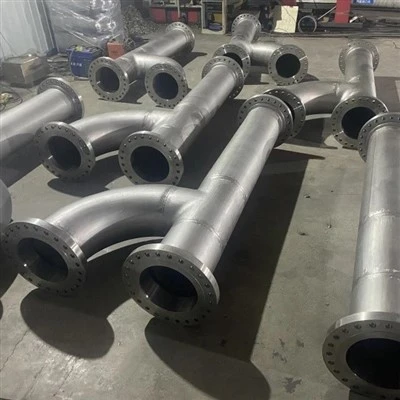
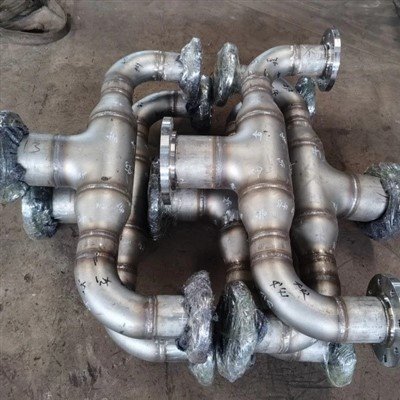
Understanding the right materials for piping systems is crucial for engineers, project managers, and procurement specialists. Among the most trusted and widely used components are ASTM A182 F304 Stainless Steel Flanges. These flanges form vital connections in countless industrial and commercial applications. Let's explore what makes them a preferred choice.

What is ASTM A182 F304?
ASTM A182 is a standard specification forged by the American Society for Testing and Materials. It details the requirements for alloy and stainless steel pipe flanges, forged fittings, valves, and similar parts designed for high-temperature service. The "F304" designation specifically refers to the grade of stainless steel used. F304 fundamentally corresponds to the common austenitic stainless steel grade UNS S30400 / AISI 304. This material is chosen primarily for its excellent corrosion resistance, good strength, and reliable performance across a wide temperature range, particularly from cryogenic up to around 870°C (1600°F).
F304 Flanges Advantages
The superior performance of A182 F304 flanges stems from the properties of the base material, 304 stainless steel. Its primary characteristic is excellent general corrosion resistance due to a protective chromium oxide layer (over 18% Chromium) that forms naturally on its surface. This "passive layer" shields the underlying metal from attack by many environmental factors, chemicals, and oxidizing agents. Compared to carbon steel flanges, F304 offers vastly superior resistance to rust and oxidation. It also maintains good ductility and toughness, making it versatile for forming into complex flange shapes and capable of withstanding pressure surges and thermal cycling encountered in piping systems.
A182 F304 Flanges Forging
ASTM A182 F304 flanges are manufactured using the forging process. This involves heating solid metal billets (ingots) of 304 stainless steel and shaping them into rough flange profiles using high-pressure hammers or presses. Forging aligns the metal's grain structure, resulting in significantly enhanced mechanical properties – better strength, greater impact toughness, and more reliable directional strength compared to cast or plate-cut flanges. After initial forging, the flanges undergo precision machining (turning, facing, drilling bolt holes) to achieve the exact dimensions required by standards like ASME B16.5 or ASME B16.47.
ASTM A182 F304 Properties
When selecting AS182 F304 flanges, understanding their core physical and mechanical properties is vital. These flanges exhibit high tensile strength and yield strength, essential for holding internal pressures. They offer good elongation, meaning they can deform somewhat without breaking under overload conditions. Their operating temperature range is impressive: generally suitable from as low as -250°F (-156°C) up to 1500°F (816°C), though specific permissible stress values decrease significantly at higher temperatures and are defined in the ASME Boiler and Pressure Vessel Code. Their non-hardenable nature simplifies forming and welding processes.
Welding and Heat Treatment
Welding A182 F304 flanges to pipes and fittings is common practice. This grade exhibits good weldability using standard arc welding processes common to austenitic stainless steels (e.g., GTAW/TIG, SMAW/Stick, GMAW/MIG). Crucially, welding can make the material susceptible to sensitization – the precipitation of chromium carbides in the heat-affected zone – which reduces corrosion resistance locally. For service in corrosive environments above about 800°F (427°F) or for thicker sections, solution annealing (heating to around 1900-2050°F / 1038-1121°C followed by rapid quenching) after welding is highly recommended to dissolve carbides and restore corrosion resistance. Alternatively, using low-carbon grade F304L (A182 F304L) can minimize this risk from the start.
Where A182 F304 Flanges Are Relied Upon
Thanks to their corrosion resistance and strength, these flanges are indispensable across diverse sectors. You'll find them connecting pipelines in chemical processing plants handling mild acids and alkalis, transporting food-grade products, processing pharmaceuticals, and within power generation facilities (water treatment sections). They are extensively used in water distribution, wastewater treatment plants, HVAC systems, and marine applications near coasts (though higher grades like 316 are preferred for saltwater splash zones). Their utility also extends to cryogenic storage applications and general construction involving corrosive service fluids.
When procuring AS182 F304 flanges, always partner with trustworthy manufacturers and suppliers. Request certified Material Test Reports (MTRs) that verify adherence to ASTM A182 requirements, including specific chemical and mechanical test results for your batch. Confirm the material grade marking (F304) is clear and permanent on every flange. Verify that manufacturing processes meet relevant standards for both the material (ASTM A182) and the flange dimensions (e.g., ASME B16.5). Don't hesitate to ask about the manufacturer's quality control procedures and non-destructive testing protocols. Reputable suppliers understand this is non-negotiable.
Summary
ASTM A182 F304 flanges are a fundamental, high-quality component for creating strong, permanent, and leak-tight connections in piping systems made from 304 stainless steel. Made from a corrosion-resistant, strong, and versatile stainless steel grade and manufactured to precise forging standards, they offer dependable performance in a vast array of environments from freezing cold to high heat. Understanding their material properties, manufacturing essentials, correct application, welding considerations, and the importance of certified quality is key to selecting the right flanges for your critical projects. Choose genuine F304 flanges that carry the assurance of the ASTM A182 standard.